Positive Leadership has also been recognised as a Top 50 Leadership Expert to Follow on Twitter.

Follow us on Twitter @posleadership


LEADERSHIP IS A PROCESS OF SOCIAL INFLUENCE, WHICH MAXIMISES THE EFFORTS OF OTHERS TOWARDS THE ACHIEVEMENT OF A SHARED GOAL.

Tuesday, November 12, 2013

Positive Leadership: Entrepreneurial Advice

Business advice from Sheldon Adelson, Bill Gates, Steve Jobs, Richard Branson, Charlie Munger, Donald Trump, Warren Buffet, Jim Pattison, Charles Koch and Sunil Mittal

Share/Save/Bookmark

Monday, November 11, 2013

Positive Leadership: Leadership Development

To become an effective CEO, work for companies committed to leadership development, and take responsibility for your own development on the job. Joseph L. Bower, Professor, Harvard Business School. 


Share/Save/Bookmark

Friday, November 08, 2013

Positive Leadership: Control is for Beginners

Carl Størmer is the founder of Jazzcode.

As Carl shows us in this video, by jamming with two people he’d never practised with before, sometimes you just need to let go. A jazz musician needs to stop controlling and start trusting his band members’ competency and artistry. This trust, the willingness to let go and allow for space, allows band members take risk (that’s what a jazz solo is!) and try something new and different — while being supported by their band-mates. Without that support, you get a chaos of sound. With too much control, you don’t get jazz.

Carl’s wife, Ane, sums up this attitude with her own adage: “Control is for beginners.”

Spontaneity and relinquishing control provide enormous advantages, even if it takes a certain kind of non-practice to feel comfortable with it. Jazz musicians know that. Innovators should learn that as well… because sometimes, control really is for beginners.

 
Share/Save/Bookmark

Thursday, November 07, 2013

Positive Leadership: The Importance of Enduring Values

On 8 May 2010 Angela Ahrendts, former ceo of Burberry and now retail chief at Apple, returned to her alma mater, Ball State University in Indiana, to give the commencement address. 


Share/Save/Bookmark

Wednesday, November 06, 2013

Positive Leadership: Expectations Drive Behaviour

‘Expectations drive behaviour. If we expect to do poorly we will behave in ways that ensure a poor performance. Negotiation is problem solving. The goal is not to get a deal; the goal is to get a good deal.’  Margaret Neale

Margaret Neale is the Adams Distinguished Professor of Management at the Stanford University Graduate School of Business. Her research focuses primarily on negotiation and team performance. In particular, she studies cognitive and social processes that produce departures from effective negotiating behaviour. Within the context of teams, her work explores aspects of team composition and group process that enhance the ability of teams to share the information necessary for learning and problem solving in both face-to-face and virtual team environments.


Share/Save/Bookmark

Tuesday, November 05, 2013

Positive Leadership: The Link Between Emotion and Sales

Robert Senior is CEO Europe, Middle East and Africa, Saatchi & Saatchi.

In this video he talks about how love, emotion, actions and sales are closely aligned.

Share/Save/Bookmark

Monday, November 04, 2013

Positive Leadership: The Greatest Leaders Are Driven by a Purpose Beyond Profit


Share/Save/Bookmark

Friday, November 01, 2013

Positive Leadership: What is Good Leadership?

Jeremy Marchant of Emotional Intelligence discusses in this IOD video why good leadership means more than just glorified management.

Good leadership is actually a relationship of equals where the person leading recognises the most powerful way they can ensure the enterprise they are responsible for thrives is one in which they let go of their ego and essentially empower everyone else in the team to do the best job.


Share/Save/Bookmark

Thursday, October 31, 2013

Positive Leadership: Opportunity


Share/Save/Bookmark

Wednesday, October 30, 2013

Positive Leadership: Choices


Share/Save/Bookmark

Tuesday, October 29, 2013

Positive Leadership: The Essence of Leadership

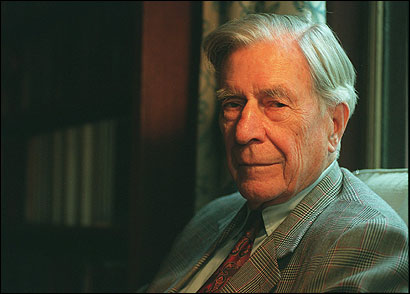
Economist John Kenneth Galbraith once said that “all of the great leaders have had one characteristic in common: it was the willingness to confront unequivocally the major anxiety of their people in their time. This, and not much else, is the essence of leadership.” 

We all have our anxieties to bear. For some it is a decision we need to make. For others it is a habit we need to break. 

Whatever the anxiety is, we have to confront it, if we want to overcome it. 

That is what it means to lead!

Share/Save/Bookmark

Monday, October 28, 2013

Positive Leadership: Joe Montana's Winning Wisdom

Joe Montana reckons his real secret was simply being able to remember that “football is just a stupid game” while at the same time never losing his almost pathological detestation of defeat.

“You have to believe that, when it comes down to it, there’s nobody better than you. And that if it comes to that one final pass, you have to make sure you’re that guy. And you have to relish it.”


Montana is self-effacing but press him on which quarterback he would want to throw a ball to save his life and you get the true gauge of his self-confidence. “I’d pick myself first!” he smiles.

Share/Save/Bookmark

Friday, October 25, 2013

Positive Leadership: Principles


Share/Save/Bookmark

Thursday, October 24, 2013

Positive Leadership: Happiness


Share/Save/Bookmark

Wednesday, October 23, 2013

Positive Leadership: Be Yourself, But Don’t Overshare

A rise in team-based workplaces has heightened the demand for managers who are “authentic” and “instantly intimate.” But sharing your thoughts, feelings, and experiences at work can sometimes backfire.

Here are a few pointers for effective—and authentic—self-disclosure:

Consider relevance. Before sharing personal information, ask yourself if it’s germane to the situation. Make sure it contributes to the overall goal of building trust and engendering better collaboration.

Understand the context. Some societies are more inclined than others to disclose personal information. Investigate regional and organisational norms about sharing so that you’ll know when it’s best to keep quiet.


Delay or avoid very personal disclosures. In some workplaces, you will eventually find it safe and helpful to share; in others you’ll realise it’s unwise to do so.


Share/Save/Bookmark

Tuesday, October 22, 2013

Positive Leadership: Instant Success Takes Time

One of the more mundane differences between perpetual winners and long-term losers among businesses, sports teams, and other organisations is that the winners simply work harder. 

Winners are more likely to take the time to keep honing skills and testing ideas in preparation for change. That’s not too dramatic or glamorous, but it’s among the biggest differentiators. 

In contrast, teams or organisations headed for losing streaks lurch from tactic to tactic without any apparent long-term direction. They lack discipline, do not always rely on facts before chasing fads, and panic under pressure.


Share/Save/Bookmark

Monday, October 21, 2013

Positive Leadership: Dreaming and Disruption

Dreaming is at the heart of disruption.  

Whether we want to disrupt an industry or our personal status quo, in order to make that terrifying leap from one learning curve to the next, we must dream.  The good news is that the causal mechanism for achieving our dreams is always, always, always showing up:  and as we show up, our future will too.


Share/Save/Bookmark

Thursday, October 17, 2013

Positive Leadership: George P. Shultz: "Issues on My Mind"

George P. Shultz’ storied career in government, academia, and business includes four US cabinet posts; appointments at the University of Chicago, MIT, and Stanford; and the presidency of Bechtel Corp. 

Now 92, the economist is the author of the new book, Issues on My Mind: Strategies for theFuture, a guide to policymakers on how to govern more effectively in a wide range of areas. 

In an interview with Stanford Business, Shultz discussed technology, U.S. relations with Russia and China, the environment, and how the United States can get its house in order. 


Share/Save/Bookmark

Wednesday, October 16, 2013

Positive Leadership: Purpose


Share/Save/Bookmark

Tuesday, October 15, 2013

Positive Leadership: Finding Your Purpose and Passion


Share/Save/Bookmark

Monday, October 14, 2013

Positive Leadership: Why Grit Determines Success


Wisdom from psychologist Angela Duckworth on ‘Why Grit, Not IQ, Predicts Success’

“Character is at least as important as intellect.”


Share/Save/Bookmark

Friday, October 11, 2013

Positive Leadership: Great Mentors

A few truths about great mentors:

* a mentor will help me to be self-dependent
* a mentor can have tremendous coaching skills and not impose answers.
* my mentor should bring clarity of distance
* a great mentor is a great communicator: succinct, simple and specific
* a great mentor can learn from me
* a great mentor can share stories of his/her own failures and weaknesses
* a great mentor can also ask me for advice

* a great mentor can be a sponsor (ie. open doors and speak highly of me).


The mediocre teacher tells. The good teacher explains. The superior teacher demonstrates. The great teacher inspires. - William Arthur Ward


Share/Save/Bookmark

Thursday, October 10, 2013

Positive Leadership: Do We Have the Right Core Values?

Values are important because they may be the only force that can counter the power of markets and market-based thinking. 

Today’s ever-present markets have their own implicit values, and they can easily overwhelm whatever values leaders want to instil in their organisations. 

To lead responsibly, leaders must commit to clarity, meaningful projects, and bright ethical lines. 

In different ways, each of these helps leaders and organisations respond to the risks and opportunities created by pervasive market forces.

Share/Save/Bookmark

Wednesday, October 09, 2013

Positive Leadership: Want to Be More Decisive?

Great leaders are decisive. 

They make tough calls, and they have the spine to follow through. Yet, the rest of us seem to get stuck in cycles of indecisiveness. So what sets our more decisive-minded colleagues apart from us? Not much, really. 

Research has shown that everyone experiences traces of indecisiveness — say, pessimism, or a low sense of control — when contemplating a decision. There’s no avoiding it. But decisive people don’t let these negative feelings hold them back. Once they make a decision, and begin the steps to execute it, they start to feel confident, capable, and in control. 

The good news is we can all train our brains to think this way. We just have to be willing to bite the bullet. Gulp.


Share/Save/Bookmark