Positive Leadership has also been recognised as a Top 50 Leadership Expert to Follow on Twitter.

Follow us on Twitter @posleadership


LEADERSHIP IS A PROCESS OF SOCIAL INFLUENCE, WHICH MAXIMISES THE EFFORTS OF OTHERS TOWARDS THE ACHIEVEMENT OF A SHARED GOAL.
Showing posts with label Excellence Under Pressure. Show all posts

Friday, March 28, 2014

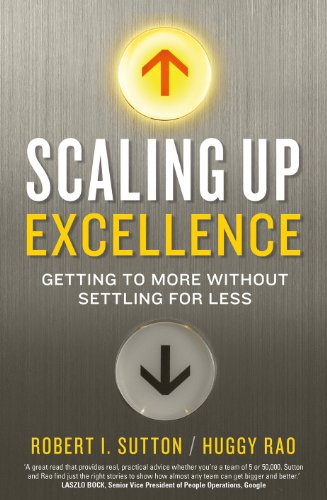
Positive Leadership: Scaling Up Excellence

Stanford Professor Bob Sutton shares principles and colorful examples from his most recent book, Scaling Up Excellence, co-authored by Huggy Rao. 

Touching on concepts around emotion, complexity, and connecting people, Sutton explains why scaling is about spreading and sustaining a mindset, not just a footprint.


Share/Save/Bookmark

Monday, January 13, 2014

Positive Leadership: Scaling Up Excellence

In Scaling Up Excellence, Stanford faculty Robert Sutton and Hayagreeva "Huggy" Rao tackle a challenge that determines every organisation's success: scaling up farther, faster, and more effectively as a programme or an organisation creates a larger footprint. 

Sutton and Rao have devoted much of the last decade to uncovering what it takes to build and uncover pockets of exemplary performance, to help spread them, and to keep recharging organisations with ever better work practices. 

Drawing on inside accounts and case studies and academic research from a wealth of industries -- including start-ups, pharmaceuticals, airlines, retail, financial services, high-tech, education, non-profits, government, and healthcare -- Sutton and Rao identify the key scaling challenges that confront every organisation.

They reveal how the best leaders and teams develop, spread, and instil the right mindsets in their people -- rather than ruining or watering down the very things that have fuelled successful growth in the past. They unpack the principles that help to cascade excellence throughout an organisation, as well as show how to eliminate destructive beliefs and behaviours that will hold them back.

Robert Sutton is professor of management science and engineering in the Stanford Engineering School. His previous books include Good Boss, Bad Boss: How to be the Best...and Learn from the Worst, and The No Asshole Rule: Building a Civilised Workplace and Surviving One That Isn't. Huggy Rao is professor of organisational behaviour at Stanford Graduate School of Business, and the author of Market Rebels: How Activists Make or Break Radical Innovations.


Share/Save/Bookmark

Monday, September 23, 2013

Positive Leadership: Thinking Like a Champion

We meet and learn from champions every day. We have learned that to be a champion you must ‘Think like a Champion’. Champions think differently than everyone else. They approach their life and work with a different mindset and belief system that separates them from the pack.

1. Champions Expect to Win - When they walk on the court, on the field or into a meeting they expect to win. In fact they are surprised when they don't win. They expect success and their positive beliefs often lead to positive actions and outcomes. They win in their mind first and then they win in the hearts and minds of their customers or fans.

2. Champions Celebrate the Small Wins - By celebrating the small wins champions gain the confidence to go after the big wins. Big wins and big success happen through the accumulation of many small victories. This doesn't mean champions become complacent. Rather, with the right kind of celebration and reinforcement, champions work harder, practice more and believe they can do greater things.

3. Champions Don't Make Excuses When They Don't Win - They don't focus on the faults of others. They focus on what they can do better. They see their mistakes and defeats as opportunities for growth. As a result they become stronger, wiser and better.

4. Champions Focus on What They Get To Do, Not What They Have To Do - They see their life and work as a gift not an obligation. They know that if they want to achieve a certain outcome they must commit to and appreciate the process. They may not love every minute of their journey but their attitude and will helps them develop their skill.

5. Champions Believe They Will Experience More Wins in the Future - Their faith is greater than their fear. Their positive energy is greater than the chorus of negativity. Their certainty is greater than all the doubt. Their passion and purpose are greater than their challenges. In spite of their situation champions believe their best days are ahead of them, not behind them.

If you don’t think you have what it takes to be a champion, think again. Champions aren’t born. They are shaped and moulded. And as iron sharpens iron you can develop your mindset and the mindset of your team with the right thinking, beliefs and expectations that lead to powerful actions.

Share/Save/Bookmark

Monday, September 16, 2013

Positive Leadership: Teamwork Exemplified


The record for the fastest pit stop in Formula One history was broken not once but five times in Malaysia earlier this year.

Back in the early 1990s, fast F1 pit stops were timed at around 4.5 seconds. The fastest even closed in on 4.1 seconds – but anything close to halving that would simply have been unimaginable.

Mark Webber’s Red Bull was stationary for just 2.05 seconds when it had all four wheels changed on lap 19 of the Malaysian Grand Prix.

“It’s possible this season we’ll see the magical two-second barrier breached at some point,” said the team.

“However, rather than chasing individual times, improving consistency is always the thing coveted by the crew: breaking records is merely the consequence of doing that well.”

Share/Save/Bookmark

Monday, September 09, 2013

Positive Leadership: Making Sound Decisions Under Pressure


Here are a solid set of principles for making sound decisions under pressure:

1. Remove the rose-coloured glasses: A good cost-benefit appraisal can be trickier than you think. Why? Because most of us tend to underestimate costs and overestimate benefits – and to be generally optimistic about our ability to make things happen. Our analyses inevitably bend toward the outcomes we’re hoping for. Good decision-makers are wary of wishful thinking. Get a second or third opinion from skeptics you trust — the advisers who'll push back and make you defend your assessments.

2. Wield the red pen ruthlessly: When it comes to picking ideas, separate the elephants from the ants. Cross off everything but the top few priorities, and make sure you haven’t fallen in love with pet projects and ‘hobbies’ whose time may have passed. When it’s clear a pet project is ailing, hurry up and get out the rifle (so to speak). A few, clear, simple goals are more likely to yield results than complex “perfect decisions” that can bog down an organisation.

3. Don’t fall in love with percentages: Everyone likes a tenfold return, but you’re not going to be noticed by the Wall Street Journal for turning $10,000 into $100,000. A mere doubling of $500 million into $1 billion, however, could be worth spilling some ink over. In many business decisions, it’s the long-term return that matters, and the highest absolute benefit wins over the highest percentage benefit.

4. Don’t delay the decision: Time is rarely on your side. We have yet to hear an executive say he made a tough call too soon. The same goes for making personnel decisions: if you’re not looking for ways to promote or keep current team members, it may be time to think about replacing them.

5. Feel the fear and do it anyway: Be careful about letting your feelings warp your perception of the situation. Fear can make you freeze up; but in almost every case, it’s better to make a call and deal with consequences than to leave things in limbo. Look the circumstances squarely in the face. As Sir Winston Churchill said, "courage is the first of human qualities because it is the quality which guarantees all others.”

6. What would Kant do? It should go without saying that you want your decision to be an ethical one. So if your ethical compass needs a bit more calibrating, remember Immanuel Kant. His “categorical imperative” is a useful thought experiment to help you decide if you’re doing the right thing. It’s a bit like “The Golden Rule” on steroids: what if everyone in the world, in your shoes, always made the same choice you’re about to make? If that's a world you’d want to live in, you’re okay in Kant’s book.

7. But can you execute it? Good decisions can become great ones if you execute them well. So for every one of your options, think about whether it’ll be easy to explain to your team and your organisation, or if it’s likely to be lost in translation. Will people be enthusiastic about making it happen? If not, maybe the idea's not as good as it looked on paper.

8. Think forward: Don’t relive past decisions – good or bad. Circumstances change, people change, and you change. Dwelling on past glories or failures is dangerous and unproductive.

9. Borrow wisdom: You’re probably not the first person to face a given predicament, so seek out anyone who might have been there before. Mentors have seen a lot of things – find a good one if you can. And make a habit of reading about how past leaders made momentous choices.

Many of us have come to rely on our instincts to cut through the jungle of choices we face every day. Be careful, though: good intuition is not the same as good decision-making. In business, intuition works, but only in conjunction with calculation. Like a chess master, you should pick your move after weighing the outcomes. Then make it, implement it, and start thinking about the next one.

Share/Save/Bookmark

Sunday, June 16, 2013

Tuesday, May 14, 2013

Positive Leadership: Turning Pressure into an Asset


Pressure is nothing more than the shadow of great opportunity.’ – Michael Johnson, US Olympic Gold Medallist

Here are six things experienced leaders do that transform pressure from a liability to an asset:

Know Thyself: Leaders must know themselves, their strengths and weaknesses, and where they will and won’t compromise. When a leader is comfortable in their own skin they won’t fear dissenting opinion and diversity of thought, they’ll encourage it. Knowing who you are frees you to become a better thinker and a better leader.

Lead: A leader’s job is to acquire and develop talent. The larger the organisation you lead, the more your performance is dependent upon the talent of your team. The better the talent, and the better you utilise talent, the less pressure you’ll feel. The key to capacity, throughput, and scale is not found by doing – but by developing others to do. Leaders who feel the least amount of pressure are those who spend the most time acquiring and developing talent. Conversely, leaders who feel the most pressure are those who feel they must do everything themselves.

Keep It Simple: Complexity creates pressure. The best leaders look to simplify everything they can. Simplicity rarely equates to a lack of sophistication – it actually demonstrates remarkable elegance. Simplicity drives understanding, which leads to a certainty of execution. One truism you can count on is performance relives pressure.

Get Alignment: Great leaders strive for the following: one vision – one team – one agenda. Organisations that have a shared purpose, common values, and aligned interests are simply more productive than organisations that don’t. Alignment of values and vision take the complexity out of decision-making, and removes the ambiguity from the process of prioritisation. Leaders who have organisational alignment feel less pressure than those who don’t.

Focus: Focused leaders rarely feel external pressure. Unfocused leaders feel as if pressure is coming at them from all directions. Focus affords leaders clarity of thought that a cluttered mind will never realise. It’s not possible to lead an organisation toward a better future when a leaders mind can’t see through the fog. An organisation is never under greater pressure, or at greater risk, than when leaders lose their focus.

Create Whitespace: The best way to maintain focus is to make sure you’ve allowed for some whitespace EVERY day. Any rubber band stretched too tightly will eventually snap – there are no exceptions to this rule. Leaders who don’t create time for quality thought and planning end-up taking unnecessary short cuts and risks. They let pressure force them into making bad decisions that a little whitespace could have prevented.

Share/Save/Bookmark

Tuesday, April 30, 2013

Positive Leadership: Making Sound Decisions Under Pressure


Here are a solid set of principles for making sound decisions under pressure:

1. Remove the rose-coloured glasses: A good cost-benefit appraisal can be trickier than you think. Why? Because most of us tend to underestimate costs and overestimate benefits – and to be generally optimistic about our ability to make things happen. Our analyses inevitably bend toward the outcomes we’re hoping for. Good decision-makers are wary of wishful thinking. Get a second or third opinion from sceptics you trust — the advisers who'll push back and make you defend your assessments.

2. Wield the red pen ruthlessly: When it comes to picking ideas, separate the elephants from the ants. Cross off everything but the top few priorities, and make sure you haven’t fallen in love with pet projects and ‘hobbies’ whose time may have passed. When it’s clear a pet project is ailing, hurry up and get out the rifle (so to speak). A few, clear, simple goals are more likely to yield results than complex “perfect decisions” that can bog down an organisation.

3. Don’t fall in love with percentages: Everyone likes a tenfold return, but you’re not going to be noticed by the Financial Times for turning £10,000 into £100,000. A mere doubling of £500 million into £1 billion, however, could be worth spilling some ink over. In many business decisions, it’s the long-term return that matters, and the highest absolute benefit wins over the highest percentage benefit.

4. Don’t delay the decision: Time is rarely on your side. When did you last hear an executive say he made a tough call too soon. The same goes for making personnel decisions: if you’re not looking for ways to promote or keep current team members, it may be time to think about replacing them.

5. Feel the fear and do it anyway: Be careful about letting your feelings warp your perception of the situation. Fear can make you freeze up; but in almost every case, it’s better to make a call and deal with consequences than to leave things in limbo. Look the circumstances squarely in the face. As Sir Winston Churchill said, "courage is the first of human qualities because it is the quality which guarantees all others.”

6. What would Kant do? It should go without saying that you want your decision to be an ethical one. So if your ethical compass needs a bit more calibrating, remember Emmanuel Kant. His “categorical imperative” is a useful thought experiment to help you decide if you’re doing the right thing. It’s a bit like “The Golden Rule” on steroids: what if everyone in the world, in your shoes, always made the same choice you’re about to make? If that's a world you’d want to live in, you’re okay in Kant’s book.

7. But can you execute it? Good decisions can become great ones if you execute them well. So for every one of your options, think about whether it’ll be easy to explain to your team and your organisation, or if it’s likely to be lost in translation. Will people be enthusiastic about making it happen? If not, maybe the idea's not as good as it looked on paper.

8. Think forward: Don’t relive past decisions – good or bad. Circumstances change, people change, and you change. Dwelling on past glories or failures is dangerous and unproductive.

9. Borrow wisdom: You’re probably not the first person to face a given predicament, so seek out anyone who might have been there before. Mentors have seen a lot of things – find a good one if you can. And make a habit of reading about how past leaders made momentous choices. Many of us have come to rely on our instincts to cut through the jungle of choices we face every day. Be careful, though: good intuition is not the same as good decision-making. In business, intuition works, but only in conjunction with calculation. Like a chess master, you should pick your move after weighing the outcomes. Then make it, implement it, and start thinking about the next one.

Share/Save/Bookmark

Tuesday, January 29, 2013

Positive Leadership: Irrational Optimism


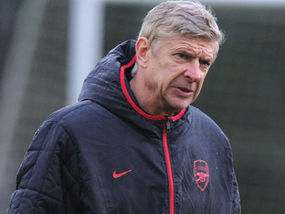
In Bounce, Matthew Syed quotes Arsenal manager Arsene Wenger, one of the most successful football (soccer) coaches in the English Premier League, on how athletes must approach competition:

'To perform to your maximum you have to teach yourself to believe with an intensity that goes way beyond logical justification. No top performer has lacked this capacity for irrational optimism; no sportsman has played to his potential without the ability to remove doubt from his mind.'

Share/Save/Bookmark

Monday, October 15, 2012

Positive Leadership: Heroic Leadership

After flying to an altitude of 39,045 meters (128,100 feet) in a helium-filled balloon, Felix Baumgartner yesterday completed a record breaking jump for the ages from the edge of space, exactly 65 years after Chuck Yeager first broke the sound barrier flying in an experimental rocket-powered airplane.

Felix reached a maximum of speed of 1,342.8 km/h (833mph) through the near vacuum of the stratosphere before being slowed by the atmosphere later during his 4:20 minute long freefall. The 43-year-old Austrian skydiving expert also broke two other world records (highest freefall, highest manned balloon flight), leaving the one for the longest freefall to project mentor Col. Joe Kittinger. 

For more on this heroic example of teamwork and excellence under pressure, see:   


Share/Save/Bookmark

Thursday, July 19, 2012

Positive Leadership: Our Offer to You


What do the recent Barclays LIBOR scandal and the ‘humiliating shambles’ of the G4S Olympics security operation have in common?

One thing is certain – leadership which has failed to deliver optimum performance and results when put under pressure.

Leadership cannot exist in a vacuum in any organisation – it impacts business strategy in a multitude of ways. Oftentimes, leaders fail to appreciate this connection or at the very least, are unprepared for the effects of pressure on strategy and behaviour.

Executing business strategy successfully in situations of high pressure and delivering optimum results requires proven leadership which appreciates the underpinning importance of a values based leadership culture throughout the organisation.

At Positive Leadership, we have developed a proprietary values based approach to optimising business results. For us, it is the interaction and close synergy between leadership values and business strategy that delivers such an outcome on a consistent basis. Our Values of Positive Leadership™ are based on extensive research and many years of business experience.

We work with our clients advising them on how to excel under pressure. Our involvement is client/transaction specific and typically involves a combination of transaction based advice, leadership coaching and management mentoring.

We are confident that our approach will help you deliver improved bottom line performance and equip you and your fellow leaders with the understanding, skills and awareness to ensure that optimum performance and results are delivered, even under pressure, unlike the leaders of Barclays and G4S.

If you would like to speak with us to learn more about our ideas and to benefit from a no-cost initial consultation, please contact graham.watson@positiveleadership.co.uk

Share/Save/Bookmark

Monday, June 25, 2012

Positive Leadership: Visualisation as a Tool for Peak Performance


How do athletes, and others who take performance very seriously, bring out the best in themselves?

Athletes began to use leading-edge techniques like mental rehearsal and focused concentration years before the general public had even heard of them. Jack Nicklaus, for example, said that he would "watch a movie" in his head before each shot.  

These days, thanks to many researchers, we know more. Peter Fox and his colleagues at the University of Texas monitored people's brain activities as they performed various body movements and also as they imagined performing the movements. They found that the actual physical movement consistently involved the interaction of several specific areas of the brain. Imagining the movement activated those same areas of the brain. 

In other words, mental rehearsal of an action puts the mind through a neural workout that is very much like the real thing.  

So whether you're trying to break your own personal best record in a sport or sell a new car to an ambivalent customer, mental rehearsal, or visualisation, can help you prepare for peak performance by walking you through successful strategies and potential pitfalls.

Share/Save/Bookmark

Monday, June 11, 2012

Positive Leadership: Excellence Under Pressure


Two people who had survived intense pressure and tasted success last year were Graham Henry and Richie McCaw. As respective coach and captain of the All Blacks they were tasked with bringing home the Rugby World Cup silverware and a nation of five million supporters weren’t going to accept anything less.

Success in sport can often hinge on how much a team wants to win and in high stakes situations mental toughness can play a crucial role.

Henry believes that his eight years coaching the All Blacks proved mentally tougher for his family than for him. "They go through more difficult times than you, because they have no control over it, and you have. You're at the coalface, doing the job, and it dissipates the pressure; you are so involved in the process you don't worry too much about the result.”

Henry is now passing on his knowledge to other sporting teams as a “mentor”. He’s involved with Super 15 rugby team the Blues, Argentina’s national rugby team the Pumas, and Sport New Zealand’s emerging coaches from disciplines such as yachting and cycling.

In a recent interview, Richie McCaw opened up about the sort of pressure he is under as All Blacks captain. “There is always pressure going into any match, I have accepted that. Everyone expects the All Blacks to win every time they go on the field. If you try and say there is no pressure you are kidding yourself. I try to put it aside and just be excited by the opportunity.”

He goes on to say that being the best player he can be is key to supporting his team. Walking the talk and leading by example are traits of role model Todd Blackadder (former All Black), which Richie hopes to emulate.

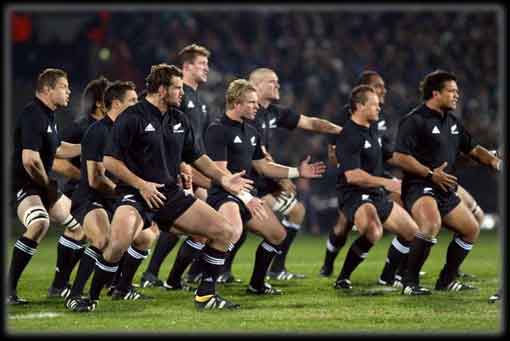
Psyching yourself up is a particularly effective mental toughness tool and we all do it before a big occasion because it helps to give us courage or the “edge”. Perhaps it is no coincidence that the world’s most successful rugby team, the All Blacks, also have the most elaborate mental warm up – the Haka!


Share/Save/Bookmark

Monday, April 30, 2012

Positive Leadership: Preparing to Excel Under Pressure

How well do you prepare to excel under pressure?

The London Summer Olympics are nearly three months from now with the opening ceremony on July 27. However, the training several U.S. Olympians have done with the US Navy SEALs — 10 U.S. teams in Olympic sports have been through at least one session in recent years — is an arduous, indelible part of their preparation.

“I guess what I took away from that was the human body can always achieve more than we believe. And that's controlled purely by our minds." US Olympic gold medallist Garrett Weber-Gale 

The fatigue is so consuming the SEALs advise them at certain points to focus only on their next step — to ignore the discomfort of the elements, the aches shooting through their muscles, the doubts plaguing their minds, and to simply put one foot in front of the other.

"You can't buy what they're going to teach them in four hours," says Wendy Borlabi, a sport psychologist with the U.S. Olympic Committee, who adds the training is especially beneficial to athletes who compete in individual sports. "They're learning what they're doing is bigger than themselves," Borlabi says. "It's different than when they're training for the Olympics, which is all centred on them. "The growth, I think, is astronomical." 

For more, see: : http://www.usatoday.com/sports/olympics/story/2012-04-16/navy-seals-olympics/54506732/1


Share/Save/Bookmark

Tuesday, April 10, 2012

Positive Leadership: Building a Winning habit with the Golf Boys


Share/Save/Bookmark

Monday, April 09, 2012

Positive Leadership: Dealing with Pressure


In today's VUCA (Volatile, Uncertain, Complex, Ambiguous) world, we're surrounded constantly by stress and pressure.

Some people always enjoy pressure. Pressure situations to them are the very essence of life. They are a privilege to enjoy. When you are feeling the pressure it means you are in the game and you must be close to achieving something very important.

This advice about pressure is relevant to life, sport and business. 

1. Work, work, work and focus on the fundamentals

You should always believed in controlling what you can control and not worrying about what your competitors might do. In a new business pitch you should never bother with who else is pitching. All you should focus on is doing what you do best and ensuring you deliver your best on the day. To do this usually means you have to work harder than those you are competing against.

2. Keep it simple

Ignore the politics, the possibilities, the past, and what might happen. Don't over rehearse, don't get into too much detail, just push yourself to be great and deliver the winning outcome.

3. Every game is the same. 

The only thing that changes in the final pitch is the importance of winning or losing. If it's a huge new business opportunity, then the stakes are high. But the game is no different than the game we play every day. The rules are the same. So focus on the game plan, not on the consequences.

4. Play in the now

Our brains crave control and certainty. Therefore, focus on the controllables. It is what we can do that counts, not what the other people might be doing.

5. Don't fear losing

You should have no fear of failure. Winning never comes easy, is rarely predictable, and never follows a straight line. Setbacks always happen. Accept it and you will reduce the stress when they occur. Your energy should then be refocused on the task at hand and handling the problem, not on increasing the stress levels. Setbacks should be converted into passionate feel and belief.

Sean Fitzpatrick, the former All Blacks rugby captian once said that when his team lost a test match, they gathered together and absorbed the pain together. Sean told them to hold that feeling so they knew how badly it felt and they would do anything to avoid it in the future.

Pressure. Bring it on.

Share/Save/Bookmark

Thursday, March 29, 2012

Positive Leadership: #gostanford Pre-Game Speech

Good luck to the Stanford Men's Basketball team in tonight's NIT final.

With pre-game speeches like this they should be in good shape!


Share/Save/Bookmark

Friday, November 18, 2011

Positive Leadership: Clutch!

When asked, are you clutch? Author of Clutch, Paul Sullivan answers: “Yes and no. (…) I’ve been clutch in my personal and professional life, and these have been the areas that have mattered most. But not in golf. What I learned, alas, was that since being clutch isn’t a mystical ability that can be bestowed on somebody, it takes work. But at least for me I know what to do now.”

These are the five traits of people who are 'clutch':
  • Focus
  • Discipline
  • Adaptability
  • Being present
  • Plus the push and pull of fear and desire.
In this video, Paul Sullivan explains what it means to be Clutch, and how you too can thrive in high pressure situations.


Share/Save/Bookmark

Monday, November 14, 2011

Positive Leadership: The Source of Pressure


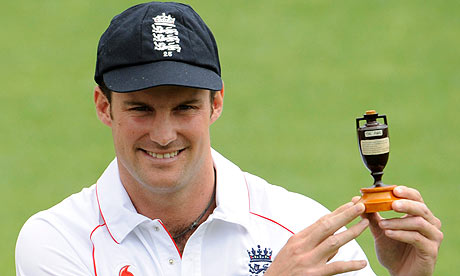
‘Pressure is a heavy feeling that weighs upon your shoulders and it’s brought upon yourself. A lot of other people think it’s brought upon you. Pressure is something you bring on yourself because of your insecurities, your own lack of form, and your concern about the opposition. It can be very different for different people. One person won’t feel it under in any given circumstance and another will feel it greatly. It’s hard to define but when we are feeling it we all know it’s there.’  Andrew Strauss, England Cricket Captain

Events do not create pressure it is only our internal thoughts that do that.  We are responsible for our mind and how it behaves. Therefore the more we train our mind, the better we are able to deal with pressure.

Share/Save/Bookmark