Positive Leadership has also been recognised as a Top 50 Leadership Expert to Follow on Twitter.

Follow us on Twitter @posleadership


LEADERSHIP IS A PROCESS OF SOCIAL INFLUENCE, WHICH MAXIMISES THE EFFORTS OF OTHERS TOWARDS THE ACHIEVEMENT OF A SHARED GOAL.
Showing posts with label Openness. Show all posts

Tuesday, August 07, 2012

Positive Leadership: Honesty is the Best Policy

Good leadership springs from a willingness to recognize uncomfortable truths and to be honest and forthright in tackling them, writes former Tesco CEO Terry Leahy. A keen sense of right and wrong underpins every successful business strategy and helps inspire workers during trying times. "Simple though it may sound, the truth is the best compass to guide one through the storm," Leahy writes.

For more, see: http://online.wsj.com/article/SB10001424052702304870304577488572183024742.html

 
Share/Save/Bookmark

Thursday, July 19, 2012

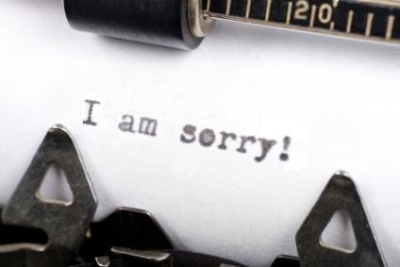
Positive Leadership: Courageous Leaders Apologise!


We are frequently taught that leaders, especially aspiring leaders, should hide weaknesses and mistakes. This view is flawed. It is not only good to admit you are wrong when you are; but also it can also be a powerful tool for leaders—actually increasing legitimacy and, when practiced regularly, can help to build a culture that actually increases solidarity, innovation, openness to change and many other positive features of organisational life.

Share/Save/Bookmark

Monday, May 28, 2012

Positive Leadership: The Keys to a Successful Leadership Strategy


What style of leadership works and what doesn't work in an organisation?

1) Strict hierarchical decision-making doesn't work. Shared consciousness or ‘smart autonomy’ - is what works.

Everyone — not just those on the top rungs of the organisational ladder — has to be empowered, but they must still look out for the needs of the whole organisation, not themselves.

2) Information ownership doesn't work. That's when people protect what they know without sharing it with others. It's a hindrance to an organisation.

It makes you more powerful but it makes the organisation weaker.

Inclusion and transparency is what works. Allowing information to flow between parts of an organisation, helps formulate ideas and foster trust.

3) Organisational equity doesn't work. It's the idea that everyone within the organisation is trying to make things "fair" for them in relation to their colleagues.

Having teams is what works, because it encourages collaboration and supports that "shared consciousness" idea.

If everybody on a football team scores plenty of goals, but you lose matches, you lost!

4) Command and control doesn't work. Micro-managing and imposing your will over much of an organisation stifles people.

Trust is what works. Without it, it's impossible to have autonomous parts of an organisation.

Share/Save/Bookmark

Wednesday, September 28, 2011

Positive Leadership: Sharing Accountability


Uncertainty necessitates the need for finding more wisdom within our organisations. This can only be accomplished by creating a leadership mindset throughout the entire organisation. It is shared accountability. Any leader that thinks that they can do it alone is indulging their own ego.

Do not assume that no one else on the premises can match our own ambition, competence, and vision. We have to accept the fact that there are many points of wisdom within our organisations and a wise leader will engage them. Too many leaders are not accustomed to accepting input from junior members no matter how valuable it is. This creates a lack of trust and openness. The currency of leadership is relationships and a wise leader would do well to encourage input from as many sources as possible and especially not from the usual suspects.

The concept of distributed leadership will keep you in touch with the environment. If you want to prepare people for this environment, you have to get leadership further down the organisation. We generally tend to drive managing down the organisation, but not leadership. However, in order to maximise the opportunity for success, we have to prepare for acts of leadership further down the organisation – even if it feels like an unnatural act to people sitting at the top.

Leadership needs to be the expected norm at all levels. 

Share/Save/Bookmark

Saturday, June 18, 2011

Positive Leadership: Openness and Transparency

Liz Elting is president and C.E.O. of TransPerfect, a translation service. This interview was conducted by Adam Bryant of the New York Times:

‘Q. When you started the company with your partner, did you have discussions about the culture you wanted to create?

A. Meritocracy was always a big concept to us — making sure that the best people were promoted and rewarded, and that is very much how we run our company now. Virtually all of the senior people at our company were promoted from within. Most of them started at entry-level positions. And so it’s very much a meritocracy. We also believe in holding people accountable. We’re also big believers in being completely open and transparent.

Q. Make that real for me. How do you do that?

A. We share with our people what’s going on in the company. We’re open with our financials because it’s better if they understand what’s going on. We make sure they’re clear on the vision and that they understand it. We also let them know our accomplishments and our challenges as well as our shared goals.
Here’s another example of being open: If we have a manager who says one thing, and another employee who says something else, and they come to us independently, we’ll put them together in a room with one of us and have a three-way conversation. There’s no reason to have side conversations. We simply bring everyone together, we talk about the issue, and we resolve it.

And when we have other meetings, we really encourage people to talk and let us know what’s on their minds so we can address it. We don’t want meetings to be a couple of people talking and everyone else listening. I do think people need to contribute. Some people are more executers, some people are more innovators, and some people are a combination but we need ideas. People often have them, and they don’t share them, so we need to encourage them.’


Share/Save/Bookmark

Tuesday, May 17, 2011

Positive Leadership: What New CEO's Need to Remember

What do you wish you’d done differently when you first became CEO?  

When asked this question, most CEO's will answer, “I wish I’d moved faster on talent decisions.”

Why? Because often their instinct tells them that the people are not aligned properly with the needs of their roles, and that the roles are not aligned with the business needs that are driven by the organisation’s new vision.  But there may be fear about sending disruptive signals by making dramatic changes, and by making them quickly.

And yet, upon reflection, that is almost always what they wish they’d done.

We believe that by doing the following seven things it is possible for CEOs and other C-suite executives to address talent alignment issues in a proactive and positive way, so that the organisation is galvanised for forward movement toward its vision as quickly as possible:

Make managing and growing your talent a top priority.  This means making it one of the top three items in every staff meeting and every strategy discussion.

Communicate openly about the importance – and the benefit to everyone in the company – of having positions aligned with the vision and strategies of the company, and of having the right people in those positions. 

At the same time, be committed to finding roles for the current employees that best align with their strengths, and thus “set them up” for success.

Be open about your willingness to work with employees who may be in positions that are not a great fit – to help them via coaching or mentoring – so that both they and the company are better off because of the process.

Make sure that talent decisions align with the values of the company.  Top performers that disrespect others and play by their own rules – and may have been allowed to do so under previous leadership – must be dealt with because of their impact on the organisation’s culture.

Remember that everything communicates.  Not addressing talent issues of non-performance speaks volumes. 

And remember the power you have to communicate, through words and actions, a genuine desire to see everyone succeed – and to mean it.

Share/Save/Bookmark

Thursday, April 07, 2011

Positive Leadership: Desired Traits for 'Good' Managers Revealed

Employees in Australasia now think trustworthiness and openness are the most important characteristic of a good manager.

Compared to this time last year, trustworthiness and openness has jumped from seventh to number one on the Top Ten Characteristics of a Good Manager list generated by Leadership Management Australasia (LMA).

The list has been drawn from LMA's late November 2010 L.E.A.D. (Leadership, Education and Direction) Survey of 3,000 employees across Australia and New Zealand, conducted by Chase Research*. The on-going L.E.A.D. Survey, which monitors workplace issues across all major sectors, has been running for 10 years.

This new perspective on the characteristics of a good manager is echoed in the growing importance of managers giving their people the space to do their work and supporting them at the same time (up from 5th to equal 2nd), and providing the resources employees need to do their job (up from equal 11th to equal 7th).

Characteristics of good managers - November 2010
Question.
 A person's working relationship with their immediate manager or managers, with whom they have frequent contact, can have a significant impact on their performance and satisfaction in their role. What would you say are the top five most important characteristics for a good manager to have, in order to positively influence your performance in your role at work?

Results


Characteristics of good managers (employee view)
Rank 2009
Rank 2010
Is trustworthy and open in approach
7
1
Clearly communicates where we are going
1
=2
Gives me the space to do my own work, but supports me
5
=2
Listens to and respects my input into decisions
4
4
Gives regular and honest feedback on how I am going
2
5
Is fair and even handed/makes reasonable demands
3
6
Provides the resources I need to do my job
=11
=7
Recognises me for extra efforts/results
10
=7
Coaches and develops me
9
9
Trusts me with challenging work
8

* 14% of the respondents were from New Zealand yielding the same results


Share/Save/Bookmark

Saturday, March 19, 2011

Positive Leadership: The New Approach to Being in Command

The long held concept of command-and-control leadership is being tested as organisations are experiencing the largest technological shift of our generation. 

Talk with your customers. Listen to your employees. These are well-tested truisms of business. But ask organisations to engage with people on Facebook or Twitter and a look of sheer terror crosses their faces.

In her newest book, Open Leadership: How Social Technology Can Transform the Way You Lead, Charlene Li addresses the challenges facing leadership given the dramatic impact social technologies have had on customer, partner, and employee relationships.


Share/Save/Bookmark

Sunday, March 13, 2011

Positive Leadership: Building Consensus and a Way Forward

One of the greatest challenges today is how to engage multiple stakeholders and/or large numbers of stakeholders in collectively crafting a way forward. How do you allow each person to be heard and yet craft a strategy to move forward in a reasonably timely fashion?

Traditional engagement methods fall short, but there is a process, which Positive Leadership often uses, that allows every voice to be heard and that enables groups of tens, hundreds or even thousands of people to swiftly tap their collective wisdom and collective find a way forward. This process is the World Café (http://www.theworldcafe.com/).


L180-100406-What is the World Cafe? from Ravi Tangri on Vimeo.
Share/Save/Bookmark

Sunday, October 17, 2010

UK leaders lag behind in the first global ranking of leadership effectiveness

The leaders of UK organisations are seen as less effective than their counterparts in India, China, Russia, the United States and Germany, according to a worldwide study by the Kenexa Research Institute (KRI).

The Kenexa Research Institute’s 2010 WorkTrends research report, entitled Exploring Leadership and Managerial Effectiveness, identifies what ‘followers’ want from their leaders and managers and it includes a global ranking of leadership effectiveness, showing which countries and industry sectors have the highest-rated leaders.

The study identifies ten ‘drivers’ of effective leadership - the characteristics that followers look for in their leaders. These include the ability to inspire trust and confidence; to value quality and customer service; to be open and communicative; to have a multi-stakeholder perspective, and to hold lower-level managers accountable for being ‘good managers’.

As part of the study, KRI created and applied a Leadership Effectiveness Index, which measures the extent to which employees believe their leaders communicate their vision, handle challenges, value employees, are committed to improving quality and inspire trust. According to this Index, India and China have the world’s most effective leaders.

The UK ranks 17th out of the 21 countries surveyed. The UK Leadership Effectiveness Index score (47%) lags a notable 25 percentage points behind India’s score (72%) and is below the global average score of 55%.

The study shows that, in the UK, effective leaders are mostly found in the manufacturing, healthcare and retail sectors. Government and financial services have the lowest rankings of leadership effectiveness.

The research also identifies the key priorities for leadership development. The two most significant are the need to build leadership trust and the need to engage in open, honest, two-way communication.

As well as focusing on leadership, Kenexa has also created a Managerial Effectiveness Index, which measures aspects such as a manager’s performance, their people and work management skills and whether they are trustworthy and inspirational. The results show that, according to employees, the most effective managers are those who are fair, communicative and involving, act as problem-solvers, provide recognition for a job well done, support employee growth and development and in general demonstrate an employee orientation.

Kenexa’s study highlights that effective leadership and management have a positive and significant impact on important financial performance metrics for organisations, such as diluted earnings per share and total shareholder return. They also have a beneficial and substantial influence on employee engagement and on organisational creativity and innovation. The study found that employee engagement levels can be five times higher if your leaders are more effective.


Share/Save/Bookmark

Wednesday, October 13, 2010

Create Candor in the Workplace

Jack Welch, former chairman of General Electric and author of  WINNING tells his audience to foster honest feedback: "If you reward candor, you'll get it."


Share/Save/Bookmark

Friday, May 14, 2010

Trust Starts With Clarity

Leaders must take the lead in building trust throughout their organisation and in individual teams.

Trust starts with clarity. Without clarity neither side in a relationship has confidence in where they stand. This means each person in the team relationship must be committed to specific and clear communication, otherwise, misunderstandings will occur causing a breakdown in trust.

One area leaders need to invest time in is ensuring specific communication is an expectation in their organisation and is one of its core values against which performance is measured.

Openness and Communication are important values in the Positive Leadership approach to building a robust leadership strategy.

Share/Save/Bookmark

Sunday, April 18, 2010

Openness and Communication

Openness and Communication are two values of Positive Leadership.

‘It is the mark of an educated mind to be able to entertain a thought without accepting it.’ Aristotle

‘The day soldiers stop bring you their problems is the day you have stopped leading them.’ General Colin Powell

‘Having the confidence to adapt quickly to any situation, use honesty, humility and humour in the conversation, and interact as a positive force in the community.’ Steve Shenbaum

Here are some reference materials which speak to these values:


Share/Save/Bookmark