Positive Leadership has also been recognised as a Top 50 Leadership Expert to Follow on Twitter.

Follow us on Twitter @posleadership


LEADERSHIP IS A PROCESS OF SOCIAL INFLUENCE, WHICH MAXIMISES THE EFFORTS OF OTHERS TOWARDS THE ACHIEVEMENT OF A SHARED GOAL.
Showing posts with label Teamwork. Show all posts

Wednesday, September 25, 2013

Positive Leadership: Great Teams Are a Mix of Old and New

The best teams, we tend to think, are like a band of brothers. They have been together for a long time. They know each other extremely well. And they are more successful as a result. It’s common sense, right?

Well, it turns out that great teams — the most creative, the most innovative — are more temporary in nature than you would think. 

Take Broadway. The best productions, researchers have found, are made up of rag-tag groups — a mix of old and new faces. The old faces bring knowledge of the best processes and the best working methods, and the new folks bring a fresh creative spirit to the table. 

The most innovative companies work in similar ways, too. Ad-hoc teams form around a given project, then disband. But it’s not so easy pull off — in order for this to work, the entire organisation has to be diverse enough in order to make temporary teams a reality.

Share/Save/Bookmark

Monday, September 16, 2013

Positive Leadership: Teamwork Exemplified


The record for the fastest pit stop in Formula One history was broken not once but five times in Malaysia earlier this year.

Back in the early 1990s, fast F1 pit stops were timed at around 4.5 seconds. The fastest even closed in on 4.1 seconds – but anything close to halving that would simply have been unimaginable.

Mark Webber’s Red Bull was stationary for just 2.05 seconds when it had all four wheels changed on lap 19 of the Malaysian Grand Prix.

“It’s possible this season we’ll see the magical two-second barrier breached at some point,” said the team.

“However, rather than chasing individual times, improving consistency is always the thing coveted by the crew: breaking records is merely the consequence of doing that well.”

Share/Save/Bookmark

Monday, July 08, 2013

Positive Leadership: Congratulations Andy Murray!

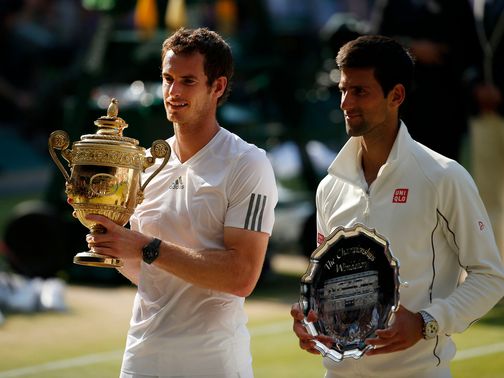
Congratulations to Andy Murray - handling the weight of expectations of a whole nation - a true performance under pressure. Murray has shown that with dedication and great teamwork, allied to the resilience and learning which comes from past disappointments, any goal can be achieved. In defeat, Novak Djokovic demonstrated real sportsmanship and he is to be applauded for that. Hopefully, we Scots will not have to wait another 117 years for a Men's Singles champion at Wimbledon! 


Share/Save/Bookmark

Thursday, June 06, 2013

Positive Leadership: 5 Disciplines of High Performance Teams


Share/Save/Bookmark

Tuesday, March 19, 2013

Positive Leadership: Lessons from Phil Jackson


Phil Jackson is a retired American professional basketball coach and former player. Jackson is widely considered one of the greatest coaches in the history of the National Basketball Association. He was the head coach of the Chicago Bulls from 1989 until 1998, during which Chicago won six NBA titles. His next team, the Los Angeles Lakers, won five NBA titles from 2000 until 2010.

His coaching career offers many leadership lessons, among them:


1. Teamwork

Phil Jackson believed strongly in teamwork. His employment of the triangle offense showed his thoughts about how a team should work together, having no one ‘glorified’ at the expense of the rest.
Although he had big characters like Dennis Rodman or Kobe Bryant in his team, he never allowed these stars to become the centre of the team. He emphasised a team centred form of play that became very successful in the NBA.

It is the same for all teams. A good team leader knows how to use each member’s strengths to their advantage. While it is sometimes tempting to glorify the “CEO” to above the rest of the company, it is important to note that the best companies in the world don’t have “Stars”.

2. Role playing

Phil Jackson used the power of role playing in his practices. It is said that in a practice against an important opponent, Jackson had one of his players of a similar build dress exactly like his opponent so that his players could visualise beating and overcoming him in practice.

Events often happen in the imagination of a person before they are brought into reality. You, too, use the power of role-playing to help your team visualise the success before they actually have it.


Share/Save/Bookmark

Friday, March 01, 2013

Positive Leadership: Being a Great Team Member


Good teams have the skill to win games; the great teams have the skill and the will to win games! The will to get through difficult times!

Deep down inside we all know we can't do it alone. We know that Cup Finals are not won by individuals. They are won by a collection of individuals who make a great team. It's the same with work and life. We are better together when we are surrounded by great team members.  Here are none ways to be a great team member.

1. Set the Example - Instead of worrying about the lack of performance, productivity and commitment of others you simply decide to set the example and show your team members what hard work, passion and commitment looks like. Focus on being your best every day. When you do this you’ll raise the standards and performance of everyone around you.

2. Use Your Strengths to Help the Team - The most powerful way you can contribute to your team is to use your gifts and talents to contribute to the team's vision and goals. Without your effort, focus, talent and growth the team won't accomplish its mission. This means you have an obligation to improve so you can improve your team. You are meant to develop your strengths to make a stronger team. Be selfish by developing you and unselfish by making sure your strengths serve the team.

3. Share Positive Contagious Energy - Research shows emotions are contagious and each day you are infecting your team with either positive energy or negative energy. You can be a germ or a big dose of Vitamin C. When you share positive energy you infectiously enhance the mood, morale and performance of your team. Remember, negativity is toxic and will sabotage teams. Complaining is like vomiting. Afterwards you feel better but everyone around you feels sick.

4. Know and Live the Magic Ratio - High performing teams have more positive interactions than negative interactions. 3:1 is the ratio to remember. Teams that experience interactions at a ratio equal or greater than 3:1 are more productive and higher performing than those with a ratio of less than 3:1. Teams that have a ratio of 2:1, 1:1 or more negative interactions than positive interactions become stagnant and unproductive. This means you can be a great team member by being a 3 to 1’er. Create more positive interactions. Praise more. Encourage more. Appreciate more. Smile more. High-five more. Recognise more. Energise more.

5. Put the Team First - Great team players always put the team first. They work hard for the team. They develop themselves for the team. They serve the team. Their motto is whatever it takes to make the team better. They don’t take credit. They give credit to the team. To be a great team member your ego must be subservient to the mission and purpose of the team. It’s a challenge to keep our ego in check. It’s something most of us struggle with because we have our own goals and desires. But if we monitor our ego and put the team first we’ll make the team better and our servant approach will make us better.

6. Build Relationships - Relationships are the foundation upon which winning teams are built and great team members take the time to connect, communicate and care to build strong bonds and relationships with all their team members. You can be the smartest person in the room but if you don’t connect with others you will fail as a team member. It’s important to take the time to get to know your team members. Listen to them. Eat with them. Learn about them. Know what inspires them and show them you care about them.

7. Trust and Be Trusted - You can’t have a strong team without strong relationships. And you can’t have strong relationships without trust. Great team members trust their teammates and most of all their team members trust them. Trust is earned through integrity, consistency, honesty, transparency, vulnerability and dependability. If you can’t be trusted you can’t be a great team member. Trust is everything.

8. Hold Them Accountable - Sometimes our team members fall short of the team's expectations. Sometimes they make mistakes. Sometimes they need a little tough love. Great team members hold each other accountable. They push, challenge and stretch each other to be their best. Don’t be afraid to hold your team members accountable. But remember to be effective you must built trust and a relationship with your team members. If they know you care about them, they will allow you to challenge them and hold them accountable. Tough love works when love comes first. Love tough.

9. Be Humble - Great team members are humble. They are willing to learn, improve and get better. They are open to their team member's feedback and suggestions and don’t let their ego get in the way of their growth or the team’s growth. If we're not humble we won’t allow ourselves to be held accountable. We won’t grow. We won’t build strong relationships and we won’t put the team first. There’s tremendous power in humility that makes us and our team better.

Share/Save/Bookmark

Monday, December 31, 2012

Positive Leadership: How to Build a Great Company from Scratch

Steve Blank, serial entrepreneur, Founder of E.piphany and Stanford consulting associate professor, says team building is an important skill for entrepreneurs. 

Startups are about putting together an orchestra. It's not about playing a single instrument.

Share/Save/Bookmark

Monday, October 15, 2012

Positive Leadership: Heroic Leadership

After flying to an altitude of 39,045 meters (128,100 feet) in a helium-filled balloon, Felix Baumgartner yesterday completed a record breaking jump for the ages from the edge of space, exactly 65 years after Chuck Yeager first broke the sound barrier flying in an experimental rocket-powered airplane.

Felix reached a maximum of speed of 1,342.8 km/h (833mph) through the near vacuum of the stratosphere before being slowed by the atmosphere later during his 4:20 minute long freefall. The 43-year-old Austrian skydiving expert also broke two other world records (highest freefall, highest manned balloon flight), leaving the one for the longest freefall to project mentor Col. Joe Kittinger. 

For more on this heroic example of teamwork and excellence under pressure, see:   


Share/Save/Bookmark

Thursday, September 27, 2012

Positive Leadership: Assessing Team Performance and Potential


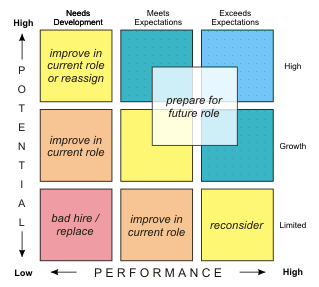
The performance and potential matrix (9 box model) is one of the most widely used tools in succession planning and development. It can be a valuable tool for anyone who works in talent management, or for any manager.

The performance and potential matrix, commonly referred to as “the nine box”, is a simple yet effective tool used to assess talent in organisations. It assesses individuals on two dimensions – their past performance and their future potential.

The X axis (horizontal line) of 3 boxes assesses leadership performance and the Y axis of 3 boxes (vertical line) assesses leadership potential. A combination of Y and X axis makes up the box within the grid that the leader is placed. 1A - High Performance/High Potential, 3C - Low Performance/Low Potential, etc...

The tool is best if used by a team and facilitated by someone who has experience with the process. 


For more, see: http://www.linkageinc.com/thinking/linkageleader/Documents/Jon_Warner_Using_a_Performance_and_Potential_Grid_to_Guide_Coaching_Interventions.pdf


Share/Save/Bookmark

Saturday, September 08, 2012

Positive Leadership: The Molecule Behind Effective Teamwork


Paul Zak, author of "The Moral Molecule," explains how oxytocin boosts cooperative behaviour.

Share/Save/Bookmark

Wednesday, August 29, 2012

Positive Leadership: Team Turnarounds


In today’s uncertain economic environment, teams are asked to do more with less. With resources stretched thin, turning around a struggling team has never been harder, and managers must work to identify and maximise whatever potential strengths a team already has. As sports fans already know, behind every great underdog story is a leader who roots out the competitive advantage that will propel the team to victory. In their excellent book, Team Turnarounds, Joe Frontiera and Dan Leidl share how this fine art of the turnaround really works, from how to inspire the team to the actual tools for change.

Share/Save/Bookmark

Monday, August 20, 2012

Positive Leadership: There Is an I in Team


Mark de Rond is a professor of Strategy and Organisation at Cambridge University's Judge Business School, where was CEO in Residence for several years. 

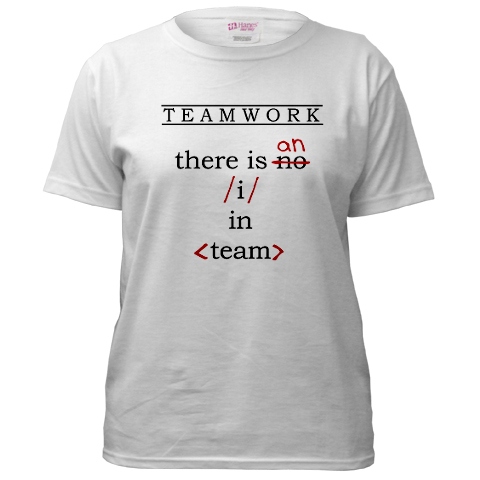
He has just released the book There Is an I in Team: What EliteAthletes and Coaches Really Know About High Performance that looks at what business can learn from the world of professional sport and how focusing on individual potential elevates team performance. The book is  readable, teachable, innovative and insightful.

According to the author, there are six ways to raise your team performance:
  • The best teams are made up of individuals.
  • Know your limits. How much are you willing to tolerate – even from your most talented team members?
  • “Star performers” are great but be mindful that everyone has their unique strengths. Amazing talent is not transferable.
  • Team players need to be aware that what may work for them as individuals does not necessarily work in a group.
  • Tension within the team may be uncomfortable, but that is not the same as dysfunctional.
  • Create an open environment where people can have their say.


Share/Save/Bookmark

Tuesday, August 14, 2012

Positive Leadership: Support Networks and Success

Procter & Gamble launched its "Thank You, Mom" campaign at the Vancouver Games in 2010. A critical and commercial success, the campaign returned for London 2012. In one execution, a re-working of its 2010 Winter Olympics 'Thank you, mom’ spot, P&G pushes raw emotion to the tear-jerking nth degree with its depiction of mothers worldwide raising children to become champions and sharing their triumph. 'Being a mom is the hardest job in the world,' the ad says, 'but it’s also the best.'

A great Olympic advert!


Share/Save/Bookmark

Tuesday, July 03, 2012

Positive Leadership: Dealing With Uncertainty


Share/Save/Bookmark

Thursday, June 28, 2012

Positive Leadership: You Don't Get to Choose the Role You Play

Sami Jo Small’s motto in life is you don’t get to choose the role you play, but you get to choose how you play it, and it’s a motto she says will serve people well in the business world.

Small, is an Olympic athlete and co-founder of the Canadian Women’s Hockey League.

Share/Save/Bookmark

Tuesday, June 19, 2012

Positive Leadership: The Power of Teamwork


This powerful and compelling video explores the essence of teamwork and reinforces the key principles embraced by the ultimate performance team: the US Navy Blue Angels.

 
Share/Save/Bookmark

Monday, May 28, 2012

Positive Leadership: The Keys to a Successful Leadership Strategy


What style of leadership works and what doesn't work in an organisation?

1) Strict hierarchical decision-making doesn't work. Shared consciousness or ‘smart autonomy’ - is what works.

Everyone — not just those on the top rungs of the organisational ladder — has to be empowered, but they must still look out for the needs of the whole organisation, not themselves.

2) Information ownership doesn't work. That's when people protect what they know without sharing it with others. It's a hindrance to an organisation.

It makes you more powerful but it makes the organisation weaker.

Inclusion and transparency is what works. Allowing information to flow between parts of an organisation, helps formulate ideas and foster trust.

3) Organisational equity doesn't work. It's the idea that everyone within the organisation is trying to make things "fair" for them in relation to their colleagues.

Having teams is what works, because it encourages collaboration and supports that "shared consciousness" idea.

If everybody on a football team scores plenty of goals, but you lose matches, you lost!

4) Command and control doesn't work. Micro-managing and imposing your will over much of an organisation stifles people.

Trust is what works. Without it, it's impossible to have autonomous parts of an organisation.

Share/Save/Bookmark

Monday, May 14, 2012

Positive Leadership: The Power of Teamwork


 ‘You stare through a gold tinted visor, as sweat stings your eyes and blurs your vision. Over the background engine and airflow noise, you hear through your headset, “Up we go, a little more pull!” as you ease back on the stick in the $30 million high performance jet fighter you’re flying.

Your eyes remain glued to the formation of five other aircrafts merely inches away; your ears are tuned in to every word and syllable spoken. Years of training and preparation have taught you to rely on all your senses to make continuous corrections and maintain control of the aircraft as it exceeds 400 miles per hour.

Your muscles become fatigued from fighting the 35 pounds of force you are countering on the stick, and the fluctuations of the g-force imposed on your body throughout the show. You cannot let up. You must burn through the ever present distractions and sensations.

The physical strain doesn’t compare to the mental exertion required. Your blue flight suit is soaked with perspiration from the intense focus required to perform and survive. The aerial manoeuvres you perform in a six-plane formation, wing-tip to wing-tip, exceed what other aerobatic pilots struggle to perform solo.

Most people think of the Blue Angels team as six shiny blue and gold F/A-18 Hornets that take to the skies, thrilling millions. But, like all successful organisations, what goes on behind the scenes is what drives the Blue Angels' success. The dedication of the support personnel and maintenance crew is what keeps these high performance machines in the air.

While I enjoyed the rewards that come with being a Blue Angel pilot, numerous other men and women with advanced skill sets sacrifice countless hours on the road, away from their families, to ensure the team’s success.

To see these dedicated professionals in action, day after day, represents the true power of teamwork.’

Share/Save/Bookmark

Monday, April 30, 2012

Positive Leadership: Preparing to Excel Under Pressure

How well do you prepare to excel under pressure?

The London Summer Olympics are nearly three months from now with the opening ceremony on July 27. However, the training several U.S. Olympians have done with the US Navy SEALs — 10 U.S. teams in Olympic sports have been through at least one session in recent years — is an arduous, indelible part of their preparation.

“I guess what I took away from that was the human body can always achieve more than we believe. And that's controlled purely by our minds." US Olympic gold medallist Garrett Weber-Gale 

The fatigue is so consuming the SEALs advise them at certain points to focus only on their next step — to ignore the discomfort of the elements, the aches shooting through their muscles, the doubts plaguing their minds, and to simply put one foot in front of the other.

"You can't buy what they're going to teach them in four hours," says Wendy Borlabi, a sport psychologist with the U.S. Olympic Committee, who adds the training is especially beneficial to athletes who compete in individual sports. "They're learning what they're doing is bigger than themselves," Borlabi says. "It's different than when they're training for the Olympics, which is all centred on them. "The growth, I think, is astronomical." 

For more, see: : http://www.usatoday.com/sports/olympics/story/2012-04-16/navy-seals-olympics/54506732/1


Share/Save/Bookmark

Tuesday, April 24, 2012

Positive Leadership: Building a Winning Team


Looking to build a Winning Team?

Teams which work with Positive Leadership will be able to add that winning edge to their overall performance through;

Better communication
Stronger leadership
Improved team-working skills
Enhanced motivation, moral and pride
Agreeing and living their team charter
Having a better understanding of how they and others tick
Building the esprit de corps
An improved way of working when under pressure.

For more information, please contact graham.watson@positiveleadership.co.uk

Share/Save/Bookmark