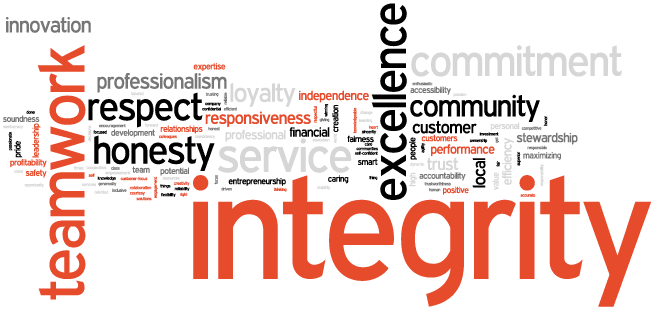
Positive Leadership: Finding Your Purpose and Passion
Positive Leadership Limited is a strategic leadership and corporate finance advisory firm. We use our considerable experience to provide unique perspectives and innovative solutions which help corporate leaders unlock maximum value from complex business challenges. There is no dress rehearsal for delivering answers to critical business challenges. When you are under intense pressure to succeed, we help deliver the vitally important marginal gains which let your business excel and win.
The Positive Leadership Blog has been recognised as a Top 50 Leadership Blog by the number of pages indexed by Google and as one of the Top 100 Most Socially Shared Leadership Blogs of 2013.
Positive Leadership has also been recognised as a Top 50 Leadership Expert to Follow on Twitter.
Follow us on Twitter @posleadership
LEADERSHIP IS A PROCESS OF SOCIAL INFLUENCE, WHICH MAXIMISES THE EFFORTS OF OTHERS TOWARDS THE ACHIEVEMENT OF A SHARED GOAL.
Tuesday, October 15, 2013
Monday, October 14, 2013
Positive Leadership: Why Grit Determines Success
Wisdom from psychologist Angela Duckworth on ‘Why Grit, Not
IQ, Predicts Success’
“Character is at least as important as intellect.”
Positive Leadership: Why Grit Determines Success
Labels:
Determination,
Success,
Values of Positive Leadership,
Video
Friday, October 11, 2013
Positive Leadership: Great Mentors
A few truths about great mentors:
* a mentor will help me to be self-dependent
* a mentor can have tremendous coaching skills and not
impose answers.
* my mentor should bring clarity of distance
* a great mentor is a great communicator: succinct, simple
and specific
* a great mentor can learn from me
* a great mentor can share stories of his/her own failures and
weaknesses
* a great mentor can also ask me for advice
* a great mentor can be a sponsor (ie. open doors and speak
highly of me).
The mediocre teacher
tells. The good teacher explains. The superior teacher demonstrates. The great
teacher inspires. - William Arthur Ward
Positive Leadership: Great Mentors
Thursday, October 10, 2013
Positive Leadership: Do We Have the Right Core Values?
Values are important because they may be the only force that
can counter the power of markets and market-based thinking.

Today’s
ever-present markets have their own implicit values, and they can easily
overwhelm whatever values leaders want to instil in their organisations.
To
lead responsibly, leaders must commit to clarity, meaningful projects, and
bright ethical lines.
In different ways, each of these helps leaders and
organisations respond to the risks and opportunities created by pervasive
market forces.
Positive Leadership: Do We Have the Right Core Values?
Wednesday, October 09, 2013
Positive Leadership: Want to Be More Decisive?
Great leaders are decisive.

They make tough calls, and they
have the spine to follow through. Yet, the rest of us seem to get stuck in
cycles of indecisiveness. So what sets our more decisive-minded colleagues
apart from us? Not much, really.
Research has shown that everyone experiences
traces of indecisiveness — say, pessimism, or a low sense of control — when
contemplating a decision. There’s no avoiding it. But decisive people don’t let
these negative feelings hold them back. Once they make a decision, and begin
the steps to execute it, they start to feel confident, capable, and in control.
The good news is we can all train our brains to think this way. We just have to
be willing to bite the bullet. Gulp.
Positive Leadership: Want to Be More Decisive?
Tuesday, October 08, 2013
Positive Leadership: Ten Essentials for Getting Value from Values
Many organisations have statements of mission and values.
Unfortunately, most of them sound alike. Who could quibble with the importance
of “respect” or “customer focus”? Values statements can seem like passive
decoration for walls and the Web, easily ignored. And the words don’t really
tell anyone what to do in any specific sense.

But that does not mean that values do not matter. In organisations
that are innovative, profitable, and responsible — widespread dialogue about
the interpretation and application of values enhances accountability,
collaboration, and initiative.
Here are ten essential ingredients that make values work to
produce organisational value.
Values are a priority
for leaders, invoked often in their messages and on the agenda for
management discussions.
The entire work force
can enter the conversation; employees are invited to discuss or interpret
values and principles in conjunction with their peers, who help ensure
alignment.
Principles are
codified, made explicit, transmitted in writing in many media, and reviewed
regularly to make sure people understand and remember them.
Statements about
values and principles invoke a higher purpose, a purpose beyond current
tasks that indicates service to society. This purpose can become part of the
company’s brand and a source of competitive differentiation.
The words become a
basis for on-going dialogue that guides debate when there is controversy or
initial disagreement. Decisions are supported by reference to particular values
or principles.
Principles guide
choices, in terms of business opportunities to pursue or reject, or in
terms of investments with a longer time horizon that might seem uneconomic
today.
As they become
internalized by employees, values and principles can substitute for more
impersonal or coercive rules. They can serve as a control system against
violations, excesses, or veering off course.
Actions reflecting
values and principles — especially difficult choices — become the basis for
iconic stories that are easy to remember and retell, reinforcing to
employees and the world what the company stands for.
Values are
aspirational, signalling long-term intentions that guide thinking about the
future.
Principles, purpose,
and values are discussed with suppliers, distributors, and other business
partners, to promote consistent high standards everywhere.
In short, it’s not
the words that make a difference; it’s the conversation. Frequent
discussion about organisational values can be engaging and empowering. The
organisation becomes a community united by shared purpose, which reinforces
teamwork and collaboration. People can be more readily relied on to do the
right thing, and to guide their colleagues to do the same, once they buy into
and internalise core principles. People can become more aware of the drivers
and impact of their behaviour.
And, as you
can see in leading companies, active consideration of core values and purpose
can unlock creative potential.
For more, see: http://blogs.hbr.org/2010/06/ten-essentials-for-getting-val/
Positive Leadership: Ten Essentials for Getting Value from Values
Monday, October 07, 2013
Positive Leadership: Using LinkedIn
Even committed LinkedIn users can be uncertain of which
connection requests to accept or extend. It’s possible to connect to almost
anyone—but that does not mean you should.

Instead, think about the two-way
quality of your relationships.
Use a filter to help you connect to those people
who will be able to help you, or whom you would be willing to help. Try the “favour
test”: Would you do a favour for this person, or ask a favour of them? If so,
make the connection. If not, take a pass.
If you're consistent in applying the favour
test and selective about which connections you initiate and accept, you can tap
LinkedIn’s power as an introduction machine: an address book in which all the
entries can see and connect with one another, and a network that’s efficient in
supporting your professional goals.
Positive Leadership: Using LinkedIn
Friday, October 04, 2013
Thursday, October 03, 2013
Positive Leadership: The Secret of Prolonged Success (at Manchester United)
In this interview with US talk-show host Charlie Rose, former Manchester United manager Sir Alex Ferguson talks about dynasty building and the secret of prolonged success.
Ferguson explains how trusting youth is key.

Positive Leadership: The Secret of Prolonged Success (at Manchester United)
Labels:
Leadership Lessons,
Sport and Business,
Trust,
Young People
Wednesday, October 02, 2013
Positive Leadership: The 'Generosity Gene'
Former General Electric ceo, Jack Welch argues that the key
to good leadership is the "generosity gene".
Positive Leadership: The 'Generosity Gene'
Labels:
Jack Welch,
Leadership Lessons,
Video
Tuesday, October 01, 2013
Monday, September 30, 2013
Friday, September 27, 2013
Thursday, September 26, 2013
Positive Leadership : Ken Costa and God at Work
Professor Ken Costa is the former Chairman of Lazard International and is the Emeritus Gresham Professor of Commerce at Gresham College in London. He studied philosophy and law at the University of the Witwatersrand, Johannesburg and then went on to study law and theology at Queens' College, Cambridge.
Following university, he went to work for an investment bank in the City of London, where he has worked for over 30 years. After serving as Vice-Chairman of UBS Investment Bank, a global financial institution, where he advised international corporations, Mr Costa was named as the Chairman of Lazard International, joining the bank in October 2007.
Ken Costa is the Chairman of Alpha International, which promotes the Alpha course - an introduction to the Christian faith attended by over two million people in the UK and ten million worldwide - and Church Warden of Holy Trinity Brompton. He is the author of best-seller, God at Work.
Over the next few days, we will show a number of Ken's Gresham lectures. His thinking around values and purposes is both fascinating and enlightening and entirely in sync with our own Values of Positive Leadership.
Positive Leadership : Ken Costa and God at Work
Labels:
Religion,
Values of Positive Leadership
Wednesday, September 25, 2013
Positive Leadership: Great Teams Are a Mix of Old and New
The best teams, we tend to think, are like a band of
brothers. They have been together for a long time. They know each other extremely
well. And they are more successful as a result. It’s common sense, right?

Well,
it turns out that great teams — the most creative, the most innovative — are
more temporary in nature than you would think.
Take Broadway. The best productions,
researchers have found, are made up of rag-tag groups — a mix of old and new
faces. The old faces bring knowledge of the best processes and the best working
methods, and the new folks bring a fresh creative spirit to the table.
The most
innovative companies work in similar ways, too. Ad-hoc teams form around a
given project, then disband. But it’s not so easy pull off — in order for this
to work, the entire organisation has to be diverse enough in order to make
temporary teams a reality.
Positive Leadership: Great Teams Are a Mix of Old and New
Labels:
Team Builder,
Team Spirit,
Teamwork
Tuesday, September 24, 2013
Positive Leadership: Pitfalls in Creating Business Strategy
When creating strategy, far too many leaders give in to
temptations that result in weak strategic choices, and ultimately, failure.

Here are three common mistakes and how to avoid them:
Failing to choose. Attempting to be all things to all
customers is not a winning strategy. Select specific segments of consumers with
particular characteristics that you can serve best.
Acquiring to change playing fields. Acquisition usually just
adds unnecessary complexity. If you cannot strategise in your current environment,
you will not necessarily excel in a different one.
Accepting an existing choice as unchangeable. A company
always has a choice of where in the market they will play, so do not use this as
an excuse for mediocre performance. Change will not happen overnight, but you can
alter the course with focus and dedication.
Positive Leadership: Pitfalls in Creating Business Strategy
Labels:
Business Strategy,
Leadership Strategies
Monday, September 23, 2013
Positive Leadership: Thinking Like a Champion
We meet and learn from champions every day. We have learned
that to be a champion you must ‘Think like
a Champion’. Champions think differently than everyone else. They approach
their life and work with a different mindset and belief system that separates
them from the pack.
1. Champions Expect
to Win - When they walk on the court, on the field or into a meeting they
expect to win. In fact they are surprised when they don't win. They expect
success and their positive beliefs often lead to positive actions and outcomes.
They win in their mind first and then they win in the hearts and minds of their
customers or fans.
2. Champions
Celebrate the Small Wins - By celebrating the small wins champions gain the
confidence to go after the big wins. Big wins and big success happen through
the accumulation of many small victories. This doesn't mean champions become
complacent. Rather, with the right kind of celebration and reinforcement,
champions work harder, practice more and believe they can do greater things.
3. Champions Don't Make
Excuses When They Don't Win - They don't focus on the faults of others.
They focus on what they can do better. They see their mistakes and defeats as
opportunities for growth. As a result they become stronger, wiser and better.
4. Champions Focus on
What They Get To Do, Not What They Have To Do - They see their life and
work as a gift not an obligation. They know that if they want to achieve a
certain outcome they must commit to and appreciate the process. They may not
love every minute of their journey but their attitude and will helps them
develop their skill.
5. Champions Believe
They Will Experience More Wins in the Future - Their faith is greater than their
fear. Their positive energy is greater than the chorus of negativity.
Their certainty is greater than all the doubt. Their passion and purpose are
greater than their challenges. In spite of their situation champions believe
their best days are ahead of them, not behind them.
If you don’t think you have what it takes to be a champion,
think again. Champions aren’t born. They are shaped and moulded. And as iron
sharpens iron you can develop your mindset and the mindset of your team with
the right thinking, beliefs and expectations that lead to powerful actions.
Positive Leadership: Thinking Like a Champion
Labels:
Champion,
Excellence Under Pressure,
Winners
Friday, September 20, 2013
Positive Leadership: Behaviours Leaders Should Avoid
If you want to empower, engage, or motivate others, don't
just focus on increasing your positive behaviours. Pay attention to the things
you need to stop doing at the same time.
Here are three to avoid:
Judgmental body
language. No one likes perceived condescension. Watch out for scowling,
furrowed brows, and quizzical or sarcastic looks (as if to say, “Are you
stupid?”). While seemingly harmless, each of these subtle darts creates a
considerable amount of relationship damage.
Interrupting.
It's almost impossible for people to feel safe if the boss takes up most of the
airtime or cuts people off. Do more listening than talking, and let people
finish their thoughts.
Being inconsistent.
It’s hard on employees to wonder who is going to show up: "smiling,
charming, funny boss" or "judgmental, intense, snapping
manager." Try to keep your tone and personality consistent so people know
what to expect.
Positive Leadership: Behaviours Leaders Should Avoid
Thursday, September 19, 2013
Positive Leadership: What a Winning Business Culture Looks Like
- People enjoy the work they do and the people they work with.
- People take pride in the work they do and the company they work for.
- There are high levels of engagement, connection, camaraderie and a community of caring.
- There is a culture of fairness, respect, trust, inclusiveness and teamwork.
- The leaders walk the talk, live the values and communicate a clear vision and strategy for growth.
- Lots of open, honest, robust and transparent communication across the entire organisation.
- The company invests back in employees; there is a commitment to learning, coaching and development.
- There is a bias for action, employees have an ownership mentality and always strive to give their personal best.
- There is high accountability and a strong focus on delivering the desired results.
- There is ample recognition and rewards and mediocrity is not tolerated.
Positive Leadership: What a Winning Business Culture Looks Like
Wednesday, September 18, 2013
Tuesday, September 17, 2013
Positive Leadership: The Power of Listening
Tom Peters uses an example from the healthcare industry to
highlight the importance of listening.
According to Tom, "the single most
significant strategic strength that an organisation can have is not a good
strategic plan, but a commitment to strategic listening on the part of every
member of the organisation."
Positive Leadership: The Power of Listening
Labels:
Leadership Skills,
Listening,
Video
Monday, September 16, 2013
Positive Leadership: Teamwork Exemplified
The record for the fastest pit stop in Formula One history
was broken not once but five times in Malaysia earlier this year.
Back in the early 1990s, fast F1 pit stops were timed at
around 4.5 seconds. The fastest even closed in on 4.1 seconds – but anything
close to halving that would simply have been unimaginable.
Mark Webber’s Red Bull was stationary for just 2.05 seconds
when it had all four wheels changed on lap 19 of the Malaysian Grand Prix.
“It’s possible this season we’ll see the magical two-second
barrier breached at some point,” said the team.
“However, rather than
chasing individual times, improving consistency is always the thing coveted by
the crew: breaking records is merely the consequence of doing that well.”
Positive Leadership: Teamwork Exemplified
Friday, September 13, 2013
Positive Leadership: The Importance of Being a Role Model
“Every child deserves a champion — an adult who will never
give up on them, who understands the power of connection, and insists that they
become the best that they can possibly be.”
Rita F. Pierson, a professional educator since 1972, taught
elementary school, junior high and special education. She was a counsellor, a
testing coordinator and an assistant principal. In each of these roles, she
brought a special energy to the role -- a desire to get to know her students,
show them how much they matter and support them in their growth, even if it was
modest.
Positive Leadership: The Importance of Being a Role Model
Thursday, September 12, 2013
Positive Leadership: Focus on Employees' Strengths and Potential (Not on Their Weaknesses)
It is much easier to focus on what your employees do well
than to try to fix their weaknesses. However, many leaders don’t understand how
to translate this truth into how they lead on a day-to-day basis. So how do you
make it happen?
Understanding your employees’ potential is going to take
some energy and thought on your part, especially if, like many of us, you’re
used to focusing on what people are rather than what they could be.
Here are a
few questions to ask yourself:
- Can they do something well that isn’t in their formal training or experience?
- Compare them to others with the same experience—are they doing anything faster or better?
- Do they appear to enjoy certain projects more than others?
- What kind of work do they show the most ownership for?
- What kind of work do they need the least guidance from you to do?
- What have they produced that has genuinely surprised you?
- Once you’ve identified employees’ strengths, take a few minutes in your next one-on-one meeting to tell them what they’re doing especially well, or to describe the potential you see in them in a particular area. Get their perspective. Do they know what they’re good at? How can you help them leverage those strengths? Do what you can, but then get out of the way!
Now, here are a few practical suggestions to help you bring out hidden strengths in your team members:
- Ask them what they like about their job and what they are less enthusiastic about. Make a list. Add the strengths in them that you see that they have not listed. Discuss how—or whether—these strengths map onto their current job or role.
- Even when giving corrective feedback, talk about the strengths you see in them.
- Instead of viewing them as a problem employee, take the approach that there has to be something they do well and it’s your job to help them find it.
- See whether you can structure the job around their strengths.
- If you can’t offer them a job or project that plays to their strengths, consider whether the employee might thrive in another part of the company.
The lesson is simple: Spend your time and energy developing
your employees’ strengths and limit your effort to address their shortcomings;
in these weak areas, they need only be passable. This is not the same as saying
that you should ignore weaknesses completely. In fact, one of the most
important aspects of Positive Leadership is acting swiftly and decisively in
the face of poor performance. Nevertheless, even in this situation you must
focus more time and energy on developing your team’s strengths.
Once you discover the individual strengths of your employees
and provide them with appropriate coaching, you’ll set them on the course to
develop their true potential. This will benefit both parties!
Positive Leadership: Focus on Employees' Strengths and Potential (Not on Their Weaknesses)
Labels:
Coaching,
Leadership Skills,
Strengths
Subscribe to:
Posts (Atom)