Positive Leadership has also been recognised as a Top 50 Leadership Expert to Follow on Twitter.

Follow us on Twitter @posleadership


LEADERSHIP IS A PROCESS OF SOCIAL INFLUENCE, WHICH MAXIMISES THE EFFORTS OF OTHERS TOWARDS THE ACHIEVEMENT OF A SHARED GOAL.

Monday, July 22, 2013

Positive Leadership: Confidence


Confidence isn’t something you either have or you don’t. It’s a dynamic emotion that, like a physical muscle, needs exercise to grow stronger. 

Here are two ways to build and maintain it:

1. Take inventory of your past. It’s easy to doubt yourself and your abilities. But if you look at your track record, the chances are that your successes outweigh your failures. And, more importantly, you likely survived your missteps and gleaned lessons along the way.

2. Focus on strengths. Most leaders are very strong in a few competencies, average in the majority, and weak in a few. Concentrate on leveraging what you’re best at. Then, manage your average and weak areas so they don’t detract from your effectiveness.

Share/Save/Bookmark

Friday, July 19, 2013

Positive Leadership: Resilience is the New Normal


'The difference between winners and a losers how they handle losing.

That's a key finding from my ongoing research on great companies and effective leaders: no one can completely avoid troubles and potential pitfalls are everywhere, so the real skill is the resilience to climb out of the hole and bounce back.

Volatile times bring disruptions, interruptions, and setbacks, even for the most successful among us. 

Companies at the top of the heap still have times when they are blindsided by a competing product and must play catch-up. Sports teams that win regularly are often behind during the game. Writers can face dozens of rejections before finding a publisher that puts them on the map. Some successful politicians get caught with their pants down (so to speak) and still go on to lead, although such self-inflicted wounds are harder to heal.

Resilience is the ability to recover from fumbles or outright mistakes and bounce back. But flexibility alone is not enough. You have to learning from your errors. Those with resilience build on the cornerstones of confidence — accountability (taking responsibility and showing remorse), collaboration (supporting others in reaching a common goal), and initiative (focusing on positive steps and improvements). As outlined in my book Confidence, these factors underpin the resilience of people, teams, and organizations that can stumble but resume winning.

For anyone who wants to get beyond adversity or start over rather than give up, America is the Land of Second Chances. According to Jon Huntsman, former US Ambassador to China, getting back on our feet is an American strength widely admired in China. And everywhere, rapid recovery from natural disasters is increasingly a key to a robust economy. Entrepreneurs and innovators must be willing to fail and try again. The point isn't to learn to fail; it is to learn to bounce back.

Some stumbles are due to circumstances outside of most people's control, including weather events and geopolitical shocks. But while people might not control the larger problem, they control their reactions to it — whether to give up or find a new path. Recession in Europe is an example. I have spoken recently to European audiences at public conferences and within companies about cultivating resilience in their businesses even when markets are shrinking, so that they hold their own as recession continues and are well-positioned for recovery. A German machinery company showed resilience by growing its service contracts when demand for machines slowed, and it mobilized employees to find new service possibilities. An Italian cosmetics firm grabbed talent from job-shedding multinationals and increased its international marketing tied to both health and fashion; new sales followed. In both companies, like others described in my book SuperCorp, such initiatives were made possible by a strong sense of purpose that drew members together and motivated them to take responsibility to help the companies survive and thrive. Employees were resilient because they cared, and that made the companies resilient.

Complacency, arrogance, and greed crowd out resilience. Humility and a noble purpose fuel it. Those with an authentic desire to serve, not just narcissism about wanting to be at the top, are willing to settle for less as an investment in better things later. Raymond Barre, former Premier of France, after being defeated for re-election at the national level, ran for a lesser office as Mayor of Lyon and became a hero of his region. That's the strategy Eliot Spitzer is taking by running for a lesser city office after having been governor of a state. He showed remorse quickly when scandal surfaced and then re-entered the public conversation talking about the issues, increasing his comeback prospects.

Some observers say it is harder for women to stage comebacks. Still, consider Martha Stewart. She served prison time for insider trading rather graciously, showing remorse, and that graciousness restored much of her fan base afterward. In a more positive vein, Hillary Clinton was not a sore loser to President Obama in 2008 (though some of her followers were) and accepted his offer to become his Secretary of State. She's now perhaps even better-positioned for a 2016 Presidential run. In the long term, graciousness beats sour grapes.

Resilience draws from strength of character, from a core set of values that motivate efforts to overcome the setback and resume walking the path to success. It involves self-control and willingness to acknowledge one’s own role in defeat. Resilience also thrives on a sense of community — the desire to pick oneself up because of an obligation to others and because of support from others who want the same thing. Resilience is manifested in actions — a new contribution, a small win, a goal that takes attention off of the past and creates excitement about the future.

Potential troubles lurk around every corner, whether they stem from unexpected environmental jolts or individual flaws and mistakes. Whatever the source, what matters is how we deal with them. When surprises are the new normal, resilience is the new skill.'


Share/Save/Bookmark

Thursday, July 18, 2013

Positive Leadership: Family


Share/Save/Bookmark

Wednesday, July 17, 2013

Positive Leadership: Take a Long Lunch

There’s a simple, old-fashioned practice that can make work more effective, engaging, and fun — long lunches. 

The idea of a leisurely lunch chatting with colleagues or clients might seem like something out of another era, but it has a place in modern office life too. Eating slowly has documented health benefits and having unplanned time with colleagues can help you forge deeper connections. Instead of scarfing down a sandwich at your desk or grabbing something on the go, make time for a longer lunch break. Even if you do it just once or twice a week, it can create stronger relationships with co-workers, and make you healthier and more productive.


Share/Save/Bookmark

Tuesday, July 16, 2013

Positive Leadership: Women Leaders

A new study is further proof that the double bind female leaders face is more pervasive than we thought - 


Share/Save/Bookmark

Monday, July 15, 2013

Positive Leadership: Culture


Share/Save/Bookmark

Friday, July 12, 2013

Positive Leadership: The Job of a Leader


Leaders “do” people.

You take care of the people.

The people take care of the service.
The service takes care of the customer.
The customer takes care of the profit.
The profit takes care of the re-investment.
The re-investment takes care of the re-invention.
The re-invention takes care of the future.

And at every step, the only measure is EXCELLENCE.

(Thanks to Tom Peters for this timely reminder!)

Share/Save/Bookmark

Thursday, July 11, 2013

Positive Leadership: Dare to be Unforgettable!


From: http://rochellemoulton.com/the-be-unforgettable-manifesto/
Share/Save/Bookmark

Wednesday, July 10, 2013

Positive Leadership: Crisis Leadership

In this presentation, Harvard Business School historian Nancy Koehn explores two examples of effective leadership in moments of great turbulence: Abraham Lincoln's presidency during the Civil War and Antarctic explorer Ernest Shackleton's leadership when his ship, the Endurance, became stuck in the ice in 1915 to 1916. 

From these powerful stories, Koehn draws together several key lessons about individual leadership and its impact. She concludes by applying these insights to our own volatile, high-stakes moment today.


Share/Save/Bookmark

Tuesday, July 09, 2013

Positive Leadership: Why We Will Rely on Robots

MIT professor Rodney Brooks studies and engineers robot intelligence, looking for the holy grail of robotics: the AGI, or artificial general intelligence. For decades, we've been building robots to do highly specific tasks -- welding, riveting, delivering interoffice mail -- but what we all want, really, is a robot that can figure things out on its own, the way we humans do.

 Brooks realised that a top-down approach -- just building the biggest brain possible and teaching it everything we could think of -- would never work. What would work is a robot who learns like we do, by trial and error, and with many separate parts that learn separate jobs. The thesis of his work which was captured in Fast, Cheap and Out of Control,went on to become the title of the great Errol Morris documentary.

A founder of iRobot, makers of the Roomba vacuum, Brooks now heads Rethink Robotics, whose mission is to apply advanced robotic intelligence to manufacturing and physical labor. Its first robot: the versatile Baxter. Brooks is affiliated with CSAIL, MIT's Computers Science and Artificial Intelligence Laboratory.

 
Share/Save/Bookmark

Monday, July 08, 2013

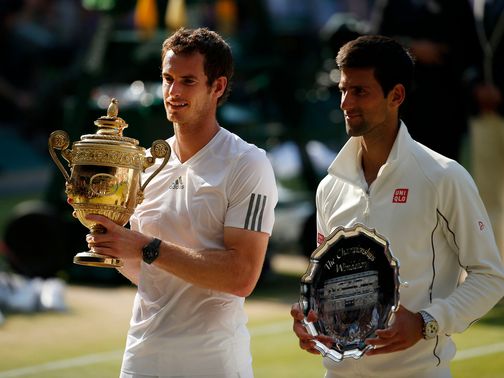
Positive Leadership: Congratulations Andy Murray!

Congratulations to Andy Murray - handling the weight of expectations of a whole nation - a true performance under pressure. Murray has shown that with dedication and great teamwork, allied to the resilience and learning which comes from past disappointments, any goal can be achieved. In defeat, Novak Djokovic demonstrated real sportsmanship and he is to be applauded for that. Hopefully, we Scots will not have to wait another 117 years for a Men's Singles champion at Wimbledon! 


Share/Save/Bookmark

Positive Leadership: The Qualities of an Effective Coach


No Ego: A great coach gets out of the way and allows the coachee to own the content.

Credible: A great coach doesn’t necessarily have to be the subject expert, but does need to have suitable experience to ‘walk the talk’.

Empathy: A great coach understands the coachee and identifies with their background, their personal preferences and learning style, their personal/ professional context, their needs, wants and aspirations.

Process: A great coach understands, operates and takes ownership for a coaching process that is open, fair and consistent.

Share/Save/Bookmark

Friday, July 05, 2013

Positive Leadership: Confidence and Winning


Share/Save/Bookmark

Thursday, July 04, 2013

Positive Leadership: A Happy July 4th to all our American Friends!


Share/Save/Bookmark

Wednesday, July 03, 2013

Positive Leadership: Firms of Endearment

In  his book, “Firms of Endearment: How World-ClassCompanies Profit from Passion and Purpose”,  Professor Raj Sisodia of Bentley University, compiled a list of companies that pay and treat employees significantly above average; provide high value and service to customers; do not squeeze suppliers for the lowest possible prices; invest significantly in their local communities; minimise their environmental impact; and do not cite as a primary goal “maximising shareholder returns.”

Over the 15 year period, 1996 to 2011, the “Firms of Endearment” companies outperformed the Standard & Poor’s 500-stock index by 
10.5 to 1. They returned a cumulative 21%, while Jim Collins’s “Good to Great” companies earned an annualised return of just 7% during the same period, barely outpacing the broader market.

Here is the inescapable conclusion: When a company truly seeks to take care of all its constituencies, it serves not just the collective good, but also its own long-term best interest.

Share/Save/Bookmark

Tuesday, July 02, 2013

Positive Leadership: Passion and Emotion

Passion and emotion are related but not the same.

Emotion alone can be detrimental to performance. Emotion that is the result of passion for a job well done is performance fuel. If you are playing with passion emotion will follow. Emotion without true passion is shallow.

Regardless of your specific form of performance (e.g., business, sport, art or life) do you have a team with the characteristics of an Olympic champion? If not, create one!

Share/Save/Bookmark

Monday, July 01, 2013

Positive Leadership: Do One Thing Better Today

Many individuals, teams and organisations have tasted excellence periodically. It goes down well on the palate, doesn't it? Like the perfectly aged Bordeaux, the perfectly executed recipe, the perfect balance of flavours in a great meal. But consistently delivering superior results over time is another story. It requires process, discipline and focus. It requires energy, effort and persistence. It requires daily attention.

A technique we have found helpful with performers to deliver sustainable excellence is to focus on one thing every day to improve from the day before. It could be personal, professional or relational. It doesn't have to be monumental every day.

Why does this process work?

Confidence is the result of an accumulation of success experiences. By doing one thing better each day you consistently experience (and expect) success.  Each day builds upon the last.

Improving every day creates focus. How many times have you wound up at the end of a day wondering what you truly accomplished? By committing to daily improvement you organise your thoughts, energy and effort.

Continuous improvement becomes a habit, not a cliché. 

When you commit to daily improvement, development opportunities are expected and welcomed. You look forward to development feedback rather than dreading it and reacting defensively.

Sustainable excellence is not rocket science. It is the result of establishing an effective system and having the discipline to follow it. Getting better each day establishes the mindset. What are you going to improve today?

Share/Save/Bookmark

Friday, June 28, 2013

Positive Leadership: The Difference between Success and Excellence

Most performers believe success and excellence are interchangeable terms. After all, if I'm successful I'm excellent--right? Wrong.

Success is an absolute term. If you are the highest producing salesperson, win the game or beat the earnings forecast you are successful. Success in the performance world is about achieving outcomes better than others by comparison.

Excellence, on the other hand, is a relative term. It is about maximising your personal and organisational potential. If you are the highest producing salesperson but you can sell more, you have not fulfilled your sales potential. If you win the game but could have scored more points, you have not fulfilled your athletic potential. If you beat the earnings forecast but leave some organisational profit on the table, you have not fulfilled the potential of your company. 

If you are excellent you deliver the best performance you are capable of, regardless of the absolute outcome.

If you are excellent, you will be successful but you can be successful without being excellent. Commit to excellence--it's more meaningful. And, by the way, it's also more fun!

Share/Save/Bookmark

Thursday, June 27, 2013

Positive Leadership: High Performance Cultures

High-performance cultures deliver sustainable excellence over the long haul.  They do not rely on the latest fad, management trend or leadership gimmick to achieve short-term results. Consistent, long-term performance is based on a set of core values.  

Performers in high-performance cultures want to win just as much as their competitors. But they do so within the confines of values that will not be compromised, regardless of the short-term success that may result by looking the other way, rationalising questionable behaviour or otherwise failing to evaluate the best course of action through the lens of core values.

Many teams and organisations develop values. However, most organisations do not consistently rely on their values to guide decision making, business decisions and how people are treated. The creation of corporate or team values becomes a “check the box” exercise. The organisation pats itself on the back for creating values and proudly displays them on the company website. Yet when you peel back the onion, you find many individuals acting counter to the created values with no repercussions or adverse consequences.  That is, as long as they deliver results. 

True high-performance cultures deliver results and treat people in a manner they can be proud of. In fact, these cultures will not tolerate individuals who do not act from a set of core values.

Share/Save/Bookmark

Wednesday, June 26, 2013

Positive Leadership: Make The Jump!


Share/Save/Bookmark

Tuesday, June 25, 2013

Positive Leadership: Do One Thing!


Share/Save/Bookmark

Monday, June 24, 2013

Positive Leadership: Learn How to Embrace Failure and Focus on Your Customers

Garth Saloner is Dean of the Stanford Graduate School of Business. He says that small business owners of today should be keeping their eyes on their peers while never taking their eyes off their customers.


Share/Save/Bookmark

Friday, June 21, 2013

Positive Leadership: Gen. Colin Powell’s Leadership Presentation


Share/Save/Bookmark

Thursday, June 20, 2013

Positive Leadership: The 'Extras' of Coaching


Share/Save/Bookmark