Positive Leadership: Women in Business
Positive Leadership Limited is a strategic leadership and corporate finance advisory firm. We use our considerable experience to provide unique perspectives and innovative solutions which help corporate leaders unlock maximum value from complex business challenges. There is no dress rehearsal for delivering answers to critical business challenges. When you are under intense pressure to succeed, we help deliver the vitally important marginal gains which let your business excel and win.
The Positive Leadership Blog has been recognised as a Top 50 Leadership Blog by the number of pages indexed by Google and as one of the Top 100 Most Socially Shared Leadership Blogs of 2013.
Positive Leadership has also been recognised as a Top 50 Leadership Expert to Follow on Twitter.
Follow us on Twitter @posleadership
LEADERSHIP IS A PROCESS OF SOCIAL INFLUENCE, WHICH MAXIMISES THE EFFORTS OF OTHERS TOWARDS THE ACHIEVEMENT OF A SHARED GOAL.
Friday, November 23, 2012
Thursday, November 22, 2012
Positive Leadership: Authenticity, Generosity, and Passion in Leadership
Shelly Lazarus is Chairman of Ogilvy & Mather Worldwide. She has been working, as she would say it, "In the business I love," for more than three decades. Recognised as one of the most powerful women in business, Shelly has transformed Ogilvy & Mather into one of the world’s largest and most successful ad agencies.
In her keynote at Womensphere’s Global Summit 2010, Shelly reflects upon what defines a great leader, and shares her insights from countless encounters with leaders of different styles and personalities.
Authenticity, Generosity, and Passion in Leadership - Shelly Lazarus from Womensphere on Vimeo.

In her keynote at Womensphere’s Global Summit 2010, Shelly reflects upon what defines a great leader, and shares her insights from countless encounters with leaders of different styles and personalities.
Authenticity, Generosity, and Passion in Leadership - Shelly Lazarus from Womensphere on Vimeo.
Positive Leadership: Authenticity, Generosity, and Passion in Leadership
Wednesday, November 21, 2012
Positive Leadership: Optimising the Return from Change
If you are either announcing a change, or receiving direction
on change, here are ten key questions that need to be clearly addressed:
1. What is the change?
2. What business issue(s) is (/are) driving this change?
3. Why should we care?
4. How will this change help address these issues?
5. What alternatives were considered? What were the pros and
cons of each alternative?
6. Why must this change succeed?
7. Where does this change fit with other organisational
priorities?
8. How will people emotionally respond to this change, and
how should we acknowledge their feelings (the good or bad)?
9. What is the first action we need to take?
10. What are the milestones we will use to measure progress?
Take the time upfront to answer or get answers to these
questions and you should see a significant return on your time invested.
Positive Leadership: Optimising the Return from Change
Tuesday, November 20, 2012
Positive Leadership: When Leaders Do Harm
Bad bosses don’t wake up in the morning and ask themselves:
“How can I derail the corporate strategy today?”
Thunderbird research, based on
surveys and interviews with more than 250 managers in 37 countries, shows that
most ineffective leaders remain blissfully unaware of the harm they do to their
organisations. Only 35% of respondents at high-performing companies said their
leaders were doing a good job inspiring their teams to participate in strategic
initiatives.
In this video, Thunderbird School of Global Management Professors Kannan
Ramaswamy and Bill Youngdahl talk about the "hindrance trap" that catches
many leaders.
For more, see: http://knowledgenetwork.thunderbird.edu/research/2012/08/24/when-bosses-do-harm-breaking-the-hindrance-trap/
Positive Leadership: When Leaders Do Harm
Labels:
Bad Leaders,
Research,
Video
Monday, November 19, 2012
Positive Leadership: Energising a Firm with Mission and Values
Kent Thiry became Chairman and CEO of DaVita® (then called Total
Renal Care) in October 1999. Upon Thiry’s arrival, the company embarked on an
ambitious restructuring plan to save it from the brink of bankruptcy. Ten years
later, the company’s dedication to teammate (employee) engagement and
empowerment has helped transform DaVita into a FORTUNE 500® company with
approximately $6.1 billion in annual revenues, a stock price that has increased
more than 2,600 percent since shortly after he joined, and an 11% reduction in teammate
turnover.

Here he talks about energising a firm with mission & values.
A very interesting approach, albeit one which might be difficult to implement in some cultures!
Positive Leadership: Energising a Firm with Mission and Values
Labels:
Mission,
Positive Values,
Video
Friday, November 16, 2012
Positive Leadership: The Value of Consultants
DaVita CEO Kent Thiry discusses how being a consultant
prepares you—or doesn't—for being a leader. Thiry spoke at
the Stanford Graduate School of Business' View from the Top series.
Watch the full talk: http://www.youtube.com/watch?v=4p_d5jnCpqU&feature=plcp
Positive Leadership: The Value of Consultants
Thursday, November 15, 2012
Positive Leadership: Relationships
Excerpt of conversation between Daniel Goleman and George
Kohlrieser on high performance leadership and relationship management - developing relationships and finding common bonds and goals.
Positive Leadership: Relationships
Wednesday, November 14, 2012
Tuesday, November 13, 2012
Monday, November 12, 2012
Positive Leadership: Staying Motivated: Advice form Peyton Manning
NFL star quarterback, Peyton Manning provides advice on how to stay focused and
motivated throughout the season.

Positive Leadership: Staying Motivated: Advice form Peyton Manning
Labels:
Motivation,
Sport and Business,
Video,
Winning
Friday, November 09, 2012
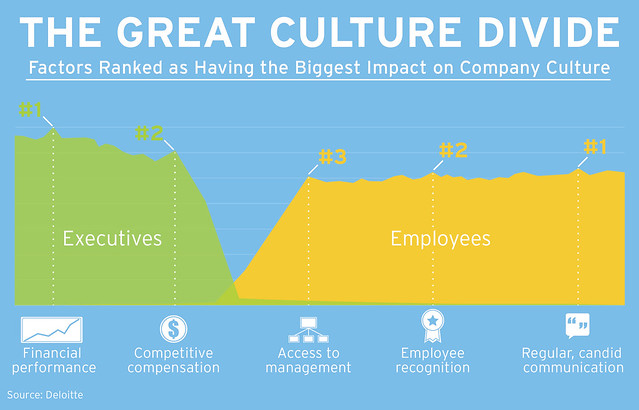
Positive Leadership: The Great Culture Divide
A culture is idealistically a force that drives and unites
people with a common focus, but........
Positive Leadership: The Great Culture Divide
Thursday, November 08, 2012
Positive Leadership: How to Learn?
Human beings are learning animals, probably the most
efficient learning machine ever to have walked the earth. From birth we are programmed to alter our
behaviour depending on our desires and the feedback we are receiving from the
environment. Our success as a species is
largely down to how efficiently we learn and change our behaviour, depending on
circumstances.
So, if the learning process is so natural and normal, why do
we find it so hard sometimes to change our behaviour and learn new skills,
especially new motor skills and movement patterns?
Something seems to have gone wrong with the way we learn, we
seem to have got in the way of the natural process and made it much harder than
it needs to be.
Rather than focus on the acquisition of the new skill as a
starting point, perhaps it would be better if the first stage of the learning
journey was to reconnect with and understand exactly how we go about acquiring
and developing that new skill, whether it’s a golf swing, playing a musical
instrument or tiling a bathroom.
In his books, ‘The Talent Code’, and ‘The Little Book ofTalent’, author Daniel Coyle goes into great detail into the learning process,
and offers some great insights into how to get the most from your tuition and
practice, and how to work with the natural learning process rather than
fighting against it.
Here are a few of the key points he raises.
1. Repetition is the absolute Number 1 key to
successful motor skill acquisition.
It takes about 3000 repetitions of a movement for the body
to ‘get it’, 10000 reps for it to become a habit. That’s why a couple of hours a week down the
driving range might be fun, but it isn’t really helping your golf swing to
become a consistent, repeatable movement.
2. We learn most by failing.
You need to fail to learn.
Instead of berating yourself and feeling angry and disappointed when you
hit a bad shot, pause for a second. Open
your mind. What actually happened
there? What did it feel like? What was the difference in feeling between
that and a good one? Your mistakes are
the big opportunities. Make them count.
3. Break it down into
small pieces.
When learning a large and complex movement such as the golf
swing, it really helps to break it down into ‘chunks’. Work on small pieces of
the movement, such as the takeaway, transition or impact, and focus tightly on
that specific part of the movement, repeating it over and over until it is
perfect. Then integrate it into the overall movement.
4. Little and often
is better than feast and famine.
Sitting down once a week and saying “Right, I’m going to
practice my grip for the next hour” very rarely works, for the simple reason
that it’s dull, repetitive and unlikely to hold our attention for that length
of time. Within a few minutes we’ll get distracted and any opportunity for
learning will be limited. Much better to
say “Right, I’m going to grip the club perfectly 20 times” then leave it an go
and do something else, coming back after a while, then doing 20 more perfect
reps.
5. Play games, make
it fun!!
In the same way that a little and often is better than feast
and famine, playing games rather than doing drills, is an excellent way to make
practice engaging and enjoyable. Whether
it’s competing with a friend to get it up and down, or challenging yourself to
hole 20 consecutive 3 footers, or hit 10 drivers in the fairway, making
practice into a game keeps it from becoming ‘work’. Most of us play golf for
fun, and while we all want to improve, turning it into work is rarely the way
forward.

Positive Leadership: How to Learn?
Labels:
Book,
Leadership Skills,
Sport and Business
Wednesday, November 07, 2012
Positive Leadership: The Qualities of the Most Successful US Presidents
Knowing the traits that forged the best U.S. presidents could
have helped US voters grasp what's necessary to succeed in the Oval Office.
Here are some interesting historical perspectives on the key qualities needed for success:
• Show vision.
The best-rated presidents conveyed the direction they wanted to take the
nation. Abraham Lincoln and George Washington, fixtures at the top of
historical rankings, exuded that quality of setting a futuristic tone. Thus
Washington shaped the presidency, and Lincoln reshaped the nation. Ronald)
Reagan had it too. His concept that it was possible to win the Cold War was
visionary. Almost no one else, in or out of government, thought there was any
prospect of that.
• Have
self-confidence. Washington was
secure enough to recruit the greatest minds ever assembled in a Cabinet: future
high-ranking Presidents, Thomas Jefferson and James Madison, plus Alexander
Hamilton. The first president knew he needed their help to shape the nation. Lincoln,
a one-term congressman, had no problem deferring to or overruling his secretary
of state, William Seward, who many thought was more qualified to be president.
• Be humble. It's
not just that Lincoln had the ability to reject advice from more qualified
people. It's that sometimes he listened to the advice, took it seriously and
changed his mind. The 16th president could acknowledge that he very well might
be wrong on issues. That attribute prevented Lincoln from making the
catastrophic mistakes that someone who lacked humility might make. Washington
and Lincoln were secure enough that they didn't feel they were the smartest
people in the room. The same could be said of Harry Truman. The 33rd president
called George Marshall the greatest man in the country and that if the former
Army chief of staff could take the presidency, he'd resign in a minute.
• Character does
matter. The top-ranked presidents who were most upstanding were Lincoln,
Washington, Reagan, Truman and Dwight Eisenhower.
• Be diverse. Career
politicians were less capable as president when rated against men who entered
office with varied backgrounds. Some soldier-presidents — such as Washington,
Eisenhower, U.S. Grant and Truman, with their sense of management were highly capable
presidents. The ones who didn't plan on being president from the time they were
little tended to excel! For example, political ambition came to Ronald Reagan
late in life and Washington thought he'd die a soldier. As it turned out, the
general won the Revolution and became the father of the USA.
Positive Leadership: The Qualities of the Most Successful US Presidents
Labels:
Character,
Confidence,
Experience,
Humility,
Political Leaders,
Self-Confidence,
Vision
Tuesday, November 06, 2012
Positive Leadership: What is Your Ecological Footprint?
Chip Conley is the founder of Joie de Vivre
Hotels, California's largest boutique hotel collection, which includes more
than 30 properties.
In this extract from a Stanford Graduate School of Business article he talks about the values that are important to him in business.
'You can see who’s most powerful in a society based on who
has the tallest buildings. Two hundred years ago it was cathedrals. Fifty years
ago it was a government building. Today, in most urban areas, the power rests
with business and skyscrapers. Business is the most powerful influence in the
world today. Fifty-four of the 100 most powerful entities in the world today
are companies, not countries. That means it is that much more important that
businesses take a conscious capitalist perspective to make a difference in the
world. I’m a big believer in that on a global level. Businesses are finally
asking, what is our ecological footprint? I also believe businesses need to
look at their emotional fist print on their employees.
Our work is the most
predominant use of our time. We spend more hours in our working life than our
family life. Yet for many people their working life leaves an emotional fist
print as if they're getting punched. It creates anxiety, anger, and a sense of being
abused. That can have a contagious effect on their family, friends, and
everybody around them. How do we measure that? Fifty years ago we had no idea
we could measure our ecological footprint. How can we start measuring and
managing what’s most important in life?'
Positive Leadership: What is Your Ecological Footprint?
Monday, November 05, 2012
Positive Leadership: Values Drive Our Behaviours
To live intentionally, you must surface your values – not
the ones you think you should have, but the ones you really do have.
Our values are our deeply held beliefs about what is right
and good.
Values drive our behaviours, whether we are conscious of them
or not.
Many people adopt the values articulated by their parents,
organisations or institutions. But when they are not also conscious of their
own personal values and the connection between their values and what they
espouse, they are often only superficially committed to them. The values
support a self-image of who they want to be, not necessarily who they are, and
don’t hold up during times of stress. This is one of the reasons we see values
breached so often – where we are surprised by the incongruous behaviour of
someone we respected.
We are all values-driven. The question is whether it’s
consciously or unconsciously.
When you are conscious of your values:
- You can challenge beliefs that no longer serve you.
- You can make intentional choices about your actions, rather than being driven unconsciously by them.
- You can be intentional about choosing relationships with people who share our values.
To surface your personal values, take time out for
reflection. Identifying your values is not a mental activity – we care deeply
about our values and become emotional when we connect with them.
Ask yourself questions like:
- What do I care deeply about?
- What would I stand in front of the bus to defend?
- What do my actions say about what I really value?
If you believe something is a value but it’s not guiding your behaviour, it’s not a real value … it’s simply a “good idea.”
Positive Leadership: Values Drive Our Behaviours
Friday, November 02, 2012
Thursday, November 01, 2012
Positive Leadership: What Does A Win Look Like?
How do you keep score? How does your team keep score? What
does winning look like? Are these questions you immediately have an answer for,
or do they make you stop and think? Do you have an answer at all? We believe
this is one of the most critical factors in human engagement. We think it’s
true at home, at work and even where we play.
The best leaders help people understand what a win looks
like and how to get there. Wins come in all shapes and sizes. Here are a few
principles to consider as you help your team and yourself answer the important
question: What constitutes a win?
A win must be
quantifiable. How will you measure your progress? How will you know if you
win? Unclear victories can demotivate even the strongest individual and team.
As a leader, you may need to create milestones that can be measured and
achieved to boost the energy of your team. A win defined as 10 new customers
this month is better than we need more customers.
A win should require
a stretch. Yes, there is such a thing as a “cheap win” – a victory that was
achieved with little effort or thought. These are not the type we are
advocating. These wins generally don’t help people grow or feel long-term
satisfaction. A win that requires people’s best efforts are inherently
motivating.
A win needs to
matter. Small visions stir no man’s soul; neither do wins that don’t
matter. You probably shouldn’t consider it a win if you show up for work. What
will really contribute to your growth and/or the growth of your organisation?
The answer is a candidate for a win. A Win: Raise revenues by 10% at year-end
to avoid layoff.
A win should build
confidence. What are the wins that will help you do this? Think about wins
for individuals and the team. What is challenging but not insurmountable? What
could serve as a stepping-stone to bigger wins?
A win should be
achievable. Have you ever tried to accomplish the impossible? These
situations are not win-win – they are lose-lose. The organisation and the individual
both lose. If a win is achievable, it can motivate performance.
A win should
ultimately serve the larger good. Most appropriate wins help the
individual, but the best ones also help the team, the organisation or beyond.
People long to be part of something bigger than themselves. As leaders, when we
can help connect the dots between the immediate task and the larger good,
people love it!
Think about the next 30 days; 90 days; 12 months – what does
a win look like for you? What does a win look like for your team? Perhaps
you’ll want to establish several. Don’t wait. The sooner you define them, the
sooner you can pursue them. Enjoy the journey!
Positive Leadership: What Does A Win Look Like?
Labels:
Leadership Strategies,
Winning
Wednesday, October 31, 2012
Positive Leadership: Make Others Better
As leaders, our purpose should be to strive to make others
better.
We walk our talk and lead by the
example we put forth in our actions, thoughts and words in everything we do.
As leaders, we must strive to ensure to make others better
by encouraging others to find their own voice, not holding them back because we
fear their capability or wisdom. To make others better means we are holding
ourselves to our word, our truth and being honourable in all that we do.
Sometimes, we can make others better in spite of what we are doing; even if we
are not the best ourselves, we influence others.
To be a better leader, we must
be a leader who believes we are making others better in a positive way.
Positive Leadership: Make Others Better
Tuesday, October 30, 2012
Positive Leadership: Cultivating #Leadership Success
Here are some guidelines to cultivating leadership success across an
organisation:
Make It a Priority: Acknowledge the risk, and put a formal
action plan in place. Start by clearly defining the behaviours and skills which
make a successful leader in your organisation.
Look Beyond Performance: Have a full picture of the leadership
potential across your organisation and don’t restrict that view to only those
you think are high potential. Do not confuse ambition with ability.
Replace Subjectivity with Objectivity: Gut instinct won’t do.
Using scientific data, benchmark your people against competitor talent and
identify leadership shortages to avoid succession risk.
Be Pragmatic & Proactive: Don’t wait for yearly review
cycles, instead, employ development interventions at the point-of-pain with
individual employees or across departments. This includes where and when to
spend learning and development budgets throughout the company.
Cast a Wider Net: Take a global view of where your
leadership talent is located and be prepared to use creative strategies to
source talent across borders to fill leadership gaps.
Positive Leadership: Cultivating #Leadership Success
Labels:
High Potentials,
Leadership Development
Monday, October 29, 2012
Positive Leadership: How to Build a Business
Facebook COO Sheryl Sandberg talks about her experience in building two of the largest tech businesses in Silicon valley - 'Think Big, Hire Big, Plan Big!'
.

.
Positive Leadership: How to Build a Business
Sunday, October 28, 2012
Subscribe to:
Posts (Atom)