Positive Leadership has also been recognised as a Top 50 Leadership Expert to Follow on Twitter.

Follow us on Twitter @posleadership


LEADERSHIP IS A PROCESS OF SOCIAL INFLUENCE, WHICH MAXIMISES THE EFFORTS OF OTHERS TOWARDS THE ACHIEVEMENT OF A SHARED GOAL.

Wednesday, June 27, 2012

Positive Leadership: Hard Work Builds Winners


Share/Save/Bookmark

Tuesday, June 26, 2012

Positive Leadership: Act Like an Optimist

In this brief video Jack Canfield describes a simple technique that will get you thinking, perceiving and acting like an optimist, so you can start enjoying the rewards that come with recognising opportunities...

Try it! But not just once...try it again and again and again until it becomes a habit. Then this "simple trick" will stop being a trick and become a part of who you are.

Here's to your success!


Share/Save/Bookmark

Monday, June 25, 2012

Positive Leadership: Visualisation as a Tool for Peak Performance


How do athletes, and others who take performance very seriously, bring out the best in themselves?

Athletes began to use leading-edge techniques like mental rehearsal and focused concentration years before the general public had even heard of them. Jack Nicklaus, for example, said that he would "watch a movie" in his head before each shot.  

These days, thanks to many researchers, we know more. Peter Fox and his colleagues at the University of Texas monitored people's brain activities as they performed various body movements and also as they imagined performing the movements. They found that the actual physical movement consistently involved the interaction of several specific areas of the brain. Imagining the movement activated those same areas of the brain

In other words, mental rehearsal of an action puts the mind through a neural workout that is very much like the real thing.  

So whether you're trying to break your own personal best record in a sport or sell a new car to an ambivalent customer, mental rehearsal, or visualisation, can help you prepare for peak performance by walking you through successful strategies and potential pitfalls.

Share/Save/Bookmark

Friday, June 22, 2012

Positive Leadership: The Price of Greatness


Share/Save/Bookmark

Thursday, June 21, 2012

Positive Leadership: The Power of Pause

Maria Shriver, is a mother of four, a Peabody and Emmy Award-winning journalist and producer, a six-time New York Times best-selling author, and an influential voice on the shifting roles, emerging power and evolving needs of women in modern life.

Shriver was California's trailblazing First Lady from 2003 to 2010. Her work is driven by her belief that all of us have the ability to be what she calls Architects of Change -- people who see a problem in their own life or the community around them, then step out of their comfort zone and do what it takes to create the solution.

Excerpts from the USC Annenberg School of Communication 2012 Commencement Address by Maria Shriver:

"But today, I have one wish for you. Before you go out and press that fast forward button, I'm hoping - I'm praying - that you'll have the courage to first press the pause button."

"That's right: the pause button. I hope if you learn anything from me today, you learn and remember -- The Power of the Pause."

"Pausing allows you to take a beat -- to take a breath in your life. As everybody else is rushing around like a lunatic out there, I dare you to do the opposite."


Share/Save/Bookmark

Wednesday, June 20, 2012

Positive Leadership: Controlling Your Mind Through Positive Intelligence


Daniel Goleman made a compelling and accurate case nearly two decades ago that Emotional Intelligence (EQ) was more important to leadership effectiveness and performance than IQ. But most attempts at increasing EQ have resulted only in temporary improvements. The reason is that a more foundational and core intelligence has been ignored, which is a pre-cursor to high EQ, namely Positive Intelligence (PQ). Without a solid PQ foundation, many of our attempts at improvements fail due to self-sabotage.

Your mind is your best friend, but it is also your worst enemy, involved in self-sabotage. To illustrate, when your mind tells you that you should prepare for tomorrow’s important meeting, it is acting as your friend, causing positive action. When it wakes you up at 3:00 a.m. anxious about the meeting and warning you for the hundredth time about the many consequences of failing, it is acting as your enemy; it is simply exhausting your mental resources without any redeeming value. No friend would do that.

Your PQ is the percentage of time your mind is serving you as opposed to sabotaging you. For example, a PQ of 75 means that your mind is serving you 75% of the time and sabotaging you about 25% of the time. Compelling evidence from a synthesis of research in psychology, neuroscience, and organisational science shows that with higher PQ teams and professionals ranging from leaders to salespeople perform 30-35% better on average. What’s more, they report being far happier and less stressed.

In this video, author and Stanford lecturer Shirzad Chamine introduces Positive Intelligence. He shows how your Positive Intelligence score or PQ dramatically affects both your performance and personal fulfilment. He reveals the 10 Saboteurs that are our hidden internal enemies and how to combat them.


Share/Save/Bookmark

Tuesday, June 19, 2012

Positive Leadership: The Power of Teamwork


This powerful and compelling video explores the essence of teamwork and reinforces the key principles embraced by the ultimate performance team: the US Navy Blue Angels.

 
Share/Save/Bookmark

Monday, June 18, 2012

Positive Leadership: With Hard Work Anyone Can Be Brilliant!


In this presentation to design and illustration students from the University of Cumbria, England, Kevin Roberts, CEO Worldwide of Saatchi & Saatchi talks about the great importance of creative design solutions and the challenge to create a future that is: Vibrant, Unreal, Crazy and Astounding. 

As one student said to him after the presentation: ‘….thank you for ……making me realise that there is no reason at all that with hard work, I can’t be brilliant.’


Share/Save/Bookmark

Friday, June 15, 2012

Positive Leadership: Anything Is Possible!


Arthur Boorman was a disabled veteran of the Gulf War for 15 years, and was told by his doctors that he would never be able to walk on his own, ever again.

His story is proof, that we cannot place limits on what we are capable of doing, because we often do not know our own potential.

Do not waste any time thinking you are stuck - you can take control over your life, and change it faster than you might think.

Hopefully this story can inspire you to follow your dreams - whatever they may be.

Anything is Possible!


Share/Save/Bookmark

Thursday, June 14, 2012

Positive Leadership: Roger Federer and Mental Toughness


In a recent forum in Rotterdam Roger Federer opened up about reinventing himself. 

He said that though talent and determination to win are two key factors in his successful career, what took him from good to great is developing mental toughness. 

“…Fighting your own demons is a difficult thing,” he says. “I had them when I was younger… afraid of the unknown and [asking yourself questions] ‘How confident are you?’ and ‘Are you doing the right things?’ A lot of open questions are sometimes a difficult thing to handle - especially if you bring in the pressure.”

Sport is emotional, tennis especially so because of the one-to-one intensity. No team-mates to lean back on. If you have watched any major tennis match you’ll understand how the intensity can help and hinder the best on court. Players collapse on their knees in tears from relief or scream to the gods in frustration. Being able to play an opponent for hours requires the mastering of self-belief and the ability to stay focused allowing your intuition to guide you.

The same rules apply to business and life.

Share/Save/Bookmark

Wednesday, June 13, 2012

Positive Leadership: Changing Your Mindset

"When people believe they can change, they react differently." Professor Carol Dweck on growth mindset

Professor Carol Dweck has reduced student aggression and other behaviour problems in American high schools and increased adults' willingness to compromise in the Middle East by teaching about the malleable nature of people's thoughts, feelings, and behaviour.

She discussed her recent research as part of a briefing for nonprofit and corporate leaders at "The Science of Getting People to Do Good" conference at the Center for Social Innovation of the Stanford Graduate School of Business.


Share/Save/Bookmark

Tuesday, June 12, 2012

Positive Leadership: Why Feedback?


  • Human beings are intentional animals.
  • Embedded self-disclosure.
  • Builds relationship.
  • Pinches before crunches.
  • Promotes intellectual honesty.
  • Key to development.


Share/Save/Bookmark

Monday, June 11, 2012

Positive Leadership: Excellence Under Pressure


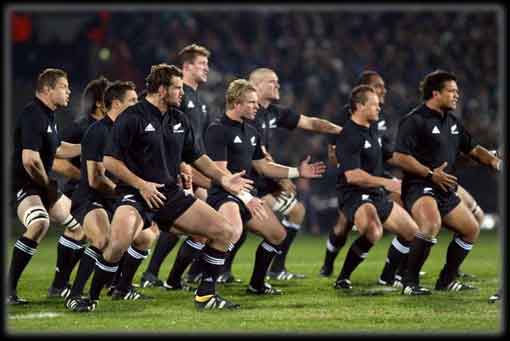
Two people who had survived intense pressure and tasted success last year were Graham Henry and Richie McCaw. As respective coach and captain of the All Blacks they were tasked with bringing home the Rugby World Cup silverware and a nation of five million supporters weren’t going to accept anything less.

Success in sport can often hinge on how much a team wants to win and in high stakes situations mental toughness can play a crucial role.

Henry believes that his eight years coaching the All Blacks proved mentally tougher for his family than for him. "They go through more difficult times than you, because they have no control over it, and you have. You're at the coalface, doing the job, and it dissipates the pressure; you are so involved in the process you don't worry too much about the result.”

Henry is now passing on his knowledge to other sporting teams as a “mentor”. He’s involved with Super 15 rugby team the Blues, Argentina’s national rugby team the Pumas, and Sport New Zealand’s emerging coaches from disciplines such as yachting and cycling.

In a recent interview, Richie McCaw opened up about the sort of pressure he is under as All Blacks captain. “There is always pressure going into any match, I have accepted that. Everyone expects the All Blacks to win every time they go on the field. If you try and say there is no pressure you are kidding yourself. I try to put it aside and just be excited by the opportunity.”

He goes on to say that being the best player he can be is key to supporting his team. Walking the talk and leading by example are traits of role model Todd Blackadder (former All Black), which Richie hopes to emulate.

Psyching yourself up is a particularly effective mental toughness tool and we all do it before a big occasion because it helps to give us courage or the “edge”. Perhaps it is no coincidence that the world’s most successful rugby team, the All Blacks, also have the most elaborate mental warm up – the Haka!


Share/Save/Bookmark

Friday, June 08, 2012

Positive Leadership: Success for the Successful: The Kobe System


If you haven't experienced the Kobe System for yourself, you must not know what it feels like to be over the top!

This is because the Kobe System isn't just about getting to the top; it's about going over the top! Success for the Successful is Kobe Bryant's winning, results-oriented philosophy on how to adapt to succeed.

In this motivational speech, Kobe makes clear that just because you're the GOAT doesn't mean you're done dominating. The KobeSystem helps ex NFL star, Jerry Rice come to that hard conclusion.


Share/Save/Bookmark

Thursday, June 07, 2012

How Positive Leadership Can Help You: Building Leadership Strength is a Business Imperative


It is mission critical that organisations consistently review how their employees perceive their leaders’ actions and efforts. Strong leadership, at all levels of an organisation, is central to organisational success – it improves employee retention, morale, productivity, engagement and ultimately, profitability.  

Building leadership strength and depth is a business imperative – but it can be expensive. In today’s economy, leadership development expenses will likely have to meet certain standards of proof of impact or return on investment.

So, how do organisations improve the effectiveness and efficiency of their leadership development programmes and processes, to ensure they drive a positive impact, and thereby make them (the organisation) more competitive?

Positive Leadership works with its clients to identify the best practices, trends and strategic solutions needed to prioritise their investments to achieve the greatest impact on their bottom line.

We address the 4 fundamentals of corporate leadership development strategies and programmes:
  • Selection – we focus on identifying and developing leaders in critical roles at all levels of the organisation
  • Alignment – we continuously align development efforts with distinct business challenges and goals
  • Efficiency – we utilise the most efficient ways to build and deliver learning solutions
  • Effectiveness – we consider the overall business impact beyond the classroom or course, and implement development approaches that reinforce sustainable, and transformational,  behaviour change.
To maximise ROI for leadership development efforts, organisations must effectively plan, implement and evaluate their initiatives. They must create a ‘chain of impact’ that connects leadership development to relevant organisational outcomes.

Positive Leadership provides advice and support in these endeavours.

A relationship with us gets you 3 things:
  • Our knowledge
  • Our experience
  • Our commitment to helping you achieve the results you want, and need.
For further information please contact: graham.watson@positiveleadership.co.uk

Share/Save/Bookmark

Wednesday, June 06, 2012

Positive Leadership: The Olympic Spirit - Never Quit!

Derek Redmond is best remembered for his performance at the 1992 Olympic Games in Barcelona where he tore his hamstring in the 400 metres semi-final but fought through the pain and, with assistance from his father, managed to complete a full lap of the track as the crowd gave him a standing ovation.

The incident has become a well-remembered moment in Olympic history, having been the subject of one of the International Olympic Committee's 'Celebrate Humanity' videos and been used in advertisements by Visa as an illustration of the Olympic spirit and featured in Nike's "Courage" commercials in 2008.


Share/Save/Bookmark

Tuesday, June 05, 2012

Positive Leadership: Hard Work Pays Off!

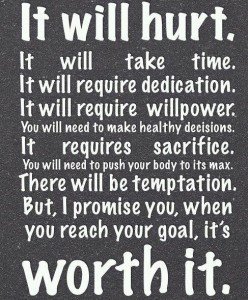
The best people in any field are those who devote the most hours to what the researchers call "deliberate practice." It's activity that's explicitly intended to improve performance, that reaches for objectives just beyond one's level of competence, provides feedback on results and involves high levels of repetition.

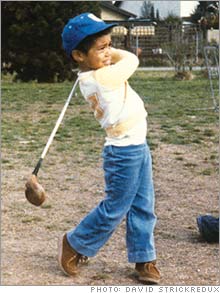
For example: Simply hitting a bucket of balls is not deliberate practice, which is why most golfers don't get better. Hitting an eight-iron 300 times with a goal of leaving the ball within 20 feet of the pin 80% of the time, continually observing results and making appropriate adjustments, and doing that for hours every day - that's deliberate practice.

Tiger Woods is a textbook example of what the research shows. Because his father introduced him to golf at an extremely early age - 18 months - and encouraged him to practice intensively, Woods had amassed at least 15 years of practice by the time he became the youngest-ever winner of the U.S. Amateur Championship, at age 18. Also in line with the findings, he has never stopped trying to improve, devoting many hours a day to conditioning and practice, even remaking his swing twice because that's what it took to get even better.

The result? Here is the video of Tiger Woods's dramatic chip-in for birdie on the 16th hole in the final round of the recent Memorial Tournament. Woods went on to win by two shots and tie Jack Nicklaus with 73 career PGA Tour victories.


Share/Save/Bookmark

Positive Leadership: Pledge to 'Be Fearless'!


Share/Save/Bookmark

Monday, June 04, 2012

Positive Leadership: Values Ground an Organisation


The chances are your organisation has a set of values, operating principles or organisational expectations. They typically include items such as integrity, customer service, quality, respect, high performance, leadership, innovation etc. These corporate values interact with the personal values which individual members of the organisation bring to work each and every day. 

However, in order to build a winning organisation, where the execution of business strategy is assured and optimised in all circumstances, it is important that corporate and individual values are harnessed within a framework of leadership values.

Leadership values “ground” an organisation – providing direction for people that find themselves in ambiguous situations. They are guides for decision-making. When employees encounter situations in which they must choose one course of action from a number of different alternatives, they can turn to their leadership values for help. Approached from the context of values, decisions often become less complicated and stress-inducing.

When it comes to leadership values, your job as a leader is critically important. You have a two-fold responsibility. First, you need to make sure that everyone understands what the values are and what they mean. Then, you need to guide people in practicing those values in their day-to-day work lives. It is the right thing to do for yourself, your team members and your organisation.

Lead well ... LEAD RIGHT!

Share/Save/Bookmark

Friday, June 01, 2012

Positive Leadership: Five Management Lessons from Olympic Athletes


Athletes are preparing hard for London 2012 at present. Once the Games are over, the memories - and lessons – will remain. Whether you're a sports fan or not, there are valuable lessons to be learned when you view the efforts and results of these amazing athletes from the perspective of leadership and peak performance. 

Here are 5 such lessons - one for each Olympic ring - to take to work this week:

They keep score
Olympic athletes know how they are doing all the time. They know their results, but they also know their progress and improvement. If you want to improve your performance, you’ve got to keep score of your own efforts and results.

They have clear goals
Every athlete has a goal for the Olympics. To some, just qualifying to be there is the target, while, for others, a medal - or a specific medal, gold - is the obsession. In whichever case, the athletes are all clear about their goals. You must duplicate that precision in your own work life.

They practice
Actually, they practice, practice, practice - and practice some more. They don't expect world-class performance after only putting in occasional efforts in training. They know to be their best, they must practice in focused and strategic ways to reach their goals. Do you practice like a champion? Are you as diligent and consistent in learning the skills that will help you succeed as they are?

They play to the end
They know where the finish line is, and they don't stop until they hit it. They pick themselves up after falling and continue, or even ignore injuries in their zeal to make it to the finish line. Their chance to achieve their goal may be lost but they don't stop. And you will rarely hear them blaming others for results, unlike many folks in the workplace who constantly berate scapegoats. Olympic athletes play to the end, remaining singularly focused on their endeavour. Do you?

They have coaches
It's unheard of for these world-class athletes not to have a coach. Even though they are among the best in the world, they recognise that they need help to keep improving their performance. It's the same for achieving success in the office. The best thing you can do to improve your own or your staff's performance is to find a coach.

Share/Save/Bookmark

Thursday, May 31, 2012

Positive Leadership: Demonstrable Values and Integrity are Key to Economic Recovery


Giving the sixth annual ICAS Aileen Beattie Memorial Lecture recently, Douglas Flint CA, the Group Chairman of HSBC Holdings PLC, said that while the financial crisis was a “great opportunity to move things forward to learn lessons, [and] to fix things that need fixing”, it was also an opportunity for some “to take advantage of people’s fear of repetition to offer seductively attractive remedies that only address symptoms rather than causes”.

As well as addressing the fixes needed in the financial system, Flint said, it was important offer a positive vision and “to focus on what we want the wider financial system and banks in particular to do”.

Flint said restoration of confidence was important to recovery, and if this were to happen there needed to trust in leaders, in their motives and their data.

He emphasised the importance of behaviour: “the greatest opportunity for improvement will come from defining, teaching, reinforcing, rewarding and enforcing values in terms of behaviour”.

If behavioural values are to be relied upon it requires trust in organisations, Flint said. Assurance that this trust has been earned has to be built into the system.

He urged regulatory and public policy bodies to think more deeply about how to understand - “and if necessary shape” - the character and culture of the organisations critical to the financial system.

He said people should “care more about tone from the top, how individuals are screened for behavioural characteristics when recruited or promoted, how ethics and values are taught and reinforced, how values are enforced and rewarded”.

Flint listed the elements he felt needed to be embraced: “independence of thought, character, judgment, accountability, responsibility, a duty that goes beyond one’s own self-interest or the narrow interest of one’s employer to one’s underlying principles and integrity”.


Share/Save/Bookmark

Wednesday, May 30, 2012

Positive Leadership: Everyday Leadership

In this inspiring video, Dan Mulhearn talks about what he calls "the shift to awesome" - going from passivity - where the world happens to you -- to a stance of activity, where you happen to the world. Dan shares his own personal shift and how he gained a new perspective and outlook on life and offers two ways you can shift your perceptions to live a better life.

Dan Mulhern is an expert on leadership and organizational development. He currently teaches courses in business and law at UC Berkeley. Mulhern is the author of two leadership books, Everyday Leadership: Getting Results in Business, Politics and Lifeand Be Real: Inspiring Stories For Leading At Home And Work and is the co-author of the bestselling political book, A Governor's Story: The Fight for Jobs and America's Economic Future. He is married to Gov. Jennifer Granholm, who served two terms as the governor of Michigan. They have three children.


Share/Save/Bookmark

Tuesday, May 29, 2012

Positive Leadership: Using Your Time More Efficiently


Here are three ways to get going and sustain an action-orientation to your own productivity:

Choose smaller verbs. One of the reasons that people don't do things as they think of them (especially entrepreneurs and senior leaders) is because of their skill at ‘Visionary Thinking’. Because they CAN think big, they do. Chunk your objectives into smaller markers along your path to success.

Find, create, utilise and assess the extra time you have each day. Arrive to an off-site meeting somewhere early? Other people running late? Maybe you get a last-minute cancellation of an appointment you had scheduled. What can you do during that time? Get ready for 15-minute blocks of time throughout the day. Why 15 minutes? That window is long enough to actually "do" something and short enough to find!

Focus on what has happened. Regularly through the day (before lunch, and before you go home), take a moment and mentally check off what is complete. All too often there is so much going on, and so much you can think of that is UNDONE, you tend to forget how much is finished. This is your chance to recharge – as acknowledging completion is a quick way to get back on track.

Too often, long-range goals fall into the “important but not urgent” category of day-to-day workflow management. We put off doing the most important things while making start-and-stop progress. When this happens, the urgent – latest and loudest – clamours for our attention. 

Work smart, maximise short windows of time, and mark something as complete…it’s the best way to beat procrastination!

Share/Save/Bookmark

Monday, May 28, 2012

Positive Leadership: The Keys to a Successful Leadership Strategy


What style of leadership works and what doesn't work in an organisation?

1) Strict hierarchical decision-making doesn't work. Shared consciousness or ‘smart autonomy’ - is what works.

Everyone — not just those on the top rungs of the organisational ladder — has to be empowered, but they must still look out for the needs of the whole organisation, not themselves.

2) Information ownership doesn't work. That's when people protect what they know without sharing it with others. It's a hindrance to an organisation.

It makes you more powerful but it makes the organisation weaker.

Inclusion and transparency is what works. Allowing information to flow between parts of an organisation, helps formulate ideas and foster trust.

3) Organisational equity doesn't work. It's the idea that everyone within the organisation is trying to make things "fair" for them in relation to their colleagues.

Having teams is what works, because it encourages collaboration and supports that "shared consciousness" idea.

If everybody on a football team scores plenty of goals, but you lose matches, you lost!

4) Command and control doesn't work. Micro-managing and imposing your will over much of an organisation stifles people.

Trust is what works. Without it, it's impossible to have autonomous parts of an organisation.

Share/Save/Bookmark