Positive Leadership: How to be a Good Boss
Positive Leadership Limited is a strategic leadership and corporate finance advisory firm. We use our considerable experience to provide unique perspectives and innovative solutions which help corporate leaders unlock maximum value from complex business challenges. There is no dress rehearsal for delivering answers to critical business challenges. When you are under intense pressure to succeed, we help deliver the vitally important marginal gains which let your business excel and win.
The Positive Leadership Blog has been recognised as a Top 50 Leadership Blog by the number of pages indexed by Google and as one of the Top 100 Most Socially Shared Leadership Blogs of 2013.
Positive Leadership has also been recognised as a Top 50 Leadership Expert to Follow on Twitter.
Follow us on Twitter @posleadership
LEADERSHIP IS A PROCESS OF SOCIAL INFLUENCE, WHICH MAXIMISES THE EFFORTS OF OTHERS TOWARDS THE ACHIEVEMENT OF A SHARED GOAL.
Friday, November 25, 2011
Thursday, November 24, 2011
Positive Leadership: The Power of Thank You
In the spirit of Thanksgiving we would like to share with
you the benefits and power of two simple words. THANK YOU.
They are two words that have the power to transform our
health, happiness, athletic performance and success. Research shows that grateful
people are happier and more likely to maintain good friendships.
A state of
gratitude, according to research by the Institute of HeartMath, also improves
the heart's rhythmic functioning, which helps us to reduce stress, think more
clearly under pressure and heal physically. It's actually physiologically
impossible to be stressed and thankful at the same time. When you are grateful
you flood your body and brain with emotions and endorphins that uplift and
energise you rather than the stress hormones that drain you.
Gratitude and appreciation are also essential for a healthy
work environment. In fact, the number one reason why people leave their jobs is
because they don't feel appreciated. A simple thank you and a show of
appreciation can make all the difference.
Gratitude is like muscle. The more we do with it the
stronger it gets. In this spirit here are 4 ways to practice Thanksgiving every
day of the year.
1. Take a Daily Thank
You Walk - Take a simple 10-minute walk each day and say out loud what you
are thankful for. This will set you up for a positive day.
2. Meal Time Thank
You's - On Thanksgiving, or just at dinner with your friends and family, go
around the table and have each person, including the children at the little
table, say what they are thankful for.
3. Gratitude Visit -
Martin Seligman, Ph.D., the father of positive psychology, suggests that we
write a letter expressing our gratitude to someone. Then we visit this person
and read them the letter. His research shows that people who do this are
measurably happier and less depressed a month later.
4. Say Thank You at
Work – When Doug Conant was the CEO of Campbell Soup he wrote approximately
30,000 thank you notes to his employees and energised the company in the
process. Energise and engage your colleagues and team by letting them know you
are grateful for them and their work. And don’t forget to say thank you to your
clients and customers too.
We hope you have a wonderful Thanksgiving.
Positive Leadership: The Power of Thank You
Wednesday, November 23, 2011
Positive Leadership: Winning Gracefully
In what ended up being a pretty close game, Duke beat Michigan State at Madison Square Garden recently. In the process, Coach Mike Krzyzewski set a record by winning his 903rd Division I basketball game. With the win, he passed his former coach, boss and mentor Bob Knight who was sitting court side calling the game for ESPN. It was a pretty compelling moment made more so by the way Coach K conducted himself in the minutes after the game.
As you can see in this interview with ESPN’s Andy Katz, the coach showed grace, gratitude and perspective after setting the record.
If you’re fortunate as a leader, there will be times when you can see a big win coming up before it happens. In Coach K’s case, it was certain that he was going to break the record this season, it was just a question of when. By thinking in advance how he wanted to handle himself if he won at MSG in front of his old coach, he created an opportunity to show leaders how to win gracefully.
Here are three lessons from the coach that stood out:
Show grace - When the buzzer sounded, Coach K hugged his staff, walked down the sideline and hugged his long-time friend and rival, Spartans coach Tom Izzo. He then proceeded to shake the hand of every MSU player just like he does at the end of every game. He then walked over to the broadcast table for a long embrace with Bob Knight. Coach K recognized that all the eyes and cameras were on him and conducted himself with grace and dignity.
Show gratitude – When the time came for the post-game interview at centre court, the first question was about what he said to Knight during their hug. Coach K said, “I told him I love him and that I wouldn’t be in this position without him.” He then expressed his appreciation for his circumstance and shared the credit by saying, “When you have really good players and a great school, you’re going to win a lot of games.” On a night when it could have been all about him, he didn’t make it all about him.
Show perspective – One of the last questions for the Coach was after setting this record, winning championships and Olympic gold medals, what are you going to do next? His simple, quiet and immediate response was, “Developing this team. We have some great kids and we want to have a really good season.”
Coach K is clearly a winner and a leader. He’s not perfect. None of us are. That said, he set a good example on Tuesday for leaders who experience a big win.

If you’re fortunate as a leader, there will be times when you can see a big win coming up before it happens. In Coach K’s case, it was certain that he was going to break the record this season, it was just a question of when. By thinking in advance how he wanted to handle himself if he won at MSG in front of his old coach, he created an opportunity to show leaders how to win gracefully.
Here are three lessons from the coach that stood out:
Show grace - When the buzzer sounded, Coach K hugged his staff, walked down the sideline and hugged his long-time friend and rival, Spartans coach Tom Izzo. He then proceeded to shake the hand of every MSU player just like he does at the end of every game. He then walked over to the broadcast table for a long embrace with Bob Knight. Coach K recognized that all the eyes and cameras were on him and conducted himself with grace and dignity.
Show gratitude – When the time came for the post-game interview at centre court, the first question was about what he said to Knight during their hug. Coach K said, “I told him I love him and that I wouldn’t be in this position without him.” He then expressed his appreciation for his circumstance and shared the credit by saying, “When you have really good players and a great school, you’re going to win a lot of games.” On a night when it could have been all about him, he didn’t make it all about him.
Show perspective – One of the last questions for the Coach was after setting this record, winning championships and Olympic gold medals, what are you going to do next? His simple, quiet and immediate response was, “Developing this team. We have some great kids and we want to have a really good season.”
Coach K is clearly a winner and a leader. He’s not perfect. None of us are. That said, he set a good example on Tuesday for leaders who experience a big win.
Positive Leadership: Winning Gracefully
Labels:
Sport and Business,
Video,
Winning
Tuesday, November 22, 2011
Positive Leadership: The Environment and Happiness
To some extent, each of us is affected by the environment
around us. But when your happiness depends on what goes on around you, you are
in trouble.
Have you ever thought about what happens when we let what
goes on in our environment determine how we feel on the inside? When things are going well, we feel good,
cheerful, positive, and full of enthusiasm.
But when the least little thing goes wrong, we start to come un-glued.
If this happens, we can start feeling like a victim, and
when we feel this way we give up control of our lives.
If you are not having problems, you are missing an
opportunity for growth; an opportunity to take charge of how you respond and
what you do, regardless of what is happening in your environment.
You know, there is only one thing in life over which we have
complete control, and that is what goes on inside our minds. When you choose to
take charge of your thoughts, of the things you tell yourself, you become very
powerful. Certainly, you may feel disappointment when things go wrong, but you
can choose to see all the setbacks as temporary. You can choose to use them as
opportunities to grow, and you'll develop the ability to quickly bounce back
when you hit an obstacle, as well as the incredible strength that comes from
standing up to adversity.
The choice really is yours to make - it has been, and will
continue to be.
Positive Leadership: The Environment and Happiness
Labels:
Adversity,
Happiness,
Learning from Failure
Monday, November 21, 2011
Positive Leadership: Great by Choice
‘When the moment comes – when we’re afraid, exhausted, or
tempted – what choice do we make? Do we abandon our values? Do we give in? Do
we accept average performance because that’s what most everyone else accepts?
Do we capitulate to the pressure of the moment? Do we give up on our dreams
when we’ve been slammed by brutal facts?
What is clear about
great leaders is that they care as much about values as victory, as much about
purpose as profit, as much about being useful as being successful. Their drive
and standards are ultimately internal, rising from somewhere deep inside.
We are not imprisoned by our circumstances. We are not
imprisoned by the luck we get or the inherent unfairness of life. We are not
imprisoned by crushing setbacks, self-inflicted mistakes or our past success.
We are not imprisoned by the times in which we live, by the number of hours in
a day or even the number of hours we’ve granted in our very short lives. In the
end, we can only control a tiny sliver of what happens to us. But even so, we are free to choose, free to become great
by choice.’
Jim Collins & Morten
Hansen
Positive Leadership: Great by Choice
Friday, November 18, 2011
Positive Leadership: Clutch!
When asked, are you clutch? Author of Clutch, Paul Sullivan answers:
“Yes and no. (…) I’ve been clutch in my personal and professional life, and these
have been the areas that have mattered most. But not in golf. What I learned,
alas, was that since being clutch isn’t a mystical ability that can be bestowed
on somebody, it takes work. But at least for me I know what to do now.”

These are the five
traits of people who are 'clutch':
- Focus
- Discipline
- Adaptability
- Being present
- Plus the push and pull of fear and desire.
In this video, Paul Sullivan
explains what it means to be Clutch, and how you too can thrive in high
pressure situations.
Positive Leadership: Clutch!
Labels:
Excellence Under Pressure,
Video
Thursday, November 17, 2011
Positive Leadership: How Organisations can Demotivate their Employees
Jim Collins — the author of the legendary Good to Great and co-author of the new and equally compelling Great by Choice – has an insightful 3-minute video describing three ways organisations demotivate their employees.
Positive Leadership: How Organisations can Demotivate their Employees
Wednesday, November 16, 2011
Positive Leadership: Achieving True Greatness
When most of us learn a new skill, we work to get just "good enough" and then we go on autopilot. We hit what journalist and bestselling author of Moonwalking with Einstein, Joshua Foer calls the "OK Plateau," where we have gained sufficient skills for our needs and we stop pushing ourselves.
But experts do it differently.
Looking at the research on everyone from incredible athletes to memory champions, Foer has extracted four principles that describe how to push through the OK Plateau to achieve true greatness.
Watch this fantastic talk to learn strategies for developing expertise in any field.

But experts do it differently.
Looking at the research on everyone from incredible athletes to memory champions, Foer has extracted four principles that describe how to push through the OK Plateau to achieve true greatness.
Watch this fantastic talk to learn strategies for developing expertise in any field.
Positive Leadership: Achieving True Greatness
Labels:
Book,
Excellence,
Hard Work,
Video
Positive Leadership: Happiness
Everyone wants to be happy, but
not everyone knows how. Today, we will share with you two ways to be happy.
How do you define
"happiness"? Some people think happiness is getting all or most of
the things they want. They always have lists of new things they want or are
about to get: cars, holidays, fancy clothes, new furniture, or the latest
electronic toy.
But often these people are deeply
discontented, for no matter how much they acquire, they never seem to have
enough. A new acquisition brings them pleasure, but only for a little while.
Happiness is always in the future, always appearing, and then disappearing.
Someone once said that there are
two ways to be happy: the first is to have all the things you want; the second
is to have the wisdom to enjoy the things you have. We even heard someone, recently, say that happiness was wanting what you have. So many ways to
define "happiness."
When you practice the
"wisdom" way, you are able to appreciate the beauty that exists in
the simplest elements of life. Even in hardship, you'll find many reasons to
feel joy on a daily basis. Of course, you'll feel good when you acquire something
new, but your real and lasting happiness will be found in relationships, in
simple pleasures, in nature, and in actions that show love.
If you remember that the time to
be happy is now, and the place to be happy is where you are, you'll find a joy
that no amount of money can buy.
Positive Leadership: Happiness
Tuesday, November 15, 2011
Positive Leadership: What is Leadership?
Here, the former chairwoman of Xerox and the winners of the 2011 Service to America award attempt to answer the question: What is Leadership?
Positive Leadership: What is Leadership?
Labels:
Leadership Principles,
Video
Monday, November 14, 2011
Positive Leadership: The Source of Pressure
‘Pressure is a heavy feeling that weighs upon your shoulders
and it’s brought upon yourself. A lot of other people think it’s brought upon
you. Pressure is something you bring on yourself because of your insecurities,
your own lack of form, and your concern about the opposition. It can be very
different for different people. One person won’t feel it under in any given circumstance
and another will feel it greatly. It’s hard to define but when we are feeling
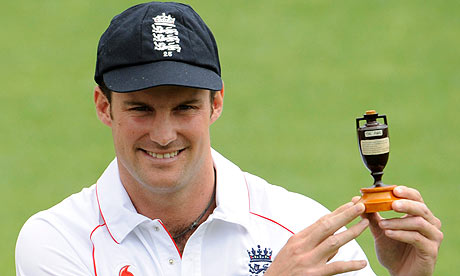
it we all know it’s there.’ Andrew Strauss, England Cricket Captain
Events do not create pressure it is only our internal
thoughts that do that. We are
responsible for our mind and how it behaves. Therefore the more we train our mind, the
better we are able to deal with pressure.
Positive Leadership: The Source of Pressure
Friday, November 11, 2011
Positive Leadership: Beating the Odds
Beating the odds in a fight against a deadly cancer for most people would mean staying alive. For Mark Herzlich, who was diagnosed with bone cancer while he was a football star at Boston College, living meant playing football in the NFL.

Positive Leadership: Beating the Odds
Labels:
Adversity,
Character,
Commitment,
Passion,
Sport and Business,
Video
Thursday, November 10, 2011
Positive Leadership: Advice on Everyday Leadership
In May 2011, Betsy Myers was appointed Founding Director of
the Centre for Women & Business at Bentley University. The centre is a repository of best practices
for corporate America to recruit and retain women leaders. Betsy served as a
senior adviser to Barack Obama’s Presidential Campaign. Here she gives her advice on everyday
leadership from her new book, Take the Lead -
Positive Leadership: Advice on Everyday Leadership
Labels:
Leadership Principles,
Political Leaders,
Video
Wednesday, November 09, 2011
Positive Leadership: Values
What does getting what you want in life have to do with
values? Let's look at how the two are
connected.

You can't get what you want in life until you know what it
is you want. And, you'll have a hard time knowing what you want, if you are not
clear about what your values are. You
see, if we were to ask you what you really want, what we are actually asking
is, "What do you value?"
Values are guides for daily living that influence your
thoughts, feelings, words and deeds.
They shape your personality and give direction to what would otherwise
be an aimless, purposeless life. Your
values are reflected in your goals, hopes, dreams, attitudes, interests,
opinions, convictions, and behaviour as well as in your problems and
worries.
Values are choices you make from the available
alternatives. Therefore, well-chosen
values require an open mind, because you can't choose freely if you don't know
what your options and consequences are.
Values are cherished and we fight to keep them because they mean so much
to us.
Finally, to be truly significant, values must move from
fantasy into reality and be acted upon.
They cause us to do something, so that we can get and keep what we prize
so highly.
What do you value in life? Have you spent much time thinking
about it? If not, we strongly suggest that you take time to do so. Start today.
Sit down and make a list of all your values.
Then make a list of all your life goals. Do they coincide? If not, maybe
you should re-define your goals to match your values, because it is more likely
that you will get what you want in life if you do.
Positive Leadership: Values
Tuesday, November 08, 2011
Positive Leadership: Left Brain v Right Brain
In this new RSAnimate, renowned psychiatrist and writer Iain
McGilchrist explains how our 'divided brain' has profoundly altered human
behaviour, culture and society. Taken from a lecture given by Iain McGilchrist
as part of the RSA's free public events programme. To hear the full lecture, go
to www.youtube.com/user/theRSAorg#p/u/2/SbUHxC4wiWk

Positive Leadership: Left Brain v Right Brain
Monday, November 07, 2011
Friday, November 04, 2011
Positive Leadership: The Role of Chaos in Leader Development
In our view, the best way to develop leaders for the
challenges of today is to deliberately introduce chaos into the development
process.
In leader development today, chaos is an imperative.
Think about
that—the idea that you would deliberately introduce chaos into leadership
experiences and see how different leaders react to it.
While we may have enough
chaos in our lives, the only way to really test leaders is to see their
response when confronted with turmoil. A
wise idea in a tumultuous world?
Positive Leadership: The Role of Chaos in Leader Development
Labels:
Change,
Leadership Development
Thursday, November 03, 2011
Wednesday, November 02, 2011
Positive Leadership: A Celebration of Steve's Life
Apple's Senior Vice President of Industrial Design, and a
key figure behind the Apple 'revolution, is Englishman, Jony Ive CBE.
Here, he speaks about Steve Jobs at the recent Apple celebration of Jobs' life.
For more, see - http://events.apple.com.edgesuite.net/10oiuhfvojb23/event/index.html#

Here, he speaks about Steve Jobs at the recent Apple celebration of Jobs' life.
For more, see - http://events.apple.com.edgesuite.net/10oiuhfvojb23/event/index.html#
Positive Leadership: A Celebration of Steve's Life
Labels:
Appreciation,
Steve Jobs,
Video
Tuesday, November 01, 2011
Positive Leadership: On Excellence
For 10 years, Tom Peters wrote a syndicated column—"On
Excellence"—for the Tribune Media Services. It was carried by over a
hundred papers—the flagship carrier was the Chicago Tribune. After Steve Jobs'
death, one of his old columns surfaced—on Jobs. It appeared on 8 November 1993,
when Steve was still "in the wilderness"—before his subsequently
triumphant return to Apple.
Herewith, in full ...
‘On Excellence
Marathoners call it "hitting the wall." You get to
a point where you can't go on. But you do. And, miraculously, you come out the
other side and finish the race.
Truth is, damn little of merit, in a profession or a hobby,
is accomplished without running through a wall or two.
I got to thinking about that while reading Fortune's recent
cover story, "America's Toughest Bosses." Some turn "beet
red." Others "scream." Some engage in "sadistic"
behavior and use tactics that amount to "psychological oppression."
While I hardly countenance "Jack Attacks," the tirades by Jack
Connors, head of the ad agency Hill Holliday, I also don't believe the best
bosses are sweethearts.
The best leaders take their firms and followers to places
they've never been before-and, more important, places they never imagined they
would reach. The chief's voice may be subdued or, more likely, strident at
times. The reason, Fortune acknowledges, is the incredible demands these
honchos place, first and foremost, on themselves.
Take Steve Jobs, one of Fortune's seven nasties. I've seen
him, in his days at Apple, lose his cool on occasion. Not a particularly pretty
sight.
Yet I was thoroughly taken aback by one of Jobs'
"excesses," as chronicled by Fortune. A subordinate at Next Computer
was showing Jobs shades of green for the company's logo. More precisely, she
produced some 37 shades of green before coming upon one that pleased the
master. "Oh, come on," the minion recalled thinking, "green is
green."
Oh, no, it isn't!
Almost every step Jobs took at Apple (and Next) broke the
mold; moreover, it defied industry tradition as set by the all-powerful, undisputed
master of the universe (IBM). To say Jobs was fighting an uphill battle is to
suggest that Charles Lindbergh's historic flight across the Atlantic was
"challenging." Jobs was reviled and ridiculed. Yet he reinvented the
computer world, in a way that makes Bill Gates' more recent contributions at
Microsoft seem meager by comparison.
How did Jobs do it? By worrying about which shade of green
was "right." He triumphed with the Apple II. Then the Macintosh. It
was precisely his stratospheric standards ("insanely great" was a
common Jobsism in days past) that allowed him and his enormously spirited teams
to push past the existing frontier time and time again.
No, sir. Green is not green. Not if you're reinventing the
planet. Which is not to applaud his tirades. But it is to suggest that for
every disaffected Apple or Next employee burned by Jobs, there are probably 10
who by age 28 achieved Neil Armstrong-like lifetime highs at his side. Perhaps
the bitterness of some stems from the subliminal realization they'll never soar
so high again. It's a nightmare for a 28-year-old software designer, just as it
is for 30-year-old Michael Jordan.
My two best bosses were my two toughest bosses. Neither was
a screamer, although one came reasonably close. Both practiced psychological
terrorism-though neither knew he was doing so. Both set mercilessly high standards for themselves. And
neither believed in barriers to achievement, including acts of God (which were
seen simply as opportunities to demonstrate one's mettle as never before). Both sent me home screaming. I recall literally a year of
just about non-stop headaches in one case.
It doesn't jibe with the perfectly balanced life. But I'll
tell you, I learned more, faster, from these two than ever before or since.
The perfect boss is, of course, aware of individual
differences and knows exactly how far to push each individual to "attain
maximum performance," or some such ideal.
Except I very much doubt bosses like that exist. Those with
shockingly high standards undoubtedly cause casualties among their followers.
Yet without these outrageous pioneers, we wouldn't get anywhere.
Am I callous? Yes and no. To countenance, under any circumstances, the infliction of pain is callous. But to fail to understand that no epic bridge or dam has ever been built, or fighter aircraft tested, without casualties is to fail to comprehend the real world of high-performance anything.
Fortune quotes experts who say these executive thugs suffer
from low self-awareness. I'm sure that's true, and perhaps the toughies would
benefit from counseling by a trusted peer (unlikely) or elder (slightly more
likely) who would clue them in on the havoc they've left in their wake.
But, let's face it. If these chiefs were thoroughly
self-aware they would probably not realize how insane (literally) their
towering quests are. And the world would be a poorer place for it.’

Positive Leadership: On Excellence
Monday, October 31, 2011
Friday, October 28, 2011
Positive Leadership: The Difference Between Management and Leadership
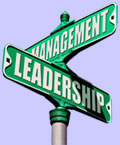
Managers work to get their employees to do what they did
yesterday, but a little faster and a little cheaper.
Leaders, on the other hand, know where they'd like to go, but
understand that they can't get there without their tribe, without giving those
they lead the tools to make something happen.
Managers want authority. Leaders take responsibility.
We need both. But we have to be careful not to confuse them.
And it helps to remember that leaders are scarce and thus more valuable.
Positive Leadership: The Difference Between Management and Leadership
Thursday, October 27, 2011
Positive Leadership: Bridgewater Associates' Pursuit of Truth and Excellence
In both 2010 and 2011, Bridgewater Associates (www.bwater.com) ranked as the largest and
best performing hedge fund manager in the world.
Bridgewater’s unique results are a product of its unique
culture. Truth and excellence are valued above all else.
As Bridgewater founder, Ray Dalio says:
'In order to be
excellent we need to know what’s true, especially those things that we would
rather not be true, so that we can decide how best to deal with them. We want
logic and reason to be the basis for making decisions. It is through this
striving to be excellent by being radically truthful and transparent that we
build meaningful work and meaningful relationships.
At Bridgewater, our overriding objective is excellence, or
more precisely, constant improvement. We believe that producing excellence
requires approaching both work and people in a principled way. Above all else,
we want to find out what is true and figure out how best to deal with it. We
value independent thinking and innovation, recognizing that independent
thinking generates disagreement and innovation requires making mistakes.
To foster this thinking and innovation, we maintain an
environment of radical openness, even though that honesty can be difficult and
uncomfortable. At Bridgewater each individual has the right and the obligation
to ensure that what they do and what we do collectively in pursuit of
excellence makes sense to them. Everyone is encouraged to be both assertive and
open-minded in order to build their understanding and discover their best path.
The types of disagreements and mistakes that are typically discouraged
elsewhere are expected at Bridgewater because they are the fuel for the
learning that helps us maximize the utilization of our potential. It is through
this unique culture that we have produced the meaningful work and meaningful
relationships that those who work here and our clients have come to expect.'
Underpinning the Bridgewater philosphy are Ray Dalio's Principles, which the organisation uses, debates and changes to agree on how individuals should be with
each other in their collective pursuit of excellence.
Positive Leadership: Bridgewater Associates' Pursuit of Truth and Excellence
Labels:
Excellence,
Excellence Under Pressure,
Honesty,
Truth
Wednesday, October 26, 2011
Positive Leadership: Leading in a VUCA World
How do you lead
successfully in a VUCA (volatile, uncertain, complex, ambiguous), disruptive, even chaotic world?
In their new book Great by Choice, Jim Collins and Morten
Hansen pondered that question. To get some empirically derived answers, they
studied leaders of companies that grew to become great in highly uncertain,
even chaotic, industries. They include the biotech, semiconductor, personal
computer, and airline industries. Over the years, the CEOs of these companies
faced massive technology disruptions, deep industry recessions, sudden
collapses in demand, price wars, oil shocks — you name it. But even so, they
led their companies to great long-term financial performance. Their experience
can guide leaders who now must lead in today's disruptive world.
Some of these leaders have become legends, such as Andy
Grove of Intel and Herb Kelleher of Southwest Airlines. Others remain fairly
unknown outside their industry, such as John Brown of Stryker and George
Rathmann of Amgen. What then were the leadership characteristics that separated
the winning leaders from their industry peers?
Surprisingly, they were not more visionary (they did not
stand out for their ability to "see" the future), and they were
generally not more charismatic (yes, a few were, like Herb Kelleher, but not
all, and so were some industry peers).
Instead, the researchers found three other characteristics:
Productive Paranoia.
Bill Gates was hyper-vigilant about what could hit and damage Microsoft.
"Fear should guide you," he said in 1994. "I consider failure on
a regular basis." Herb Kelleher predicted eleven of the last three
recessions. Andy Grove ran around "looking for the black cloud in the silver
lining." Productive paranoia is the ability to be hyper-vigilant about
potentially bad events that can hit your company and then turn that fear into
preparation and clearheaded action. You can't sit around being fearful; you
must act, like Herb Kelleher, who insisted on cutting costs and running lean
operations in good times, so that they would be prepared for the next storm,
imagined or real.
Empirical Creativity.
Well, just staying alive does not produce greatness. You must also create. So
we should expect these leaders to be highly creative — to create new, wonderful
products. Yes, but here's the rub. The leaders of the average industry peers
also displayed lots of creativity. The researchers found that the
differentiating leadership principle was a certain approach to creativity, what
we call empirical creativity — the ability to empirically validate your
creative instincts. This means using direct observation, conducting practical
experiments, and engaging directly with evidence, rather than relying on opinion,
whim, and analysis alone. When Peter Lewis of Progressive, the car insurance
company, had the idea of expanding into the safe-driver market, he did not move
in one big swoop. Rather, he started with trials in Texas and Florida, then
added more experiments in other states, and finally, three years later, when
the concept was validated, he bet big on the new business. His idea was rooted
in empiricism, not analysis alone.
Fanatic Discipline.
Discipline can mean many things — working hard, following rules, being
obedient, and so on. However, the researchers mean something else: The best-performing leaders in the study
exhibited discipline as consistency of action — consistency with values, long-term goals, and performance standards;
consistency of method; and consistency over time. It involves rejecting
conventional wisdom, hype, and the madness of crowds — essentially being a
nonconformist. When John Brown of Stryker set the long-term goal of 20% annual
net income growth, year in and year out (he hit it in more than 90% during 21
years), he was so committed to this quest that it could only be described as,
well, fanatical. Markets down? Competition severe? Recession? Market hype? He
did not care. He built a system of fanatic discipline to achieve the quest, no
matter what. He was highly disciplined
by showing consistency between his words (the goal) and his behaviours
(everything he did to make it happen).
You need all three
leadership skills in an uncertain world: Fanatic discipline keeps you on track;
empirical creativity keeps you vibrant; and productive paranoia keeps you
alive.
When we speak to leaders, we find it helpful to ask: When
you consider these three leadership skills, which do you perceive as your
weakest one, and how can you turn that into a strength?
Positive Leadership: Leading in a VUCA World
Subscribe to:
Posts (Atom)