Positive Leadership has also been recognised as a Top 50 Leadership Expert to Follow on Twitter.

Follow us on Twitter @posleadership


LEADERSHIP IS A PROCESS OF SOCIAL INFLUENCE, WHICH MAXIMISES THE EFFORTS OF OTHERS TOWARDS THE ACHIEVEMENT OF A SHARED GOAL.

Saturday, May 08, 2010

The Power of Positive Leadership

Here is a thought provoking view of the power of Positive Leadership:


Share/Save/Bookmark

Why a Collaborative Culture is Essential in Business

Business leaders around the world are increasingly realising that "silo mentality" and knowledge hoarding behaviours are wasting the kind of collective brainpower that could save their organisation millions, or lead to the discovery of a revolutionary new process or product, or, in the current economic climate, help keep their company afloat when others are sinking!

And it's not just corporate profits that suffer when collaboration is low: the workforce loses something too. Individuals lose the opportunity to work in the kind of inclusive environment that energises teams, releases creativity and makes working together both productive and joyful.

Here are seven insights for harnessing the power of collaboration:

1. Collaboration is a leadership issue. In trying to capture and communicate the cumulative wisdom of a workforce, the public and private sectors have invested hundreds of millions of dollars in portals, software, and intranets. But collaboration is more than the technology that supports it, and even more than a business strategy aimed at optimising an organisation's experience and expertise. Collaboration is, first and foremost, a change in attitude and behaviour of people throughout an organisation. Successful collaboration is a leadership issue.

2. Collaboration is essential for organisational change. Regardless of how creative, clever and savvy a leader may be, he or she can't transform an organisation, a department or a team without the brain power and commitment of others. Whether the change involves creating new products, services, processes – or a total reinvention of how the organisation must look, operate, and position itself for the future – success dictates that the individuals impacted by change be involved in the change from the very beginning. 

3. Visioning is a team sport. Today's most successful leaders guide their organisations not through command and control, but through a shared purpose and vision. These leaders adopt and communicate a vision of the future that impels people beyond the boundaries and limits of the past. But if the future vision belongs only to top management, it will never be an effective motivator for the workforce. The power of a vision comes truly into play only when the employees themselves have had some part in its creation.

4. Diversity is crucial. Experiments at the University of Michigan found that, when challenged with a difficult problem, groups composed of highly adept members performed worse than groups whose members had varying levels of skill and knowledge. The reason for this seemingly odd outcome has to do with the power of diverse thinking. Diversity causes people to consider perspectives and possibilities that would otherwise be ignored. Group members who think alike or are trained in similar disciplines with similar bases of knowledge run the risk of becoming insular in their ideas. Instead of exploring alternatives, a confirmation bias takes over and members tend to reinforce one another's predisposition.

5. Relationships are key. The outcome of any collaborative effort is dependent upon well-developed personal relationships among participants. Not allowing time for this can be a costly mistake. For example, all too often, in the rush to get started on a project, team leaders put people together and tell them to "get to work." This approach proves less than productive, as the group hasn't had time to get to know one another, to discover each other's strengths and weaknesses, to build trust, nor to develop a common understanding and vision for the project.

6. Trust is the glue. Trust is the belief or confidence that one party has in the reliability, integrity and honesty of another party. It is the expectation that the faith one places in someone else will be honoured. In many businesses today, there is a crisis of trust: suspicious and cynical employees are disinclined to collaborate – sharing knowledge is still perceived as weakening a personal "power base." And, despite lots of lip service to the contrary, too many corporate leaders still don't trust employees with the kind of open communication that is the foundation of informed collaboration.

7. Body language matters.  Leaders often make "body language blunders".  For example, have you ever been in an important meeting, and heard the presenter telling the group how much he welcomed any input the group could provide? But at the same time he was using both his hands to nonverbally push the entire group away!

Today's corporation exists in an increasingly complex and ever-shifting ocean of change. As a result, leaders need to rely more than ever on the intelligence and resourcefulness of their staff. Collaboration is not a "nice to have" organisational philosophy. It is an essential ingredient for organisational survival and success.

Share/Save/Bookmark

Friday, May 07, 2010

The Message to Britain's Political Leaders

What has changed more than anything as a result of yesterday’s UK General Election is the voters’ view of those in authority. Whatever constitutional conventions, Parliamentary arithmetic and party ambitions say, deference by the electorate is dead. The old order changeth. That is what the politicians of all parties must remember above all else as they consider this election result.


Share/Save/Bookmark

What is 'Failure'?

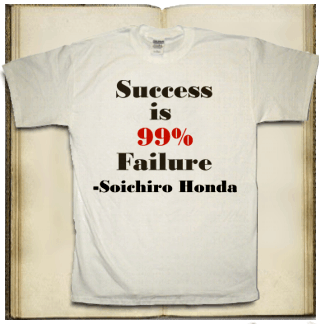
In our view, and regardless of circumstances, there is no such thing as failure. You see, most people have been programmed to be afraid of failure. But we believe that failure, more than anything else, is an attitude. 

All of us can remember times when we didn't get the results we wanted. We did poorly in a test, or put together a business plan that didn't work.

But successful people don't think in terms of failure. They think in terms of results they can learn from. If they try something and it doesn't work out, they believe they've had a learning experience, and they take new actions to get new results. 

Think about it. What is the one asset, the one benefit you have today that you didn't have in the past? Experience, right? And experience is what you make of it. 

Maybe you are afraid of failure, but how do you feel about learning? Fear of failure can stop you before you start. It can stop you from taking the risks you need to take in order to grow. If you redefine failure as learning, as important feedback, there is no longer anything to fear. 

As a familiar example, Edison tried thousands of different materials before he found the right filament for the electric light bulb. When asked why he didn't quit, he said, "Why should I? I now know 2,000 things that don't work!" If you look at your experiences the way Edison did, you are much more likely to achieve success. 

Share/Save/Bookmark

Thursday, May 06, 2010

Character Matters

Character always matters in UK politics, and it matters more than ever now. The age of austerity that will shortly be upon us will require some hard decisions. There will be bruising battles with the public-sector unions; the might of the Whitehall establishment will have to be taken on. The scale and role of government will have to be fundamentally re-assessed because the deficit will demand it. Make sure you vote today!

Share/Save/Bookmark

Make Expectations Clear

The first item in The Gallup Organisation's Q12 survey, which they use to measure employee engagement, is "I know what is expected of me at work." You may be surprised to know that less than 50 percent of the millions of employees who have responded to the survey agreed with this statement.

How can employees do what's expected of them when they don't know what's expected? A big part of the problem is that managers assume their team members are clear because they have their job descriptions, and the manager has, in their own mind, clearly communicated their expectations.

The problem is that meaning resonates in a person's mind, not in the words used to communicate. How many times have people misinterpreted something you said? Your meaning isn't necessarily the same meaning they interpret from your words.

The only way meaning can be effectively transferred is through a two-way discussion--and that is the only way to ensure expectations are clear.

Here are some steps you can take to ensure that you and your team members are clear about what is expected of each other:

  1. Make sure you are not only clear about what you expect from each person, but also about the desired outcomes.
  2. Recognise that your team members have expectations of you as well, and they are more likely to meet your expectations if you meet theirs.
  3. Ask each team member their understanding of what is expected of them and what outcomes they believe they are accountable for. Where their understanding differs from yours, reach agreement and get confirmation that you are both on the same page.
  4. During team meetings, make time to get input from all team members on whether expectations are being met, and agree on any changes that need to be made.
  5. If anyone is failing to meet the team's expectations, make sure the expectations are realistic, and if they are, remind them of their commitment to the team, and get agreement to fulfil the expectations.

Share/Save/Bookmark

Wednesday, May 05, 2010

BP Boss Needs to Do More

As a result of the Gulf of Mexico oil spill, BP faces huge clean-up and compensation bills, a barrage of lawsuits, and a political backlash against the deep-water drilling that has become an important part of its business. When Tony Hayward took the top job three years ago, he made safety his main priority. By all accounts, there have been considerable improvements, but that hardly matters now.

Mr Hayward's reputation depends on how rapidly BP brings the spill under control, even though this is out of his hands, and could take days or weeks or months. But whatever happens, the chief executive sets the tone. We judge organisations now on whether their leaders seem suitably humble and sincere and decent.

In particular, the crisis-stricken boss must weigh up the dangers of defiance against the perils of penitence: Toyota was disastrously slow to acknowledge its recent safety failings, just as Gordon Brown was reluctant to accept any responsibility for Britain's economic woes. 

And even though Hayward promised to cover the costs of the clean-up, his early insistence that the oil slick was "not our accident", since the rig was run by another company, was not what the fishermen of Louisiana wanted to hear. Greater eagerness to shoulder responsibility quickly ensued.

The central problem is that, for most of their careers, executives and politicians are drilled by lawyers and advisers to avoid admitting liability for anything. Yet when things get really bad, taking a hit to next quarter's profits may be less dangerous than the longer-term impact of punitive legislation or regulation (especially in the US, where a political backlash is the inevitable consequence of any crisis). 

Whether you call this the growth of a blame culture, or a greater holding to account of those who mess up, it is an increasingly powerful force – and should prompt bosses to spend more time worrying about the consequences of excessive risk, and less time lobbying for fewer restrictions.

Does anyone remember the late Sir Ian MacGregor and the plastic bag during the 1983 miners' strike in the UK?


Share/Save/Bookmark

Decision Day Tomorrow - Who Should Be Our Next Leader?


Share/Save/Bookmark

Tuesday, May 04, 2010

Leadership on the Rugby Pitch

Andrew Cosslett, CEO of InterContinental Hotels Group, has learned more on the rugby pitch about the value of everyone on the team than in any other part of his life:


Share/Save/Bookmark

10 Ways to Train Your Brain

Here are ten abilities of those who are mentally tough; a key value of Positive Leadership:

1  Visualise the Goal
2  Focus on the Goal
3  Build a Consistent Routine
4  Stay in the Present
                               5  Build Momentum
                               6  Move On
                               7  Prepare Porperly
                               8  Practice for Pressure
                               9  Keep Track to Evaluate
                              10 Believe in Yourself and your Team

For more on how we can help you develop these skills, please contact: gavin.hastings@positiveleadership.co.uk

Share/Save/Bookmark

How Should Your Company Look at Leadership?

Some good advice for leaders who want to focus their energies on people:


Remember the five most important words in business -

'I am proud of you'

Remember the four most important words in business -

'What is your opinion?'

Remember the three most important words in business -

'I appreciate that'

Remember the two most important words in business -

'Thank you'

Remember the most important word -

'You'


Share/Save/Bookmark

Monday, May 03, 2010

Uncommon - A Different Way of Leading

Super Bowl winning coach and #1 New York Times best-selling author Tony Dungy has had an unusual opportunity to reflect on what it takes to achieve significance. He is looked to by many as the epitome of the success and significance that is highly valued in our culture. He also works every day with young men who are trying to achieve significance through football and all that goes with a professional athletic career—such as money, power, and celebrity. He is the author of Uncommon: Finding Your Path to Significance.


Share/Save/Bookmark

What Hurts Large Companies

This interview with Omar Hamoui, founder and chief executive of the mobile advertising network AdMob, was conducted by The New York Times:

'Q. You’ve been involved mostly with start-ups, but you also spent some time working at Sony Pictures as a developer. So what did you learn about large corporations?

A. Two really key things. One was that insecurity is incredibly damaging in a corporate environment. You end up making really poor decisions, a lot of things you do are based on fear, and eventually it will fail. When people are playing defence and they’re primarily focused on their own jobs, it ultimately ends up being a sort of losing strategy.

The second thing is that there’s a lot of time wasted in conversations that don’t happen face-to-face. When there are backroom conversations and dealings — as opposed to direct conversations — it’s less efficient and you get poorer outcomes. People could spend weeks building these political coalitions rather than just having a direct conversation.'


Share/Save/Bookmark

Sunday, May 02, 2010

Great Leaders are Fair Leaders

Many great leaders understand intuitively that they need to work hard to create a sense of safety in others. In this way, great leaders are often humble leaders, thereby reducing the status threat. Great leaders provide clear expectations and talk a lot about the future, helping to increase certainty. Great leaders let others take charge and make decisions, increasing autonomy. Great leaders often have a strong presence, which comes from working hard to be authentic and real with other people, to create a sense of relatedness. And great leaders keep their promises, taking care to be perceived as fair.

Share/Save/Bookmark

How Trust Creates Wealth

Integrity might sound like a personal virtue, but a new book says it's actually a precious economic asset. In The Economics of Integrity: From Dairy Farmers to Toyota, How Wealth Is Built on Trust and What That Means for Our Future, journalist Anna Bernasek writes that almost every aspect of the modern global economy — from getting cash at an ATM to trading gold in international markets — is possible only because of deep-seated trust.

Here is what she has to say about this cornerstone value of Positive Leadership:

‘You talk about creating integrity systems. What are those?

I use eBay as an example of how you can create integrity from scratch. If you played according to the rules — if you bought, if you sold exactly the products in the way that you said they were, if you handed them over to the buyer in good order — then everybody created wealth and everybody benefited. And that cycle of integrity and wealth encouraged more people to come in. And then you had a bigger pot of integrity and a bigger pot of creating wealth. It's a virtuous circle.

What are the key components of creating an integrity system?

I call it the DNA of integrity: Disclosure, Norms and Accountability. [By] disclosure I mean bringing the truth out into the open so people can make their own decisions. Norms [are] basic guidelines that are simple, easy to understand and intuitive. If you're buying [on eBay], the rule is, you follow through and you send your money. If you're selling, you basically send your goods in the way that you say you will. That makes sense to us; it's easy to follow those rules. Lastly, accountability. This isn't about trying to catch people. It's actually about giving people the perception that if they break the rules there's a good chance they'll get caught.

I think there are two other factors I would include. One is a long-term view. [With] eBay, the potential for cheating was just enormous. What they did with their feedback system — where today buyers can rate sellers on how they behave — is that suddenly they brought sellers' behavior out into the open. So if you want to do business with a seller you can look at their feedback scores and decide, do I trust this person or not. So all of a sudden, it changed the dynamic: it eliminated the possibility of short-term cheating. If you cheated one person, it would go on your record. And then suddenly nobody would want to do business with you. That long-term view is really critical. And then the last thing is the feedback. When we put in place rules from government, new laws, regulations, you just have no idea how it's really going work out. So you need a feedback system that actually allows you to judge, to monitor, to make changes, to be adaptable.’


Share/Save/Bookmark

Saturday, May 01, 2010

Army Lessons in Leadership

As the US army's touchstone for leadership, The U.S. Army Leadership Field Manual stresses ethics, high moral character and the honourable refusal to obey unlawful orders. American army training repeatedly emphasises moral leadership, character and integrity, as seen in this primary field manual of leadership, which is used by soldiers and officers everywhere. Read the principles that helped shape such leaders such as Marshall, Eisenhower, Schwarzkopf and Powell. You can employ many of their lessons of moral courage and determination in the corporate boardroom.

What does the Army teach that enables it to create effective, inspirational leaders?

Character Comes First

The key attribute for command in the U. S. Army is character. In other walks of like, what you know or do might be the foundation of your promotion - not in the Army. Army leadership begins with the leader's innermost character, the internal strength that enables him or her to do the right thing regardless of adversity. The Army motto describes this as "Be, Know and Do." Being a person of high character comes first.

Character is who you are. The core of who you really are doesn't change. It's the same when you're speaking to a group or when you are by yourself, when all eyes are on you or when you think nobody is watching. 

Character helps you know what is right and wrong, and follow right over wrong consistently. Army leaders must reflect the highest standards of character, and they must instill those principles in others.

The Army describes the essence of leadership in terms of the moral values of its leaders, which are: loyalty, duty, respect, selfless service, honour, integrity and personal courage.

Share/Save/Bookmark

Influencing the Decision Maker

Every decision in the world is made by the person who has the power to make that decision—not the “right” person, or the “smartest” person, or the “most qualified” person, and in most cases not you. 

If you influence this decision maker, you will make a positive difference. If you do not influence this person, you will not make a positive difference. Make peace with this. You will have a better life! And, you will make more of a positive difference in your organisation and you will be happier.

Share/Save/Bookmark

Friday, April 30, 2010

Emotional Control Matters for Peak Performance

Controlling our emotions is important for peak performance because it maximises our brain resources. 

Our emotional experience is connected to a large brain network called the limbic system. When the limbic system gets overly aroused, it reduces the resources available for the prefrontal cortex functions we use in decision making and problem solving. But when we get emotional we don’t usually handle it in the best way.

We have three options: express them, suppress them, or change them. Expressing or suppressing them rarely help and often only makes things worse. Brain research has shown that changing how we think about our emotions is the best course. This strategy has two components: labelling for most situations and reappraisal for the most intense situations. 

Share/Save/Bookmark

Leaders Need 'Presence'

Being 'in the present' is a key leadership skill. In this respect there is much to learn from the theatre. Watch this talk for some enlightening views. Patsy Rodenburg is a sought-after voice and acting coach has worked with some of the world's leading actors, including Daniel Day-Lewis and Judi Dench.


Share/Save/Bookmark

Thursday, April 29, 2010

Preventing Leadership Failures

What causes a leader to fail? What can we learn from those who have fallen? How do we avoid failure of our own? These are just a few of the question answered in  a new book for leaders and aspiring leaders of all levels by Dr. Tim Irwin.

Derailed: Five Lessons Learned from Catastrophic Failures of Leadership (NelsonFree)chronicles the collapse of six high-profile CEOs, the factors that drove their downfalls, and the lessons that we can learn to avoid derailing our own lives and careers.




Share/Save/Bookmark

True Leadership

True leadership is about bettering the lives of the people around you. That is a simple idea, but far too few people follow it. Too many executives get caught up in making money at any price.

When you make any business decision, about training or compensating employees or dealing with clients or anything else, consider how that decision will make the lives of the people around you better. Do so during both good times and bad times, and you will make better decisions.


Share/Save/Bookmark

Wednesday, April 28, 2010

Excellence: Don't Fear Failure

Tom Peters tells a story about a man who was unafraid to fail, and why that makes him an excellent role model:


Share/Save/Bookmark

Tuesday, April 27, 2010

Signs of a Positive Leader

So how do we know when we're following a true leader? Well, that's something we all have to decide for ourselves. But we have some ideas about what it takes to excel - as an expert and as a leader. So here's our list:

1. Positive, no Matter What.  Leaders don't jump on the easy bandwagon of negativity. A true leader is determined to find the positive, no matter how ugly things appear. They hold fast to their positive vision - tirelessly seeking the best outcome for all. Anyone can throw in the towel and succumb to negative, woe-is-me, finger-pointing thinking. Leaders rise above the negative path - finding positive aspects in any situation to help their followers find a better way to live and grow.

2. Problem Solving. When there are issues, leaders focus on solving them in the most expedient way possible. They don't start a witch hunt to find out who caused the problem. That won't solve anything. Leaders roll up their sleeves and dive into problem solving mode. They inspire others to do the same - leveraging expertise and a positive focus to solve the issue and move on.

3. The Guts to Be a Winner. Those with true expertise usually also have the guts to spit in the face of a business storm and come out a winner. They don't collapse under the weight of negative commentary, shudder when the naysayers gather like a pack of wolves. They stand up and come out fighting with every positive aspect in their bones. Their inspiration teaches all of us how to be winners in the face of the negative storms that are bound to hit us.

4. Thoughtful Commentary. Leaders don't run around pointing to others saying things like 'just look at that awful product, look at how stupid those other companies are'. No way. Leaders are thoughtful and constructive with every word that comes from their mouths. Our words are one of the most powerful things we own. Leaders know that, and are thoughtful with their words. When they comment - it's always in the spirit of positive, helpful and supportive advice or wisdom. Even when they point out an issue - they follow it with a recommendation for how that issue can become a  strength. Their words are always used to inspire and lift their followers.

5. Consistency and Integrity. Leaders value their own integrity above all else. They refuse to sacrifice that integrity no matter how large their potential gain. Leaders have consistent, fair and well-founded opinions. Yes, those opinions will evolve - they must to avoid getting stuck in the status quo.   But when they do evolve, leaders will share the logic and reasoning behind that evolution. Then they'll be consistent with that evolved opinion. Leaders don't flop back and forth like a poor fish out of water, seeking a ride on the most popular tide.

6. Placing others before themselves. Leaders know that the 'good of the many outweighs the good of the few, or the one.' They place the good of their followers above themselves, their fame, their fortunes. Great leaders are servants - placing the value they provide above all else.

7. No Chest Thumping. Leaders quickly let us all know they are just like the rest of us. Leaders do everything they can to make others feel special because they are focused on lifting their followers - not themselves.

8. Thumper Rules! Leaders follow Thumpers' lead:  'If you can't say something nice, then don't say anything at all'!

For more on how we can help you develop as a Positive Leader, please contact: graham.watson@positiveleadership.co.uk 

Share/Save/Bookmark

Developing Leaders from the Military

Bill Simon, the chief operating officer of Wal-Mart U.S. and a 25-year veteran of the US Navy and Naval Reserves, had a suggestion. What the company should do, he argued at the time, was create a programme to recruit junior military officers - the lieutenants and captains who had recently led soldiers, sailors, Marines, and airmen.

Regardless of where you fall on the favourable-of-military-and-war scale, the fact is the military is a leadership-training hotbed, particularly in wartime.

According to General David Petraeus, the man in charge of U.S. forces in Iraq and Afghanistan:

"Tell me anywhere in the business world where a 22- or 23-year-old is responsible for 35 or 40 other individuals on missions that involve life and death. Their tactical actions can have strategic implications for the overall mission. And they're under enormous scrutiny, on top of everything else. These are pretty formative experiences. It's a bit of a crucible-like experience that they go through."

Recently GE CEO Jeff Immelt gave a speech at West Point called "Renewing American Leadership". In the speech he said that 21st-century leaders:
  • Need to be better listeners.
  • Need to be comfortable with complexity.
  • Must be willing to delegate so that the organisation can move quickly.
Even the US Army Training and Leader Development Panel concluded in 2001 that it needed officers with two basic qualities: self-awareness and adaptability.

Does this mean that the military is the only place you're going to find:
  • Better listeners.
  • Those comfortable with complexity.
  • Self-awareness.
  • Adaptability.
  • Those who take strategic risk and fail with certainty.
  • Those who are comfortable leading self and others.
No, of course not, but this definitely provides a learn-by-doing framework from which to source future leaders within and without your organisation.

Maybe they came from the military, or public safety (police and fire), or another company, or even your own firm (when you weren't looking) where existing leadership trial by fire and brimstone has forged the new millennium of management talent.

Identify them. Nurture them. Train them. Allow them risk and responsibility.


Share/Save/Bookmark