Positive Leadership Limited is a strategic leadership and corporate finance advisory firm. We use our considerable experience to provide unique perspectives and innovative solutions which help corporate leaders unlock maximum value from complex business challenges. There is no dress rehearsal for delivering answers to critical business challenges. When you are under intense pressure to succeed, we help deliver the vitally important marginal gains which let your business excel and win.
"The Glaswegian has been an inspiring leader during these
troubled days, not simply in the support he has shown [Farbice] Muamba’s family and the
way he has tended his distressed flock.
Coyle has handled the media adroitly, always exuding
positivity. In times of darkness, football needs beacons of hope and Coyle has
lit them across the land.
A humble character, Coyle will hate this sentiment but it
needs chronicling for all time that he has embedded himself so deeply in the
affections of the Bolton public.
As a player, Coyle lifted Bolton up once before, helping
them rise to the Premier League via the play-offs in 1995.
As a manager, Coyle has now lifted the club off its knees.
The nation has also seen and admired somebody assuming
responsibility when most required. So ‘66 was a great year for English
football: Owen Coyle was born.
This is a man of principle, a figure who inspires trust
amongst his players.
It is astonishing to consider that earlier this season
Coyle’s leadership credentials were being questioned. Not now. Not after these
past few days.
Whatever fate befalls Bolton this season, and the feeling
endures that they could be acquiring the quickening resolve (as well as players
like Rio Miyaichi) to scrap their way out of the relegation basement, Coyle’s
reputation has been enhanced. His critics have been scattered.
Some men are made for such moments. Again, Coyle will hate
the praise. That’s not his style. Never has been.
In company, the former Republic of Ireland international is
modest and bright, talking almost too quickly such is the abundance of ideas
spilling forth.
Attending one of Kevin Davies’ golf days last year, I
suggested a quick coffee with Coyle in the clubhouse and listened spellbound to
his espousal of the passing game and of football’s role in the community.
Coyle enthuses people, especially players. It is little
surprise that managers like Arsenal’s Arsène Wenger entrust him with youngsters
like Miyaichi and particularly Jack Wilshere, who flourished on loan under
Coyle.
Chelsea’s Daniel Sturridge also matured as man and player
during his spell at the Reebok.
It is also little surprise that Bolton’s dressing-room is
home to some of the more thoughtful souls in the game like Davies, Sam
Ricketts, Stuart Holden, Nigel Reo-Coker and Muamba.
They enjoy working with such a shrewd teacher as Coyle.
If Coyle has been seen in the right light over the past few
days, the game he loves and serves so well has been viewed in a different light…….”
In 2009, Haroon Mirza’s start-up, CognoVision, was named most innovative
company by the Canadian Innovation Exchange. He attributes the accomplishment,
at least in part, to the pitch he delivered prior to being awarded the
prestigious title.
Shortly after winning, Mr. Mirza’s facial-recognition
software business was purchased by Intel for millions of dollars.
The pitch may be an art, not an exact science, but Mr. Mirza
has a few simple techniques he says can help anyone improve their public speaking:
Say the pitch out
loud as many times as possible in advance
Mr. Mirza always thought Steve Jobs was the best presenter
in the world. “He looks so natural. I remember I read somewhere that he spent
more than a month preparing for every presentation, and it made me think that
if Steve Jobs spends that much time preparing, how does anybody wing it?”
If forgetting lines and feeling self-conscious in front of
an audience are two things that make a presenter nervous, go through dry runs
to get used to the content, allowing greater flexibility to articulate it, and
familiarise yourself with performing.
You don’t know all
the answers
And that’s all right. Meticulous preparation is important,
and being able to answer any questions from prospective investors, venture
capitalists or anyone else for that matter, speaks to a presenter’s confidence
and knowledge of a product. However, not knowing all the answers does not mean
failure.
“If someone asks you a question and you don’t know the
answer, do not attempt to make it up on the spot,” Mr. Mirza advises. “These
people can smell BS and as soon as they do, you lose credibility. The best way
to handle the situation is to be honest; saying something like ‘I don’t have
that information at the moment but I’ll look into it immediately and be sure to
follow up.’”
Read
Seriously. Mr. Mirza thinks of it as investing in yourself.
When researching the people he thought were the best public speakers – Bill
Clinton, Steve Jobs – he noticed one thing they had in common was that they
were well-read. Exposure to so much material likely helped them articulate
their own.
“So I started reading more, I expanded my vocabulary, I
learned how to better articulate my ideas, and I think in this way the
presenter earns the respect of the audience.”
Storytelling as a
competitive advantage
The audience feeds off the energy of a presenter. When the
speaker is nervous, so is everyone else in the room. A confident, measured
delivery can help a presenter maintain control. That’s why Mr. Mirza tries to
make each presentation like telling a story.
“Say you’re presenting to a venture capitalist. If you’re a
great storyteller, you transfer that enthusiasm to the audience and you get
them feeling involved in what you’re saying. Excellent presentation skills are
an unfair advantage; when you’re really good and you make it look easy, it’s
unfair to everyone else who has to present against you.”
Music is a powerful mood setter, transcending time and
place, and has the ability to evoke memories made yesterday or thirty years
ago. We all know that music makes us feel, but what is it about music that gets
us pensive, or full of life and on our feet and dancing?
British psychologist, John Sloboda, conducted a study
where he asked participants to identify the parts of a song they thought were
most powerful. The results showed that a significant number of the 'powerful
song parts' were created by appoggiatura – a process which creates emotional
tension in the listener.
If appoggiatura doesn't sound familiar, you'll be able to
relate to it when we say it's the moment in a song when you feel shivers down
your spine. If you've heard "Someone Like You" by Adele, you'll know
what we mean. Appoggiatura creates an emotional connection with our brains
which leads us to think that these are the most powerful parts of a piece of
music.
What's really interesting
is that listening to emotionally charged music, whether happy or sad, releases
dopamine which makes us feel good. The more goosebumps you feel when listening
to a song, the more your brain craves it.
Nancy Koehn is a professor of business administration at Harvard University.
The business community is due for a change in the way it values families and work-life balance, Koehn says. She addresses this in three parts.
Large companies are struggling to retain top talent, half of whom or more are women, Koehn says. Improvement is needed in enabling a woman to maintain her career and have a life outside of work — including having and raising a child — that goes beyond “a kind of toggle switch” in which a woman leaves and then “tries to get back in.”
Corporations need to have open discussions about work-life balance, including what it means to have a family. It’s not enough to discuss “work-life balance” or “work-family,” Koehn says. What is needed is “a more nuanced dialogue that’s in keeping with the … difficulty and messiness of trying to work well and live well as a family member, a parent and a citizen,” she says.
Businesses don’t foster values that include men and women as units of a family, particularly among large corporations, Koehn says. Few include family as a core part of their mission or values, and “yet everyone has a family, and everyone is very much affected in terms of the possibilities and their paths by what that family is and what it becomes.”
Fast
Company's website 30secondmba.com is a great source of short video
insights on leadership, business success, teamwork and innovation from some of
today’s top business people. This "advice from the trenches" is a
wealth of easily digestible information and a font of real experience.
One headline that caught our attention was the role of imagination in leadership. Senior leaders from
Intel, DreamWorks and Current TV among others give their version as to how
imagination is crucial to good leadership.
Imagination allows leaders to see
opportunities and obstacles that others can't, it fosters collaboration and
creativity, and it creates energy, all of which lead to motivation. Imagination
fuels success and a winning attitude. Imagination gives us the courage to
wonder 'what if'.
As we head into another year of March Madness, remember that whether you know it or not, little eyes are watching you and little minds want to be just like you.
What kind of a role model are you going to be for them?
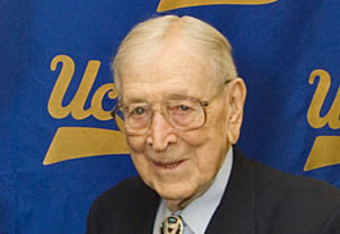
NCAA legend, the late Coach John Wooden shares some thought provoking words in this video directed by Spike Lee.
"Leadership is not a talent or a gift. It's a choice.
It's not complex, but it's very hard.", General Stanley McChrystal
explains to a packed auditorium of 600 at the Stanford Graduate School of
Business.
McChrystal shares his perspective on leadership and influence
discussing the importance of understanding culture, leading by example,
building trust, and creating a common goal within a team.
It's important, he told the audience, for a leader to share
in the critical aspects of a task. "If there's risk, you've got to share
it," he said. "If there's pain, you've got to share it."
McChrystal is a four-star general and former commander of
U.S. and international forces in Afghanistan. He also served as the former
leader of Joint Special Operations Command (JSOC).
Li Cunxin recalls having integrity in life was something he
was taught very early on in his childhood. Li notes that integrity is an
essential trait for leaders in order to inspire and motivate those around you.
Jim Stengel, former global marketing officer for Procter
& Gamble, believes that businesses must rethink their purpose to achieve
far better results.
But not just the most apparent purpose, but a higher order
ideal or purpose. For example, Johnnie Walker exists to make great whisky, but
its higher order ideal is to celebrate journeys of progress and success.
Starbucks must make great coffee, but it must do more if it
is to attract people and innovate in ways that make life better for the people
they serve both inside and outside the organisation. “It’s necessary,” writes
Stengel in Grow,
“to want to be the best-performing enterprise around, with the highest
standards, the best people, and the most satisfied customers.
However, this
simply doesn’t aim high enough and look far enough ahead. To hit higher targets
and stay out in front of the competition requires an ideal. ”To that end,
Starbucks also exists to create connections for self-discovery and inspiration.
It’s what fuels passion and creates meaningful work. A brand ideal of improving people’s lives is
the only sustainable way to recruit, unite, and inspire all the people a
business touches, from employees to customers.”
Stengel believes that a higher-order brand ideal must
improve people’s lives in one of five fields of fundamental human values:
Eliciting Joy:
Activating experiences of happiness, wonder, and limitless possibility; create
moments of happiness that engage our thoughts and emotions as well as our
physical senses. (Coca-Cola, Zappos, Lindt)
Enabling Connection:
Enhancing the ability of people to connect with one another and the world in
meaningful ways. Key concepts in this field are connect, listen, reach, and
community. (Airtel, Fed Ex, Blackberry, Natura)
Inspiring Exploration:
Helping people explore new horizons and new experiences. Helps customers learn,
gives them powerful tools, and invites them to reinvent themselves and their
world. (Apple, Discovery Communications, Pampers, Red Bull)
Evoking Pride:
Giving people increased confidence, strength, security, and vitality;
supporting self-expression and inspiring passion. (Calvin Klein, Heineken,
L’Occitane)
Impacting Society:
Affecting society broadly, including by challenging the status quo and
redefining categories. (Accenture, IBM, Method, Seventh Generation)
Stengel’s bases his conclusions on a ten-year growth study
involving 50,000 brands. The study tracked the connection between financial
performance and customer engagement, loyalty and advocacy. The result was “The
Stengel 50.” In the 2000’s, an investment in these companies would have been
400% more profitable than an investment in the S&P 500. “If you’re willing
to embrace the same concept and align your business with a fundamental human
ideal, you can achieve extraordinary growth in your own business and your own
career. My research shows that your growth rate can triple.”
Stengel’s point is good psychology. Success is more complex
than any one factor. More good decisions than bad (intelligent people make silly
mistakes too); timing and luck all play a part too. And then great companies
get off track, not because they were doing the wrong thing, but because they
stop doing them or failed to adapt appropriately. The ideas presented in Grow
are what worked for Stengel for the time he was at Procter & Gamble and
properly applied may work for you too. Generally, if it is based on sound
principles, it’s always worth consideration. And Sengel’s ideas are.
One implication of
the study is interesting. Stengel reports that the “study challenged P&G’s
paradigm of moving people around frequently. The companies that were growing
the fastest had a different paradigm. In recruiting and hiring they looked for
people whose values fit with their brands, and tended to keep people working in
the same areas for much longer.”
He categorizes the people that run The Stengel 50 as
business artists. “The fastest-growing businesses in the world have a leader
whose relationship to the business is not primarily that of an operator, no
matter how savvy, but an artist whose primary medium is an ideal.”
The business case for ideals is about playing a role in the
lives of both customers and employees at a much more important level than the
competition does. It’s about connecting with people holistically: rationally
and emotionally, left brain and right brain.
Stengel recommends
that you continually ask four questions:
1.How well do we understand the people who are
most important to our future?
2.What do we and our brand stand for?
3.What do we want to stand for?
4.How are we bringing the answers to these
questions to life?
The power is in the answers and executing against them. What
is your primary purpose? What do the people you serve care about beyond what
they buy from you? Could you benefit from discovering your higher ideal?

One of the things that we should constantly remind ourselves
about is to be very aware of the good things in our life. It seems to be a part
of human biological functioning to take good things for granted, especially
those good things that are a part of our day-in, day-out lives.
You see, there is actually a part of our brain that is
designed to screen out anything that isn't hurtful, fearful, or physically
moving. A long time ago, it helped our ancestors stay alive and get ready to
fight or run away.
Nowadays, this brain function may have something to do with
our neglect of the good but very familiar things in our lives. So is there
anything we can do about it? How can we combat this complacency?
Well, for one thing we can become conscious! We can
stimulate our own awareness by making lists of the things we are grateful for,
and by deliberately thinking about what we value and take pleasure from. In
other words, we can take on the "Attitude of Gratitude."
We can express these feelings in words, or in other ways. We
can express them openly, and in the process help others to remember their own
reasons for gratitude. What are you grateful for in your life? How do you
express your gratitude, and how often do you express it?
Are you taking your most important gifts for granted? If so,
how could you change, and how soon?
John Mackey, the CEO of Whole Foods Market chain, has
loftier goals than getting Americans to eat healthy foods, one of the missions
of his grocery empire. He is out to change American business as well, putting
it on the path to higher consciousness.
"It comes from saying no to 1,000 things to make sure
we don't get on the wrong track or try to do too much. We're always thinking
about new markets we could enter, but it's only by saying no that you can
concentrate on the things that are really important."
Lindsey Vonn's Aha! Moment: The Power of Positive Thinking
As told to Jessica Silvester
From the February 2012 issue of O, The Oprah Magazine
‘After very different encounters with two childhood role
models, the Olympic gold medallist skier learned the value of a winning
attitude.
One weekend when I was 9, two of my idols from the U.S. Ski
Team came to sign autographs at the ski shop in my Minnesota hometown. When I
heard about the event, I couldn't believe I'd have the chance to see them in
person—on TV, they seemed like superheroes.
Picabo Street, the downhill champion, appeared at the store
first, and she was amazing. "Keep following your dreams," she told
me. With those simple words, she made the idea of being an Olympian seem
attainable. She signed a poster for me that I still have.
But the next day I went back to meet my other idol, who
shall remain anonymous. I arrived at the tail end of her signing, and when I
asked for an autograph, she coldly said no and walked away. I was crushed. My
parents tried to console me, saying, "She's probably stressed. She must
have had a bad day. Try not to think about it." But as an impressionable
kid, I couldn't stop thinking about it. After having these opposite
experiences—one so inspiring, one devastating - I realised what a difference your
attitude can make.
That moment stayed with me. When kids recognize me now,
whether they want an autograph, a high five, or to ask me my favourite colour,
I never say no. If I'm at an event like the meet and greet I did last year in
Vail, which lasted about three hours in ten-degree weather, I don't focus on
the fact that I'm freezing. I remember that if you stay upbeat, it can have a
huge impact on those around you.
I make the effort to stay positive in other areas of my
life, too. If one of my friends gets hurt in a relationship, I try to point out
something she can learn from it (although you'd have to ask my friends if I'm
actually helping). And when I'm training with the U.S. Ski Team and feeling
exhausted, I still try to give people support. Of course, I have my moments.
But it's usually easier and more fun to be positive than it is to be
negative—and it has served me well.
In November, while I was having lunch with students from the
Vail Ski & Snowboard Academy, a 16-year-old boy named Parker politely asked
if I would come to his homecoming dance that Friday night. I couldn't say no.
And then there I was, dancing and having fun, after missing my own high school
homecoming because I was busy traveling and skiing. Parker was a great date—and
I was so glad I had said yes.’
Trevor Moawad, IMG Performance Institute Director talks about management leadership skills in this video. "If we find success, it’s all about sustaining it. And if we are struggling, it’s all about responding." Moawad explains the main principle about adopting the correct attitude to affect the performance and being able to talk athletes into winning.
Great leaders make the choice to GROW in four areas:
Gain Knowledge. Gain self-knowledge, knowledge of others,
your industry, and the field of leadership
Reach Out to Others. You need to be proactive about helping
others grow if you’re going to grow and learn. Teaching isn’t just about
sharing information, it’s also about helping people draw out new learnings for
themselves by the questions you ask.
Open Your World. You will add much more value as a leader if
you open up and expand your world with leadership experiences and life
experiences. Be on the lookout for experiences inside and outside work that
will make you a better leader over time.
Walk Toward Wisdom. Growth in wisdom has no formula, but it
almost always involves at least one of four elements: rigorous self-evaluation,
honest feedback, counsel from others, and time.
The two primary
reasons leaders get off track are ego and fear. For many leaders, their ego is
fueled by a heightened sense of confidence—you might call it overconfidence or
pride. This, combined with the fear of losing control, often prevents leaders
from serving people and growing.
The secret of success can be described in one word.
We have studied success. We have also spent a lot of time in the company
of respected research psychologists, talking about
what makes some people succeed and others collapse - the difference, in short,
between the cans and the can-nots, the do's and the do-nots.
And after this study and research, we can tell
you one thing with the utmost confidence: the secret of success is
"Attitude." That's it. And it is really not a secret. People who
succeed do not have fewer problems than other people. They do not start out
with the most brainpower or better parents or more money, either.
As a matter of fact, sometimes they start out working
against incredible odds. But they have a way of looking at things, a way of
seeing obstacles as possibilities, a way of hanging in there and making the
most of every opportunity that almost guarantees success. If you are running up
against an unexpected challenge, do an attitude check. Ask yourself, "Am I
not seeing the way around, because of an attitude?"
You are successful - and flexible, optimistic and
hardworking. So if you want to sum it up in a word, it is not difficult to do:
success is a question of attitude.
Just over two out of five bosses consider their line
managers to be ineffective, according to a study into the business benefits of
management and leadership development, released today by the Chartered
Management Institute (CMI) and Penna.
The research shows organisational performance and management
abilities to be clearly linked - with only 39% of managers in low performing
businesses deeming their line managers to be effective, compared to 80% in high
performing organisations.
The CMI-Penna report, produced with Henley Business School,
draws on findings from almost 4,500 managers, including more than 300 CEOs and
550 HR decision makers.
The research provides evidence showing how management and
leadership development activities can lead to increases of up to 32% in people
performance and 23% in overall organisational performance, across organisations
of all sectors and sizes.
The findings show high performing organisations spend on
average 36% more on management and leadership development per manager per year
than low performing ones.
Former General Electric ceo, Jack Welch talks here about the lessons from the Jeremy Lin story - 'Every company is filled with young talent just waiting to explode. Don’t let the bureaucracy keep them on the bench.'
In the US today, Jeremy Lin is the man-of-the-moment, the
new New York Knick Rock Star. Lin’s face is everywhere. The Knicks point guard
has taken the world by storm. He has led the Knicks to a winning record since
he became a starter. His highlights
include hitting a game-winning 3 pointer at the buzzer to beat the Toronto
Raptors and nationally televised wins over Kobe Bryant and the Los Angeles
Lakers and the defending champion Dallas Mavericks. During this time Lin became
the first NBA player to score at least 20 points and have seven assists in each
of his first five starts. Ever.
But here’s the part of the story that bothers us: Many in
the media are portraying Jeremy Lin as an “overnight LINsation,” as ESPN put
it.
Let’s look at what Lin’s “overnight” really looked like.
Lin said he dreamed of playing in the NBA as a child.
There’s a You Tube of 6 year-old Jeremy Lin showing off his dribbling skills.
The product of two 5-foot-6 engineers, most laughed when he laid out his career
choice.
As a high school senior, he led Palo Alto (CA) High School
to a state championship over nationally ranked #1 Mater Dei High School. His
coach was quoted as saying that the school was so well known for its academics
that when the players returned with the trophy, they were reminded “how well
the robotics club” had done the same week.
Lin sent out 25 DVDs and resumes to colleges, yet received
no college scholarship offers – not even from Stanford, which was less than a
mile from Lin’s High School! He chose to play basketball for Harvard. Ivy
League schools offer no athletic scholarships.
In his junior year Lin was the only NCAA Division 1 player
to rank in the top ten in his conference in scoring, rebounding, assists,
steals, blocked shots, field goal percentage, free throw percentage, and
three-point shot percentage.
Lin’s name was not called in the 2010 NBA draft.
He signed with his hometown favourite, Golden State Warriors
but spent most of the 2010 season on the inactive list.
Three times that year he was sent down to the developmental
league then called back up to the Warriors.
He finished his rookie season
averaging 2.6 points per game playing in 29 games for the Warriors.
Lin sought the advice of coaches on his weaknesses, then
hired a shooting coach during the off season and worked hard to improve his
shot.
On the first day of the 2011 training camp the Warriors
waived Lin. The Houston Rockets claimed him off waivers three days later.
Lin played seven minutes in two pre-season games for the
Rockets. The Rockets waived Lin on Christmas Eve.
On December 27th the Knicks signed Lin as a back-up. Three
weeks later, he was sent back to the developmental league.
On January 23rd Lin was called back up by the Knicks.
On February 4th Lin had 25 points, 5 rebounds, and 7 assists
in a victory over the Nets.
Then the LINsanity started!
Look how long it took Jeremy Lin to become an “overnight”
success. Look at that roller coaster of emotions. No scholarship offers? Not
drafted? Cut on Christmas Eve? Yes, Lin admitted to crying. Yes, Lin admits
that he thought about quitting.
The Roman philosopher Seneca once stated, “Luck is what happens when preparation meets opportunity.”
The problem is most of us see a guy like Lin and focus on
the eye-popping lightning storm of his success. We don’t want to look at the
ugly, monotonous, boring dust storm that was his preparation.
The second part of the Jeremy Lin story that inspires us is
that he kept fighting and working until he found the right situation for his
talents. He had to land in the right environment with the right coach to become
a “sensation.” Mike D’Antoni was indeed the right coach to use the skill set
that Lin had, but it took timing and misfortune of having stars Carmelo Anthony
and Amar’e Stoudemire out for Lin to be given room to operate in his own style.
Ironically, people are now wondering if superstar Anthony is the one that can
fit in with the formerly unknown Jeremy Lin.
The lessons from Jeremy Lin’s story are many. Believe…
Persevere... Practice… Improve… Believe… Persevere… Practice… Improve…
And in the end you have to find the right place, the right
time, the right environment, the right coach that will allow you to unleash
your greatest potential.
So if you are not there keep searching, because only you can find the place and the people that set you on your path to success!
Story time is over, now this is about you as a leader.
Who is your Jeremy Lin?
Who on your team have you “decided” on? We are not talking about your high potential person on that list in the
succession plan. We are talking about your
third stringer, the person that you “know” will always be a marginal performer.
What do you really know?
Have you given them reins and a chance to perform?
Or are you stifling them with your assessment of their
potential?
Jeremy Lin is a basketball player. He has, and is, working hard at his
craft. He certainly hasn’t given up or
felt sorry for himself, but this story is as much about coaches and scouts and
leaders as is it about Jeremy.
The best leaders look for and see the potential in their
team members. If you don’t see it, you
won’t give people an opportunity to use it, develop it, and move towards that
potential.
Do you see third string guards or Jeremy Lins?
Be careful what you look for, you are very likely to find
it.