Positive Leadership has also been recognised as a Top 50 Leadership Expert to Follow on Twitter.

Follow us on Twitter @posleadership


LEADERSHIP IS A PROCESS OF SOCIAL INFLUENCE, WHICH MAXIMISES THE EFFORTS OF OTHERS TOWARDS THE ACHIEVEMENT OF A SHARED GOAL.

Saturday, July 24, 2010

Positive Leadership™ Values-Based Strategic Planning

What defines our strategic planning process is our emphasis on helping you develop a robust plan built around the values of Positive Leadership™.  

Values + Strategy = Results (Even Under Pressure)

In addition, we not only help you develop a robust strategic plan, but we advise you on how best to integrate it into your organisation’s everyday operations so that the plan is accomplished. The result of our process is that your plan will help you embed Positive Leadership™ values throughout your organisation and consistently deliver increased revenue, enhanced productivity, and greater execution company wide.

A Positive Leadership™ Values-Based Strategic Plan is a road map to lead an organisation from where it is today to where it wants to be in 3-5 years. The success of our approach is measured by the level of execution and support throughout the organisation.

For further information on our approach, please contact: graham.watson@positiveleadership.co.uk

Share/Save/Bookmark

Friday, July 23, 2010

Attributes of Great Leaders

If you were to compile a checklist of attributes for great leaders, it would certainly include the following:

Visionary? Check. JFK's powerful vision of "We will put a man on the moon by the end of a decade" is a classic example of great leadership through a compelling vision.

Great communication skills? Check. Ronald Reagan's ability to inspire others through passionate oratory earned him the moniker "The Great Communicator."

Focus? Check. During the Civil War, Abraham Lincoln saved a nation (and changed the world) with his relentless focus on keeping the United States whole.

Courage under fire? Check. When things looked their bleakest for Britain in the early days of WWII, Winston Churchill rallied the country with his personal courage and bulldog tenacity.

Personable? Check. Despite his other character flaws, Bill Clinton had a charm and charisma that attracted people to him in droves.

Strategic thinker? Check. The business landscape is full of great strategists who have guided their organisations to positions of market leadership. Steve Jobs of Apple. Gordon Moore of Intel, to name a few. If you asked people which of these is most important for a leader to have, many - at least those in the business world - would probably say strategic thinker. With so many competitors in every market and with change happening in the blink of an eye, it takes a great strategy to come out ahead. It takes someone who can look around, make new connections, and connect the dots faster.

But creating a winning strategy is only half the battle. In fact, it may be the easier part. Leading effectively in today's business environment requires the ability to think strategically and to implement according to that strategy. And that's where many leaders and entire organisations are falling short.

The  number 1 job of today's leaders and managers is constant focus on both strategy and implementation. This represents a huge difference from a generation ago, when it often took several years for a good strategy to unfold. These days, speed, the rate of change, and universal access to information have created a whole new set of demands that require your daily attention.

The key is to balance your energy and attention across strategy and execution. Find a tool (or tools) that will enable you to develop the same sense of urgency around strategy and focused implementation that you normally devote to putting out all the "emergencies" that occur throughout the day.

To stay focused on implementation, pause for a few minutes and plan out your time for the week ahead. Segment it into separate activity blocks, such as collecting data on strategy X, hands-on work on initiative Y, feedback sessions, customer meetings, communication events, etc. Really think about where you are spending your time and how much of it correlates to actually achieving your strategy.

Review the percentage of time you allocate to each activity block and ask: Does this align with getting us to our destination? Am I ignoring or missing critical areas? Are there areas taking up too much of my time for the anticipated return? Of what I am doing right now, what will have an impact a year from now?

Spending all your time contemplating the future might work for think tanks and ivory towers. But in the business world, it's the day-to-day actions (communicating, providing feedback, realigning behaviours, recognising others, etc.) coupled with the strategic thinking and doing that equates to success.

Many leaders can come up with a winning strategy. It's the follow-through and focus on getting the right things done that separates the great leaders from the good ones. Don't just run, run in the right direction!

Share/Save/Bookmark

Helping Individuals Succeed


The Chinese have a saying: "There's a different length for all the fingers on a hand." You really need to find out each individual's strengths, to help them compensate for their weaknesses.

Share/Save/Bookmark

Thursday, July 22, 2010

How Video Games Build Leaders

Stanford professor Byron Reeves on how online multiplayer games like 'World of Warcraft' are creating the next generation of leaders:


Share/Save/Bookmark

The Future of Leadership

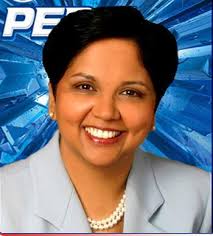
Cross-cultural, female, visionary, and values-driven, Indra Nooyi, chairman and ceo of PepsiCo embodies characteristics that will be increasingly sought in leaders for a globalising world. In an interdependent world of border-crossing and boundary-spanning, leaders must position their organisations not only in the marketplace but also in a social nexus in which sectors overlap and societal problems belong to everyone.es-driven, he has been guest speaker at national events, such as, Scottish Mutual annual event, Countrywide Investments annual sales conference, PIMS International, Finance Directors UK 
Share/Save/Bookmark

Positive Leadership™ Coaching

Central to the creation of positive, sustainable, high performance organisations is good leadership. 

Positive Leadership Limited supports leaders to become the ambassadors within the organisation, coaching others and perpetuating a positive performance culture.  Positive Leadership™ coaching can take place in a number of different settings, or as is more common a combination of settings; individual coaching, in a group setting with other leaders, or with their own team as both participant and coach. 

Positive Leadership™ coaching enables leaders to apply the principles of Positive Leadership™ to create environments where individuals become their best, people work well together in teams and with other stakeholders, and where teams and organisations build momentum in good times and demonstrate resilience in the face of challenge.

For more information, please contact: graham.watson@positiveleadership.co.uk

Share/Save/Bookmark

Building a High Performing Organisation

Here are ten quantum leaps (specific ways of acting and behaving) that build high-performing organisations:

Align the Values of Positive Leadership with Business Strategy: Do you communicate clearly and consistently the organisation’s key leadership values (what is essential for its success)? Do you make sure there are measures of success tied to the core values?

Sharpen the Focus: Do you communicate clearly and consistently the vision for the organisation (where it is going)? Does the vision communicate a sharp sense of focus and priorities? Do you make sure there are measures of success tied to the vision?

Lead Through Others: Do you make sure that talented people are recruited, placed in the right roles, and developed? Do you build effective teams? Do you manage effective meetings? Do you delegate effectively? Do you develop “operating principles” for people that enable them to work well together?

Manage Decisions Well: Do you understand the various types of decision processes? Do you communicate the process surrounding a given decision in such a way that everyone is clear on their roles and expectations?

Accelerate the Pace of Change: Do you build processes to share performance information and improve the performance of the organisation? Do you engage people in continuous improvement and learning? Do you manage change effectively?

Stimulate the Creative Flow: Do you create an environment in which innovation flourishes? Do you drive out fear of failure? Do you reward people for creativity and innovation? Do you search out people’s particular strengths? Do you give people opportunities to display their strengths and experience creative flow?

Spread Systems Thinking: Do you encourage people to use a systems approach to solving problems? Are you data-driven in your approach to solving problems? Do you help people overcome the assumption of competence? Do you help people avoid the substitution fallacy?

Communicate in 3-D: Do you communicate well internally, up, down and across the organisation? Do you communicate well with customers, shareholders, regulators, suppliers, and other interest groups? Do you have a message box? Do you mobilise new media as well as old media effectively?

Start With Yourself: Do you set a high standard for personal and professional integrity – and hold other people accountable to a high standard? Specifically, do you display high levels of passion for the organisation, honesty and honour, humour, and humility? Can you communicate effectively, using all each power of communication?

Help People Assume Responsibility: Are you able to alter your own behaviours to achieve higher levels of performance? Are you able to ask powerful questions that enable other people to assume responsibility and perform as effective leaders in the organisation? 

Share/Save/Bookmark

Wednesday, July 21, 2010

A Model for Inspirational Leadership


Simon Sinek has a simple but powerful model for inspirational leadership all starting with a golden circle and the question "Why?" His examples include Apple, Martin Luther King, and the Wright brothers -- and as a counterpoint Tivo, which (until a recent court victory that tripled its stock price) appeared to be struggling.


Share/Save/Bookmark

Mentors

What is a mentor? What is that mentors do? Can having a mentor help you succeed? 

These days, there are many sophisticated tools available to help those who want to be successful. But one of the most valuable assets anyone can have is also one of the oldest - a mentor - someone who can help you learn the ropes, find your way around obstacles, and chart a course that will get you where you want to go.

Just about every successful person, whether they are in business or one of the professions, sports, the arts, or any other field of endeavour, has had the benefit of at least one mentor. Very often, they've had many more than that.

Mentors are people who have achieved success themselves and want to pass along what they've learned to others. They don't usually tell you what to do - that's not their role - but they do help you weigh your options and think through decisions. 

Who are you mentoring and who is mentoring you? 

Share/Save/Bookmark

Tuesday, July 20, 2010

Adaptive Leadership

Ronald Heifetz is the King Hussein bin Talal Senior Lecturer in Public Leadership and founder of the Centre for Public Leadership at Harvard. Recognised for his seminal work on both the practice and teaching of leadership, his research focuses on building the adaptive capacity of societies and organisations. His first book, Leadership Without Easy Answers, has been reprinted and translated many times. In this video, he explains his concept of adaptive leadership:


Share/Save/Bookmark

Monday, July 19, 2010

Integrity and Character


“By themselves, integrity and character do not accomplish anything. But their absence faults everything else.”


Share/Save/Bookmark

Decision Making

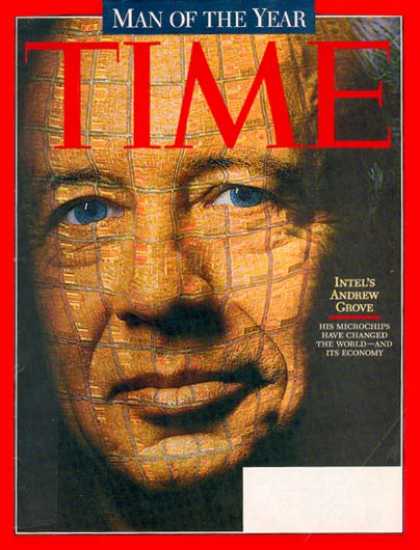
‘None of us have a real understanding of where we are heading. I don't. I have senses about it. But decisions don't wait, investment decisions or personal decisions and prioritisation don't wait, for that picture to be clarified. You have to make them when you have to make them. So you take your shots and clean up the bad ones later. I think it is very important for you to do two things: act on your temporary conviction as if it was a real conviction; and when you realise that you are wrong, correct course very quickly.’ 

Andy Grove, Senior Advisor to Intel Corporation

Share/Save/Bookmark

Sunday, July 18, 2010

7 Lessons Entrepreneurs Can Learn From the US Navy Seals

Entrepreneurs can learn a great deal from the Navy Seals. Here are 7 lessons:

1. Take Decisive Action: Build your company so that you can move quickly, regardless of the situation. You won’t have perfect information. You won’t make perfect decisions. But you can’t afford to delay and ponder. Being decisive and nailing the execution will make you effective in the long run.

2. Fear Nothing: Life is full of danger. You can spend your time worrying or you can build a team, plan an attack, and go to battle. Seals volunteer for missions few people would face. But that’s not because they’re reckless. It’s because they train constantly and know their team can handle it. Put together a solid team, a sensible plan, and work hard and you can beat the odds.

3. Seek Excellence, not Fame: How many athletes can you name? How many politicians? How many CEO’s? Probably quite a few. How about Navy Seals? Not so many. They devote everything to mission success, but don’t go looking for headlines. Entrepreneurs should do the same. Build a great product, a great company, and a great culture. Do these things and press will come, but headlines should be a side effect and not the goal.

4. Lock and Load: “Lock and Load” literally means preparing your weapon, but also represents a state of mind. Seals don’t know when they will be called on, but are ready to perform at a moment’s notice. As an entrepreneur, opportunities will come in unexpected situations and you won’t have advance notice. So be prepared to give your elevator pitch or launch an immediate demo. A 30 second chance encounter can change your life, but only if you’re locked and loaded.

5. Leave no Man Behind: Teamwork is everything. But that doesn’t end at holding meetings and dividing tasks. You should be maniacal about defending your team. Cohesive teams are forged over months and years of going to war together. Showing loyalty to your team is one of the most powerful messages in business. Missions can fail. Features can fail. Products can fail. But your loyalty should never fail. Ever.

6. Plan Your Mission, but Prepare to Pivot: Seals plan carefully. They prepare for dozens of scenarios and pay attention to every detail. Yet unknowns will always happen. Their teams are agile, handle surprises, and make adjustments on the fly. Entrepreneurs need to prepare diligently. But it’s the combination of preparation and agility that turns a good team into a great company.

7. Make Peace with Constant Chaos: You don’t know where the land mines are. You don’t know what announcements will be released tomorrow. Your life is full of legal issues, product issues, service issues, sales issues, financing issues, recruiting issues, travel issues, etc. There are always 1,000 things to do and only time for 100. Yet that will never change. So you need to make peace with the idea of being around constant chaos. Break down your mission into components, define them, plan them, execute on them, and train yourself to be calm under fire. The ability to sit amidst chaos yet focus on the task at hand and execute well is the key to running a high-growth venture.

Share/Save/Bookmark

Saturday, July 17, 2010

Opinions

Silicon Valley futurist Paul Saffo has long argued that the best leaders and the best organisations have strong opinions that are weakly held. Strong opinions reflect and instil confidence, and also provide clear guidance about the direction that people should try to go right now. But, since those opinions are weakly held, they don't stand as barriers to change when better information comes along.

Share/Save/Bookmark

Leadership is a Transfer of Belief

As a leader you are not just managing people, you are managing their beliefs. 

Beliefs are contagious. 

As a leader if you don’t believe you can build a great team or organisation then your people won’t believe. 

To win in the marketplace you must first believe you can win in the marketplace and this belief must be transferred to the people in your organisation. 

Great coaches inspire their teams to believe they can win. Great sales managers get their sales people to believe in their product or service. Great teachers inspire their students to believe in themselves.

Share/Save/Bookmark

Friday, July 16, 2010

Sustaining Success

Sustaining success is a challenge. Usain Bolt, the fastest man in the world, fully understands this. At the 2008 Beijing Olympics, Bolt completed three exhilarating sprint performances, not only winning gold medals in the 100m, 200m and 4x100m relay, but also setting world records in each discipline. His feat solidified his designation as the fastest man on earth. How does Bolt maintain this level of success? What can leaders learn from him?


Share/Save/Bookmark

Military Leadership as a Role Model for Business Leadership

Military service—particularly service in the crucible of combat—is exceptionally effective at developing leaders. Why? It's nurture, not nature.

First, in all services, military leadership qualities are formed in a progressive and sequential series of carefully planned training, educational, and experiential events—far more time-consuming and expensive than similar training in industry or government. Secondly, military leaders tend to hold high levels of responsibility and authority at low levels of our organisations. Finally, and perhaps most importantly, military leadership is based on a concept of duty, service, and self-sacrifice; soldiers take an oath to that effect.

Soldiers view their obligations to followers as a moral responsibility, defining leadership as placing follower needs before those of the leader, and this value priority is taught to junior leaders. Military leadership extends to caring for the families of soldiers, sailors and airmen, especially when service members are deployed.

When serving in crisis conditions where leadership influences the physical well being or survival of both the leader and the led—in extremis contexts—transactional sources of motivation (e.g. pay, rewards, or threat of punishment) become insufficient. Why should a person be motivated by rewards when he might not live to enjoy them? Why would a person fear administrative punishment when compliance might lead to injury or death? Soldiers in such circumstances must be led in ways that inspire, rather than require, trust and confidence. When followers have trust and confidence in a charismatic leader, they are transformed into willing, rather than merely compliant, agents. 

In the language of leadership theorists, such influence is termed transformational leadership, and it is the dominant style of military leaders.

Contrast the military leader value set reflecting service to the one that currently exists in some businesses. Are we likely to see business leaders placing the well-being of their shareholders and employees above their own – in compensation discussions for instance? The quantity of compensation awarded to the ceo of Marks and Spencer for instance isn't as relevant as the message to followers that, when times were tough, the leader puts his personal well being ahead of theirs.

Such perceptions of a military leader in combat would render that leader mistrusted and ineffective in the eyes of soldiers forever. Why should business leaders expect anything else on the part of people desperate about the loss of their equity or employment or lifestyles? The current economic environment, partly caused by a crisis of self-service leadership, has created belt-tightening reminiscent of a world war, with budgets slashed, travel funding restricted, training programmes cut, personnel layoffs, and other draconian, cash-saving measures in place. 

CEOs have to start leading like generals—even if that means living a lifestyle in common with their troops. The best leadership—whether in peacetime or war—is borne as a conscientious obligation to serve.

In many business environs it is difficult to inculcate a value set that makes leaders servants to their followers. In contrast, leaders who have operated in the crucibles common to military and other dangerous public service occupations tend to hold such values. Tie selflessness with the adaptive capacity, innovation, and flexibility demanded by dangerous contexts, and one can see the value of military leadership as a model for leaders in the private sector.

In your own development as a leader, have you found value in putting other people first? Did it seem out of place in competitive, results-oriented businesses? Did it powerfully influence people, or did it merely suggest weakness? And have you had role models in business that you see as effective because of their servant leader orientation?

Share/Save/Bookmark

Thursday, July 15, 2010

Effective Bosses

'One of the defining, and most crucial, features of effective bosses is that they shield their followers -- whether from political manoeuvring or resource grabbing or just the innumerable distractions, indignities, time suckers, lame rules, and local idiots that go with organisational life -- and create the space for them to succeed.'

Robert I. Sutton, management professor at Stanford University

Share/Save/Bookmark

Athletes in Business

'It is interesting to me that so few athletes make a successful move into business. There are so many things about being an athlete that should prepare you for this world. Discipline, practice, outworking your opponent ... all of that is just as important to me today as it was in the NBA.'

Magic Johnson


Share/Save/Bookmark

The Dutch Soccer Team and Personal Development

Many people are holding back their personal development by ignoring an important step – accepting responsibility for their actions.

A great example of this has been the reaction of the Dutch to their loss in the World Cup final last Sunday. 

As a nation, they have a legacy of playing inspirational, total football. But someone took the decision that this would not work against Spain so they took a different approach. They were brutal, frequently on the wrong side of the line that separates aggressive from illegal. Because the referee stopped them, they have turned on him as the reason for their loss. The Dutch players, management team an press all blame the referee, Howard Webb, for their loss.  Yet an objective analysis showed that far from being at fault, Webb got well over 80% of his decisions right.

The only Dutchman to openly criticise his country’s approach is Johan Cruyff who in fact blamed Webb for being too lenient, pointing out that Holland could, and perhaps should, have been down to nine players by half time. As a side issue, if Webb had done that, people would have criticised him for ruining the final!

Instead of blaming others, the Dutch players and managers should take a long hard look at themselves and accept responsibility for their decision to play as they did, and for the consequences.

It is easy when we are under pressure to perform, to change winning tactics and to blame others if we fail. For the Dutch football team, there is no greater pressure than playing in a World Cup final. They could turn themselves into admirable role models if they were to take a deep breath, admit that they were wrong and accept responsibility for the consequences of losing.

Of course, equally dangerous are those people who accept responsibility for everything, not realising when it’s just not “their stuff”.

If you look at the word “responsibility”, you can break it down into” response” and “ability”: the ability to respond. If something isn’t working, someone involved has to have the ability to respond and to try something else. If instead, you do more of what isn’t working, you get more failure.

Shame nobody from the Dutch side realised that last Sunday!

Share/Save/Bookmark

Wednesday, July 14, 2010

Winning Under Pressure

Give Hall of Fame golfer Gary Player 15 minutes and he'll try to save the world.

Ask him about his new book Don't Choke: A Champion's Guide to Winning Under Pressure and he'll recruit you into his army of revolutionists trying to change the way we live.

"One of the reasons that I wrote this book is I would like to try to help people," said Player, 74, a nine-time major winner from South Africa. "This is not for golfers only. How about a businessman? How about a mother who has to make a big decision? A granny speaking to her grandchildren."

Here is what he Gary Player has to say about why now is the right time for him to publish this book:

'Maturity. When you write a book like this in your 30s people say "what does he really know about life?" Now "this man has done something, nobody else in the world has done. He must have some common sense and reason for his success and worthwhile to listen to."'

Share/Save/Bookmark

What Separates Winners


"Mental fitness is much more important to my game. To be at this level, everyone has great physical tools. What separates winners is the mental game." 

Serena Williams

Share/Save/Bookmark

Are you Making Mistakes with Top Talent?

With today's difficult job market limiting employees' mobility, executives have a unique opportunity to boost the motivation and productivity of their top talent without spending lots of money. Unfortunately, many companies are missing the mark – especially when it comes to managing their emerging leaders, or "high potentials." 

Here are the five biggest mistakes companies are making with high-potential talent:

1. Ignoring the view from the pipeline.
2. Treating all high potentials the same.
3. Leaving high-potentials on their own.
4. Not using high-potentials to develop others.
5. Being unclear about high-potential status. 


Share/Save/Bookmark

Tuesday, July 13, 2010

Think Different!

This Apple ad leads with a fundamental leadership premise: Be courageous enough to be yourself. Entertaining, inspiring, and educational, this clip is a must-download on any leader's iPhone. Filled with role models and ideas to emulate, this clip will get you thinking about your leadership style, philosophy and broader goals.


Share/Save/Bookmark