Positive Leadership has also been recognised as a Top 50 Leadership Expert to Follow on Twitter.

Follow us on Twitter @posleadership


LEADERSHIP IS A PROCESS OF SOCIAL INFLUENCE, WHICH MAXIMISES THE EFFORTS OF OTHERS TOWARDS THE ACHIEVEMENT OF A SHARED GOAL.

Friday, June 14, 2013

Positive Leadership: The Benefit of Hard Work


Share/Save/Bookmark

Thursday, June 13, 2013

Positive Leadership: Fear


Share/Save/Bookmark

Wednesday, June 12, 2013

Positive Leadership: Perspectives on Leadership

In his ‘View from the Top’ speech, Dean of the Graduate School of Business at Stanford University, Robert Joss defines what it means to lead: "It's any position where you take responsibility for a group with a mission to fulfill." He told students that In order to have the organisation you lead evolve, "you have to be the change you want to see in others."

Share/Save/Bookmark

Tuesday, June 11, 2013

Positive Leadership: Bad Leadership

Barbara Kellerman, the James MacGregor Burns Lecturer in Public Leadership at Harvard Kennedy School, discusses the theme of her latest work entitled "Bad Leadership."


Share/Save/Bookmark

Monday, June 10, 2013

Positive Leadership: Integrity


When you think about the people you know who have integrity, do you count yourself among them? What does it mean to be a person of integrity? Well, first and foremost, integrity is about truth. And truth is the greatest force we have for personal and planetary well-being.  

No bomb, no hatred, and no prejudice can match the strength of truth. In troubled and uncertain times, truth is our most powerful friend. When we stand for truth, we are confident, whole  and energised.  

Throughout history, every great philosopher and leader has tried to teach us the same lesson - the principle that integrity, or wholeness, is the natural order of things. In spite of the fact that we live in separate bodies, houses, and nations, our essential nature is one of unity.

Any separation we think we see is an illusion that we have mistakenly learned to believe in. As long as we feel separate and isolated, we will behave in ways that result in damage to others and ourselves. Most religious and scientific scholars agree that our entire universe is one huge system - integrated and whole.  

To behave accordingly, then, is to have integrity - to stand up for the truth of our inter-connectedness and our need to care for each other if we are to survive. You see, when we have integrity, we align ourselves with the force of the entire universe. And when we live with integrity, we become very powerful indeed.

Share/Save/Bookmark

Friday, June 07, 2013

Positive Leadership: How Best To Pitch Your Business Plan


Focus your business pitch on yourself, not on your plan!

Potential investors and partners are often more interested in an entrepreneur as a person than in the business plan. That document is important, but be sure to also show these three characteristics:

Passion and purpose. Investors want to know if you’re the right person for this idea. Make your personal connection to the business you’re launching clear.

Resilience. The road to building a business is full of speed bumps. Share some failure stories to show you can bounce back from challenges.

Resource magnetism. Can you attract money, people, and other resources? This is more important than charisma. Whether or not you have a thousand-watt smile, you need to be able to persuade people to join your cause.

Share/Save/Bookmark

Thursday, June 06, 2013

Positive Leadership: 5 Disciplines of High Performance Teams


Share/Save/Bookmark

Wednesday, June 05, 2013

Positive Leadership: Learning From Failure


Share/Save/Bookmark

Tuesday, June 04, 2013

Positive Leadership: Wisdom


Share/Save/Bookmark

Monday, June 03, 2013

Positive Leadership: What Does Values Based Leadership Mean?

We speak a lot about values-based leadership, but what does it mean?

Whoever we think we are or say we are, our own and others’ perceptions result largely from what we do. That is why, as leaders, it’s important to act from our values.

Of course, we are not wholly defined by our behaviour; sometimes our environment demands that we only express a sanctioned side of ourselves.

We’ve probably all experienced a time when we’ve acted ‘out of character’, for example, we may normally be supportive but on occasion lose our temper.

But the very expression ‘out of character’ suggests that these are anomalous events that do not reflect the way we normally behave.

It’s also important to recognise that how we behave is in part situational. Self-aware leaders know that different times call for different styles. We may need to be tough in driving a legal outcome but empathetic to a colleague who is struggling or when delivering bad news.

Being able to adapt our emotional leadership style does not mean we are being inauthentic; on the contrary, values act as an anchor that allows us to read and respond to situational cues, and respond appropriately.
There’s a lot of talk about values-driven leadership. But what does it mean in reality? And how can we be values-driven leaders?

If you were asked to list your top 10 values, could you reply easily?

Would yours be acceptance, assertiveness, compassion, cooperation, encouragement, equality? Or are you about flexibility, generosity, honesty and humility? The list of possibles is long.

And, if asked, could you show how these values play out in your daily life, and where and how you apply them?

Say you believe in integrity. Then, no matter what the situation, you would ask yourself: how do I respond to this with integrity? You don’t look around to see what others consider acceptable and make a decision relative to them; you make it relative to you.

If a culture is about the way we do things ‘around here’, then the question becomes: how do I do things in accordance with my own values, without being rigid or defending my need to be right?

It’s not always easy. All choices have consequences, including those we refuse to make.

Values are not goals. They’re a deep internal drive and ultimately a shaping statement.

Properly used, values provide a filter that helps us decide what to do and, consequently, who we become. We should live them, not just speak them, and be able to demonstrate our commitment to them in practical terms.

Share/Save/Bookmark

Friday, May 31, 2013

Positive Leadership: Perseverance


Share/Save/Bookmark

Thursday, May 30, 2013

Positive Leadership: A Winning Mentality

As those who read this blog know, we have been interested in ‘winning’ for a long time and in particular, how the world’s top athletes and sports teams nurture and sustain the peak performance which is necessary in order to maintain their winnings streaks.

Sport has many lessons to teach us about how to be our best. It has it all. Highs and lows. Community, tenacity, commitment. Performing at your best under intense pressure. The crucial importance of taking action when the right moment strikes; and what to do in the face of failure.

So when we came across this article from blogger Geoffrey James on getting yourself in the mental state to win, we thought it was absolutely appropriate to our thinking.

Here are some takeaways from the article:

See the moments coming: Be prepared when it counts. Don’t run into the day blindly.

Adopt a winner’s physiology: How you look affects how you feel. Stand up tall. Look people in the eye.

Visualise the winning outcome: Lots of runners imagine themselves crossing the finish line. It helps them get from where they are to where they want to be.

Mentally rehearse what you’ll say and do: Now that you’ve seen yourself past the finish line, what are the steps you need to take to get there?

Disconnect from goals and results: Be in the moment.

Take action: Make things happen!

Share/Save/Bookmark

Wednesday, May 29, 2013

Positive Leadership: Positive Energy!


Share/Save/Bookmark

Tuesday, May 28, 2013

Positive Leadership: Who Wants to Lead a Large Corporation?

How many young people today want to become leaders of large corporations? Too few!

Why?

Many young people simply lack trust in today’s leadership models. Here are some of the concerns they voice:

Are leaders transparent enough in their actions?  

Often times, leaders are not open enough about how they make the big decisions that impact their organisations. This lack of transparency makes it difficult for people to hold their leaders to account. When the research team at the Future of Work Research Consortium asked over 3,000 corporate executives about the significance of various leadership traits, they ranked transparency as increasingly important in the future. Yet they also acknowledged that right now this was not a well-developed capacity and is a high-risk trait in need of attention.

Are leaders engaging their stakeholders effectively? 

Some believe that leadership teams of large corporations seem to be stuck in traditional management models that do not help them build trusting relationships with stakeholders. Inside corporations they can fail to create effective democratic processes with employees, while externally they aren’t always demonstrating real commitment to wider social challenges. This is a major challenge for leaders as people increasingly look at companies’ ethical practices and the way they treat employees when deciding whether to trust them or not. It’s clear from the broader research that delivering consistently strong financial performance does not guarantee a corporation the trust of its stakeholders unless accompanied by good practice and ethical behaviour.

Do leaders do as they say? 

A recurring theme is the challenge of intent and actions. Leaders may talk about strong corporate values, but some are all too quick to bypass them in the interest of the bottom line. No doubt this scepticism is a response to the wave of corporate scandals in 2012 that has increased suspicions about corporate leaders. A global survey by consulting firm Edelman Berland, found that less than 1 in 5 people believe business leaders will actually tell the truth when confronted with a difficult issue. 

It is clear that there is still much scepticism about leadership intent. What we need now is deeper insight into what it takes to restore some of the lost faith in today’s corporate leadership.

Share/Save/Bookmark

Monday, May 27, 2013

Positive Leadership: The Role of Business Education in 2013


The Wall Street Journal sounded the death-knoll for business schools back in 1985. Applications were dropping. Mass closures were on the cards. The same headlines have appeared periodically since. Eight years later the New York Times headlined with “Business Schools Hit Hard Times Amid Doubt Over Value of MBA”. Last year it was Forbes asking “Is the MBA Obsolete?” 

If you scan the latest stories on business sites and in magazines, it seems to be in fashion to give the impression that innovation and talent trumps education. But is it true?

What is true is that the nature of business has changed. Lines of communication have evolved. Globalisation has opened up new markets and competition is fierce. Innovation is now a global catch-cry and anyone with a half-baked idea is trying to sell it. Yet we are still short of quality business managers.

In reality, it isn’t a competition between natural talent and formal education. We need both. What is important is that business schools adapt their style of teaching. They must ensure our next generation of leaders are learning techniques relevant to today. In America alone, 10,000 baby boomers retire every day. These are the people who have been our business leaders for the past 30 years and we are struggling to replace them.

Business schools know this. They also know the demands on modern managers are unique in the information age. Yale rewrote its curriculum back in 2006 and continues to regularly review it. Wharton rolled out a whole new plan last year. We are seeing a shift to customised courses tailored for 21st century enterprise. There is a greater focus (particularly in North America) on leadership, trouble-shooting, problem solving and communication skills.

Business isn’t just about brilliant product, it’s about people (ideally, both brilliant). Success will come from ensuring that young people who have chosen business as their career have the right knowledge, skills and attitudes to lead.

Share/Save/Bookmark

Friday, May 24, 2013

Positive Leadership: The Impact of Short Term Profitability Motives on Leadership Decision Making

According to the London Business School, 77% of business leaders say the search for short-term profitability has lead to poor leadership decisions!


Share/Save/Bookmark

Thursday, May 23, 2013

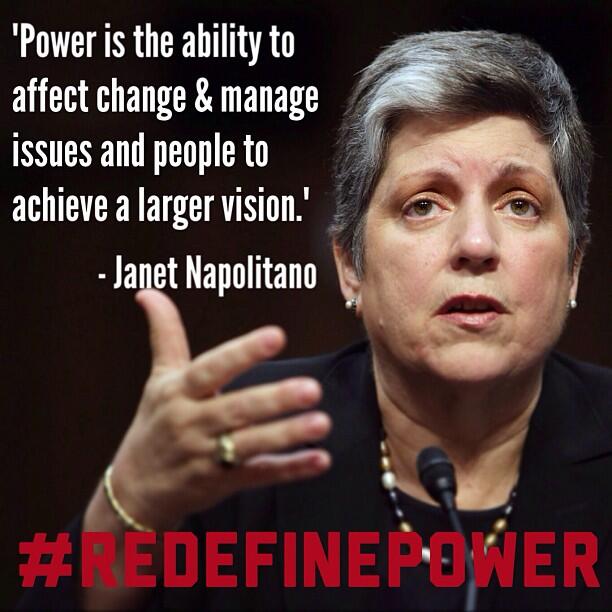
Positive Leadership: What is Power?


Share/Save/Bookmark

Wednesday, May 22, 2013

Positive Leadership: Make Today Count!


Share/Save/Bookmark

Tuesday, May 21, 2013

Positive Leadership: Influencing Up

Stanford Professor David L. Bradford shares his top tips on how to influence your boss and overcome power gaps in his new book "Influencing Up".

Bradford is the Eugene O'Kelly II senior lecturer in leadership (emeritus) at the Stanford Graduate School of Business. Allan R. Cohen of Babson College co-wrote the book.


Share/Save/Bookmark

Monday, May 20, 2013

Positive Leadership: Why Britain Has Not Produced a Google or a Facebook


London Mayor, Boris Johnson at his trenchant best -

‘I remember what the doubters said when we first announced a new bus for London – a replacement for the beloved Routemaster. They said I was mad. The Labour Party said I was deranged. My opponents said I was a swivel-eyed loon, or words to that effect. They said we were showing an arrant disregard for health and safety, and that in any case, it would never be built.

Where is it, they used to sneer at me, as Sir Peter Hendy and Transport for London began the necessarily lengthy process of procurement. When’s the bus due, eh? And when the first prototype finally turned up in 2011, the machine managed to conk out on the M1 (because someone had forgotten that a diesel hybrid still needs to be filled with diesel). The sceptics laughed their pants off.

So it gives me unbridled joy to inform you that the new bus will shortly arrive en masse. A whole gleaming fleet of them is about to take over Route 24, from Pimlico to Hampstead Heath; and in the next two years they will cease to be a curiosity – a rare species of charismatic megafauna that you might spot once in the course of a safari. They will be a glorious and regular addition to London’s streetscape, as famous and as emblematic as the elephants of the Serengeti, whose noble and domelike brows they faintly resemble.

When I went to Antrim last week, and saw dozens of them being made in the new Wrightbus plant, I felt a sense of awe, and the deep certainty that this was the most wonderful project I had ever been involved in. It has clean, green hybrid technology. If the new bus fulfils the promise it has shown in tests, we will be able to save so much on fuel that it will actually come out cheaper than our current hybrid buses. With 600 of them on the streets by 2016, they will make a significant reduction in nitrogen oxides and particulates, and will help us to improve air quality in the city.

The bus is a masterpiece of design, conceived by Thomas Heatherwick, the magician who created the Olympic cauldron. It helps to drive employment throughout the UK – unlike the wretched bendy buses, which were made in Germany. London’s buses are creating hundreds of jobs at the plants in Northern Ireland, but it does not stop there. The engines come from Darlington, the seats are made in Telford, the seat moquette in Huddersfield, the ramps are from Hoddesdon and the “Treadmaster” flooring from Liskeard. Oh, and the destination signs are from Manchester.

It is the embodiment of the point I often make, that investment in London boosts the rest of the UK economy, directly and indirectly. We have stimulated the very best of British technology, creating jobs in this country, and yes, we are now looking to potential export markets.

All these features make the bus remarkable; but there is one more thing about it – the best thing of all. This bus stands for freedom, and choice, and personal responsibility. It not only fulfils a promise often made to Londoners by bringing back conductors; it restores to the streets of London the open platform at the rear – and in so doing, it restores the concept of a reasonable risk.

We all remember the pleasure of the old Routemasters. It wasn’t anything to do with the way their flanks heaved and throbbed like wounded old warhorses. It wasn’t the boggler-boggler-boggler noise or the fumes of diesel. It was the way you could sit on those banquette seats at the back, high over the wheel arches, and watch the road passing you outside. And if the bus got stuck in traffic, or at the lights, you knew that you weren’t a prisoner. You were allowed to get on and off at will, provided the thing wasn’t moving, and now that freedom and benefit will be restored.

Of course, you will have to be careful. You should look around to make sure there aren’t any motorbikes or cycles approaching. But if the road is clear and the traffic is stationary, and you want to hop off and do some shopping – or if you have missed the bus at the stop, and you want to scoot down the street to catch it up – then the option is there. You can hop on and hop off, like the hop-on hop-off hoplites who were trained to leap from moving chariots and then back on again.

Yes, of course there is a risk; but that risk is manageable; and without it you have no opportunity to ascend or escape the bus if you want to. It is, as far as I know, one of the few recent examples of a public policy that actually gives back, to sentient and responsible adults, the chance to take an extra risk in return for a specific reward.

We need to develop this thought, because I worry that in the post-crisis world, we have become all too paranoid, too risk-averse. Yes, the banks made grotesque errors, largely because they could not understand the risks they were taking. But unless we allow businesses and banks to take reasonable risks, they will never hit the jackpot at all.

Why is it that Britain hasn’t produced a giant like Google, or Facebook, or Amazon? It is because such a business, in the UK, would not have been given access to the capital required. We are more hostile to risk, and, indeed, we are more hostile to reward. If you go to San Francisco, where so many of these tech giants were born, you can see the most bizarre tram I have ever set eyes on. People hang from it like gibbons as it swoops and clangs through the streets. It would never be allowed in Europe. But the San Francisco authorities evidently believe that Americans are more robust – more willing to be free, more willing to make their own assessment of a reasonable risk.

If you look at the state of the eurozone, and you compare it with the US economy, you can see the possible advantages of this approach. And that is the point of the hop-on hop-off platform. In restoring a culture of reasonable risk-taking, it is a platform for growth.’


Share/Save/Bookmark

Friday, May 17, 2013

Positive Leadership: What Makes Us Feel Good About Our Work?

What motivates us to work?

Contrary to conventional wisdom, it isn't just money. But it's not exactly joy either. It seems that most of us thrive by making constant progress and feeling a sense of purpose. 

In this TED Talk, behavioural economist Dan Ariely presents two eye-opening experiments that reveal our unexpected and nuanced attitudes toward meaning in our work. 

It's become increasingly obvious that the dismal science of economics is not as firmly grounded in actual behaviour as was once supposed. In "Predictably Irrational," Dan Ariely tells us why. 


Share/Save/Bookmark

Thursday, May 16, 2013

Positive Leadership: How Culture Supersedes Vision

René Carayol specialises in leadership and culture. 

Drawing from his own unique experiences on the boards of the biggest British and American organisations; from Marks & Spencer and Pepsi to IPC Media and the Inland Revenue, René has had the privilege of working closely with some of the world's best leaders, including; Sir Richard Branson, Bill Clinton, Kofi Annan and Colin Powell.

In this talk, he reveals  how culture supersedes vision and endures the most extraordinary situations. 


Share/Save/Bookmark

Wednesday, May 15, 2013

Positive Leadership: How Bad Do You Want It?


Share/Save/Bookmark

Tuesday, May 14, 2013

Positive Leadership: Turning Pressure into an Asset


Pressure is nothing more than the shadow of great opportunity.’ – Michael Johnson, US Olympic Gold Medallist

Here are six things experienced leaders do that transform pressure from a liability to an asset:

Know Thyself: Leaders must know themselves, their strengths and weaknesses, and where they will and won’t compromise. When a leader is comfortable in their own skin they won’t fear dissenting opinion and diversity of thought, they’ll encourage it. Knowing who you are frees you to become a better thinker and a better leader.

Lead: A leader’s job is to acquire and develop talent. The larger the organisation you lead, the more your performance is dependent upon the talent of your team. The better the talent, and the better you utilise talent, the less pressure you’ll feel. The key to capacity, throughput, and scale is not found by doing – but by developing others to do. Leaders who feel the least amount of pressure are those who spend the most time acquiring and developing talent. Conversely, leaders who feel the most pressure are those who feel they must do everything themselves.

Keep It Simple: Complexity creates pressure. The best leaders look to simplify everything they can. Simplicity rarely equates to a lack of sophistication – it actually demonstrates remarkable elegance. Simplicity drives understanding, which leads to a certainty of execution. One truism you can count on is performance relives pressure.

Get Alignment: Great leaders strive for the following: one vision – one team – one agenda. Organisations that have a shared purpose, common values, and aligned interests are simply more productive than organisations that don’t. Alignment of values and vision take the complexity out of decision-making, and removes the ambiguity from the process of prioritisation. Leaders who have organisational alignment feel less pressure than those who don’t.

Focus: Focused leaders rarely feel external pressure. Unfocused leaders feel as if pressure is coming at them from all directions. Focus affords leaders clarity of thought that a cluttered mind will never realise. It’s not possible to lead an organisation toward a better future when a leaders mind can’t see through the fog. An organisation is never under greater pressure, or at greater risk, than when leaders lose their focus.

Create Whitespace: The best way to maintain focus is to make sure you’ve allowed for some whitespace EVERY day. Any rubber band stretched too tightly will eventually snap – there are no exceptions to this rule. Leaders who don’t create time for quality thought and planning end-up taking unnecessary short cuts and risks. They let pressure force them into making bad decisions that a little whitespace could have prevented.

Share/Save/Bookmark