Positive Leadership has also been recognised as a Top 50 Leadership Expert to Follow on Twitter.

Follow us on Twitter @posleadership


LEADERSHIP IS A PROCESS OF SOCIAL INFLUENCE, WHICH MAXIMISES THE EFFORTS OF OTHERS TOWARDS THE ACHIEVEMENT OF A SHARED GOAL.
Showing posts with label Case Study. Show all posts

Tuesday, April 19, 2011

Positive Leadership: Take Responsibility For Your Own Leadership Development

An interview with Joseph L. Bower, Professor, Harvard Business School. 

To become an effective CEO, work for companies committed to leadership development, and take responsibility for your own development on the job.


Share/Save/Bookmark

Monday, April 18, 2011

Positive Leadership: Too Big to Innovate

AOL co-founder Steve Case talks about the "attacker" spirit of start-ups and the challenge of playing "defence" at a big company. 


Share/Save/Bookmark

Sunday, April 17, 2011

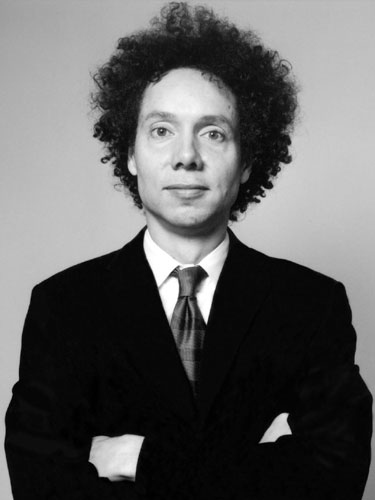
Positive Leadership: Malcolm Gladwell on Talent

In his latest work, best-selling author Malcolm Gladwell takes us on an intellectual journey through the world of Outliers: The Story of Success—the best and the brightest, the most famous and the most successful people and asks the question: Why are high achievers different from regular people? Along the way he explains the secrets of software billionaires, what it takes to be a great soccer player, the cultural forces that make Asians so successful at math and what made the Beatles the greatest rock band.


Share/Save/Bookmark

Saturday, April 16, 2011

Positive Leadership vs Bad Leadership

Barbara Kellerman, the James MacGregor Burns Lecturer in Public Leadership at Harvard Kennedy School, discusses the theme of her latest work entitled Bad Leadership: What It Is, How It Happens, Why It Matters (Leadership for the Common Good):


Share/Save/Bookmark

Saturday, November 20, 2010

Use Failure to Grow Your Business

How can companies plan and pursue an aggressive growth agenda with confidence? By framing their strategic growth opportunities, testing assumptions, and creating a culture that acts on evidence and learning. (An interview with Rita McGrath, Professor, Columbia Business School.)


Share/Save/Bookmark

Monday, November 15, 2010

Be a Better Leader, Have a Richer Life

An interview with Stewart Friedman, Professor, University of Pennsylvania's Wharton School and author of Total Leadership: Be a Better Leader, Have a Richer Life. 

Traditional thinking pits work and the rest of our lives against each other. But taking smart steps to integrate work, home, community, and self will make you a more productive leader and a more fulfilled person.


Share/Save/Bookmark

Monday, November 08, 2010

Be Prepared for a Turbulent Business World


Jeff Immelt, chairman and CEO of GE, gave the first annual Roanak Desai Memorial View From The Top at the Stanford Graduate School of Business recently. He discussed how business has changed in his nearly three decades at GE and stressed to the student audience to be prepared for a turbulent business world.


Share/Save/Bookmark

Saturday, November 06, 2010

Leading from the Front

Over the past year, business leaders have endured one of the most challenging economic climates in decades. In this video we hear from those who have emerged from the crisis stronger than ever. 

What can we learn from their leadership in developing strategies to thrive during difficult times? What has been the impact on their approaches to innovation, product life-cycles and brand management? Do changes represent a long-term shift or will things eventually return to normal?


Share/Save/Bookmark

Tuesday, October 19, 2010

Exploring Dimensions of Leadership

There have always been individuals who are able to lead effectively in a demanding and evolving world. What does it take to be one of those remarkable people?


Share/Save/Bookmark

Friday, October 15, 2010

Failure Is An Essential Part of Process


Outsourcing giant Wipro chairman, Azim Premji fosters an environment in which workers feel safe taking risks.


Share/Save/Bookmark

Thursday, October 14, 2010

Treating Customers and Employees Well

Most of the U.S. airline industry is under assault from skyrocketing fuel prices and a sluggish economy, but the message that Southwest Airlines president Colleen Barrett brought to the recent Wharton Leadership Conference was about the importance of treating employees and customers well. 

Innovative leaders such as Southwest chairman Herb Kelleher and smart management of non-human resources -- especially Southwest's fuel purchasing hedges that have saved the company more than $2 billion -- have certainly helped the airline post profits for 35 consecutive years. But the foundation for all that, she said, has been making the satisfaction of employees and customers the highest priority.


Share/Save/Bookmark

Tuesday, October 05, 2010

Team Spirit

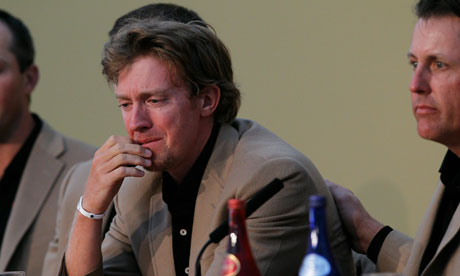
After the loss of the 2010 Ryder Cup to the Europeans, Hunter Mahan of the U.S. team was overcome with emotion. He was taking the brunt of the blame for his team's loss, as any athlete would, but his teammates would have none of it. 

In particular, Stewart Cink in the video below shows great leadership, reminiscent of Theodore Roosevelt’s famous 1910 speech at the Sorbonne in Paris:

"It is not the critic who counts: not the man who points out how the strong man stumbles or where the doer of deeds could have done better. The credit belongs to the man who is actually in the arena, whose face is marred by dust and sweat and blood, who strives valiantly, who errs and comes up short again and again, because there is no effort without error or shortcoming, but who knows the great enthusiasms, the great devotions, who spends himself for a worthy cause; who, at the best, knows, in the end, the triumph of high achievement, and who, at the worst, if he fails, at least he fails while daring greatly, so that his place shall never be with those cold and timid souls who knew neither victory nor defeat."


Share/Save/Bookmark

Benjamin Zander on Music and Passion

Benjamin Zander is the music director of the Boston Philharmonic Orchestra and the co-author of The Art of Possibility: Transforming Professional and Personal Life. He has an interesting perspective on leadership and success:

'The conductor of an orchestra doesn't make a sound. My picture appears on the front of the CD but the conductor doesn't make a sound. He depends for his power on his ability to make other people powerful.

And that changed everything for me. It was totally life-changing. People in my orchestra came up to me and said, "Ben, what happened?" That's what happened. I realised my job was to awaken possibility in other people. And of course, I wanted to know whether I was doing that. And you know how you find out? You look at their eyes. If their eyes are shining, you know you're doing it.

And, I have a definition of success. For me it's very simple. It's not about wealth and fame and power. It's about how many shining eyes I have around me.'


Share/Save/Bookmark

Friday, October 01, 2010

Follow Your Passion!


Don't follow money. Instead, pursue what inspires you. And don't miss weekends with your family.


Share/Save/Bookmark

Thursday, September 30, 2010

It's About Values

US Supreme Court Justice Stephen Breyer was appointed by Democratic President Bill Clinton in 1994. He is known for his pragmatic approach to constitutional law and is generally associated with the more liberal side of the Court. He is the author of Making Our Democracy Work: A Judge's View. This is what he has to say on the Constitution:


Share/Save/Bookmark

Sunday, September 26, 2010

Building a Leadership Brand


Companies build a leadership brand by developing leaders who enable employees to deliver the results expected by customers.


Share/Save/Bookmark

Friday, September 24, 2010

Being Terrible is Not All Bad

If tomorrow you were given the chance to be great at every single skill in your life — we are talking world-class level, in each of your various interests — would you do it?

For many of us, the answer comes easily: Yes. Being number one at everything is considered Life’s Big Goal. Accordingly, we spend a lot of our time fervently traveling toward the promised land — shoring up weaknesses, honing strengths, targeting where to excel.

But this way of thinking misses out on a potentially important point: that there are some real advantages to being terrible.  There’s an underrated beauty in clumsiness. 

At this point we would like to introduce the piece de resistance of bad, the great pyramid of terribleness: the golf swing of former NBA basketball star, Mr. Charles Barkley (see below). It is not just bad. It is an Everest of ineptitude.

Historically speaking, there are two ways of looking at being bad:

1) It’s bad. It’s to be ignored, avoided, and spoken of as little as possible.
2) It’s secretly kind of good, because it teaches important lessons we can’t learn anywhere else.

In this second way of thinking, being bad contains a potential silver lining: character development, teaching the invaluable skill of resilience. We see this all the time, not just in the work of psychologists like Albert Bandura, but also in the biographies of luminaries like Beethoven, Churchill, Darwin, Emily Dickinson, Harry Truman, and John Grisham — all of whom endured excruciating stretches of ineptitude before they got good.

What’s more, we can take this idea even farther.  Because the advantages of being terrible go well beyond the necessary benefits of resilience and character. Being terrible can be useful because:

  • It gives us freedom to experiment. Maintaining greatness is a narrow pursuit — you are essentially playing defense, vigilantly guarding against erosion. Being terrible, on the other hand, is a license to try new things. It permits a looseness and a creativity, since there is very little to lose.
  • It connects us to other people. It’s interesting to see the contrast between the way people treat the ever-smiling Barkley and the ever-grim Tiger Woods.  People admire greatness. But they relate to Barkley’s awfulness because we’ve all been there.
  • It lets us practice the vastly underrated skill of knowing when to quit. In this overprogrammed world, it’s all too easy (especially for parents and kids) to say yes to tennis, music, golf, theatre, everything. But to get really good at anything, you can’t say yes to everything. Knowing when and how to quit is not just handy — it’s a survival skill.
  • It keeps us humble and grounded. Lives built on the relentless pursuit of perfection tend to be relentlessly narrow. Witness some of the indefensible behaviour we’ve seen lately from perfectionists in the City, Whitehall and in the sports arena.  Being terrible is a reminder that we’re like everybody else — vulnerable, human, prone to error. It tilts us toward a learning mindset.


Share/Save/Bookmark

Sunday, September 19, 2010

The Leaders We Need For Tomorrow

Through Imagining the Future of Leadership, a symposium at the Harvard Business School and accompanying blog series, expert thinkers gathered to investigate what is necessary today to develop the leaders we need for tomorrow.

Featuring:
Andrew Pettigrew, Professor, Sïad Business School, University of Oxford
Bob Johansen, Distinguished Fellow, Institute for the Future
Barbara Kellerman, Lecturer in Public Leadership, Harvard Kennedy School
Deborah Ancona, Professor, Massachusetts Institute of Technology
Daisy Wademan Dowling, Executive Director, Leadership Development at Morgan Stanley
Dr. Ellen Langer, Professor, Harvard University
Evan Wittenberg, Head of Global Leadership Development, Google, Inc.
Gianpiero Petriglieri, Affiliate Professor of Organizational Behavior, INSEAD
Marshall Ganz, Lecturer in Public Policy, Harvard Kennedy School
Scott Snook, Associate Professor, Harvard Business School and retired Colonel, US Army Corps of Engineers


Share/Save/Bookmark

Friday, September 17, 2010

Building A Team That Loves What They Do

Global Business School Network president Guy Pfeffermann talks about the importance of building a team that loves what they do. 


Share/Save/Bookmark