Positive Leadership has also been recognised as a Top 50 Leadership Expert to Follow on Twitter.

Follow us on Twitter @posleadership


LEADERSHIP IS A PROCESS OF SOCIAL INFLUENCE, WHICH MAXIMISES THE EFFORTS OF OTHERS TOWARDS THE ACHIEVEMENT OF A SHARED GOAL.
Showing posts with label Leadership Principles. Show all posts

Monday, April 28, 2014

Positive Leadership: Great Leaders


Share/Save/Bookmark

Monday, March 10, 2014

Positive Leadership: Good Advice!


Share/Save/Bookmark

Tuesday, October 29, 2013

Positive Leadership: The Essence of Leadership

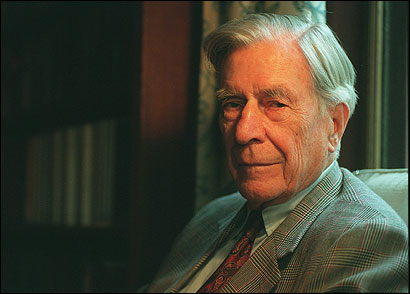
Economist John Kenneth Galbraith once said that “all of the great leaders have had one characteristic in common: it was the willingness to confront unequivocally the major anxiety of their people in their time. This, and not much else, is the essence of leadership.” 

We all have our anxieties to bear. For some it is a decision we need to make. For others it is a habit we need to break. 

Whatever the anxiety is, we have to confront it, if we want to overcome it. 

That is what it means to lead!

Share/Save/Bookmark

Friday, October 25, 2013

Positive Leadership: Principles


Share/Save/Bookmark

Tuesday, October 08, 2013

Positive Leadership: Ten Essentials for Getting Value from Values

Many organisations have statements of mission and values. Unfortunately, most of them sound alike. Who could quibble with the importance of “respect” or “customer focus”? Values statements can seem like passive decoration for walls and the Web, easily ignored. And the words don’t really tell anyone what to do in any specific sense.


But that does not mean that values do not matter. In organisations that are innovative, profitable, and responsible — widespread dialogue about the interpretation and application of values enhances accountability, collaboration, and initiative.

Here are ten essential ingredients that make values work to produce organisational value.

Values are a priority for leaders, invoked often in their messages and on the agenda for management discussions.

The entire work force can enter the conversation; employees are invited to discuss or interpret values and principles in conjunction with their peers, who help ensure alignment.

Principles are codified, made explicit, transmitted in writing in many media, and reviewed regularly to make sure people understand and remember them.

Statements about values and principles invoke a higher purpose, a purpose beyond current tasks that indicates service to society. This purpose can become part of the company’s brand and a source of competitive differentiation.

The words become a basis for on-going dialogue that guides debate when there is controversy or initial disagreement. Decisions are supported by reference to particular values or principles.

Principles guide choices, in terms of business opportunities to pursue or reject, or in terms of investments with a longer time horizon that might seem uneconomic today.

As they become internalized by employees, values and principles can substitute for more impersonal or coercive rules. They can serve as a control system against violations, excesses, or veering off course.

Actions reflecting values and principles — especially difficult choices — become the basis for iconic stories that are easy to remember and retell, reinforcing to employees and the world what the company stands for.

Values are aspirational, signalling long-term intentions that guide thinking about the future.

Principles, purpose, and values are discussed with suppliers, distributors, and other business partners, to promote consistent high standards everywhere.


In short, it’s not the words that make a difference; it’s the conversation. Frequent discussion about organisational values can be engaging and empowering. The organisation becomes a community united by shared purpose, which reinforces teamwork and collaboration. People can be more readily relied on to do the right thing, and to guide their colleagues to do the same, once they buy into and internalise core principles. People can become more aware of the drivers and impact of their behaviour. 

And, as you can see in leading companies, active consideration of core values and purpose can unlock creative potential.


Share/Save/Bookmark

Tuesday, September 03, 2013

Positive Leadership: We Can All Be Leaders

Look around the room you are in. Can you spot the leader?

Most people grow up believing that a leader is someone else in the room.

There are many different types of leader and some people take more naturally to leadership than others. Yet most people have it inside them to become leaders themselves.

In order to realise this potential, you must realise what it takes to be a leader: make a decision. Make a mistake. Move on.

Look around the room you are in again. How many future leaders can you spot now?

Share/Save/Bookmark

Friday, July 12, 2013

Positive Leadership: The Job of a Leader


Leaders “do” people.

You take care of the people.

The people take care of the service.
The service takes care of the customer.
The customer takes care of the profit.
The profit takes care of the re-investment.
The re-investment takes care of the re-invention.
The re-invention takes care of the future.

And at every step, the only measure is EXCELLENCE.

(Thanks to Tom Peters for this timely reminder!)

Share/Save/Bookmark

Wednesday, April 17, 2013

Positive Leadership: The Virtues of a Leader

‘Leadership is a matter of intelligence, trustworthiness, humaneness, courage, and discipline . . . Reliance on intelligence alone results in rebelliousness. Exercise of humaneness alone results in weakness. Fixation on trust results in folly. Dependence on the strength of courage results in violence. Excessive discipline and sternness in command result in cruelty. When one has all five virtues together, each appropriate to its function, then one can be a leader.’ 

Sun Tzu

Share/Save/Bookmark

Tuesday, April 02, 2013

Positive Leadership: Principles To Live By


L istening
E ncouragement
A uthenticity
D aring
E xpectancy
R espect
S ervice
H ope
I nspiration
P erseverance

Share/Save/Bookmark

Wednesday, January 09, 2013

Positive Leadership: Corporate Culture and Connecting to Purpose and Mission

Bernard Tyson is president and chief operating officer of Kaiser Permanente, one of America’s leading health care providers and the nation’s largest not-for-profit health plans, with annual operating revenue in excess of $45 billion. Kaiser Permanente is often referred to as the model for the future of health care. Its focus is on prevention and affordable health care delivered through evidence-based medicine and industry-leading technology.

 
Share/Save/Bookmark

Wednesday, January 02, 2013

Positive Leadership: How Values Can Make You A Great Leader


In the wake of many recent high-profile corporate and public sector scandals in the UK and in the USA, many organisations are focused on rebuilding damaged reputations and restoring trust. Leaders' values are increasingly important as businesses seek to become more responsible, accountable and transparent.  

Values-based leaders can help others (employees, customers and other stakeholders) find meaning and purpose in what they do. 

There are very real, commercial benefits to developing and putting into practice values-based leadership in your organisation. As well as increased motivation and engagement, if there had been more true values-based leaders around before the financial crisis, many of those high-profile corporate scandals would never have happened in the first place.

Know yourself

Develop your self-awareness. You may have role models you can learn from, but don't try to copy them. Think about what you stand for and what matters to you.

Identify your business values

Your business values should resonate with your employees, customers, and other stakeholders. When defining or refreshing your values, ask different groups of people for input. Test your values out. Are they meaningful? They should be easy to communicate, easy to understand, and easy to buy into.

Be authentic

Say what you mean and mean what you say. Authentic leaders are true to themselves and operate with integrity both in and out of work.

Be open minded

Consider other points of view. Explore each challenge from a range of perspectives, such as thinking what customers or colleagues think. This helps you and your team gain a broader understanding and make balanced decisions.

Be confident

Self-confidence is not about being arrogant; it's about recognising your strengths and the areas you can improve. You need confidence to be true to your values. 

Have some humility

Remember who you are and be true to your roots. Humility helps you treat others with respect and keeps things in perspective. It's one of the key factors missing from autocratic leadership and a critical element of values-based leadership.

Be a role model 

As a leader, you should aim to live your organisation's values. You've got to walk the talk.

Be brave

Values-based leaders have the courage to speak up and to stand up for what they believe is right. At times this can be difficult.  Often it's a lot easier to keep your head down and choose the easiest path. If you stick up for what's right it encourages others to do the same.

Reward values-based behaviour

Is your reward strategy in line with your values? Recently, some big banks have announced plans to reward employees based on their ability to develop mutually beneficial, long-term relationships with customers and other stakeholders, rather than rewarding a short-term focus on profit. Does your business reward values-based behaviour?

Stick to your values

People will really notice if you don't. If you say you believe in a green agenda and conserving energy but fly everywhere in a private jet, the people around you will become cynical and stop trusting you.  

Share/Save/Bookmark

Thursday, December 27, 2012

Positive Leadership: The Campbell Soup Leadership Model


Campbell's Soup Company CEO, Doug Conant talks about the Campbell Leadership Model.

Share/Save/Bookmark

Friday, August 17, 2012

Positive Leadership: Helping Your Followers Succeed


How can you as a leader get work done through others with their commitment and their contagious enthusiasm?

Here are a few ways you can provide followers with what they need to succeed:


  • Maintain an “Open Door.” Encourage them to come to you with their problems and concerns. Listen and respond appropriately.
  • Be accessible and available. Unless you’re on personal leave, make sure they can contact you for any needed clarification or guidance.
  • Allow reasonable schedule flexibility to accommodate their personal needs.
  • Think and plan before assigning work and implementing projects so you can minimise unnecessary changes and extra work.
  • Keep the environment respectful and “safe.” Do not allow derogatory humour, destructive feedback, or the criticising of input and ideas. Take immediate action to stop them if they occur.
  • Back their decisions and act on their recommendations whenever possible and appropriate.
  • Run interference. Be a “go-between” to help team members get any required senior management approvals and interdepartmental cooperation.
  • Minimise obstacles. Identify any organisational factors (including your behaviours) that inhibit team member success. Eliminate or minimise those obstacles as best you can.

Lead well ... LEAD RIGHT!

Share/Save/Bookmark

Thursday, June 28, 2012

Positive Leadership: What Great CEO's Do Well


The "best of the best" CEO’s tend to share the following eight core beliefs:

1. Business is an ecosystem, not a battlefield.
Average bosses see business as a conflict between companies, departments and groups. They build huge armies of "troops" to order about, demonise competitors as "enemies," and treat customers as "territory" to be conquered.

Extraordinary bosses see business as a symbiosis where the most diverse firm is most likely to survive and thrive. They naturally create teams that adapt easily to new markets and can quickly form partnerships with other companies, customers ... and even competitors.

2. A company is a community, not a machine.

Average bosses consider their company to be a machine with employees as cogs. They create rigid structures with rigid rules and then try to maintain control by "pulling levers" and "steering the ship."

Extraordinary bosses see their company as a collection of individual hopes and dreams, all connected to a higher purpose. They inspire employees to dedicate themselves to the success of their peers and therefore to the community–and company–at large.

3. Management is service, not control.
Average bosses want employees to do exactly what they're told. They're hyper-aware of anything that smacks of insubordination and create environments where individual initiative is squelched by the "wait and see what the boss says" mentality.

Extraordinary bosses set a general direction and then commit themselves to obtaining the resources that their employees need to get the job done. They push decision making downward, allowing teams form their own rules and intervening only in emergencies.

4. My employees are my peers, not my children.

Average bosses see employees as inferior, immature beings that simply can't be trusted if not overseen by a patriarchal management. Employees take their cues from this attitude, expend energy on looking busy and covering their behinds.

Extraordinary bosses treat every employee as if he or she were the most important person in the firm. Excellence is expected everywhere, from the loading dock to the boardroom. As a result, employees at all levels take charge of their own destinies.

5. Motivation comes from vision, not from fear.

Average bosses see fear--of getting fired, of ridicule, of loss of privilege--as a crucial way to motivate people.  As a result, employees and managers alike become paralysed and unable to make risky decisions.

Extraordinary bosses inspire people to see a better future and how they'll be a part of it.  As a result, employees work harder because they believe in the organisation's goals, truly enjoy what they're doing and (of course) know they'll share in the rewards.

6. Change equals growth, not pain.

Average bosses see change as both complicated and threatening, something to be endured only when a firm is in desperate shape. They subconsciously torpedo change ... until it's too late.

Extraordinary bosses see change as an inevitable part of life. While they don't value change for its own sake, they know that success is only possible if employees and organisation embrace new ideas and new ways of doing business.

7. Technology offers empowerment, not automation.

Average bosses adhere to the old IT-centric view that technology is primarily a way to strengthen management control and increase predictability. They install centralised computer systems that dehumanise and antagonise employees.

Extraordinary bosses see technology as a way to free human beings to be creative and to build better relationships. They adapt their back-office systems to the tools, like smartphones and tablets, which people actually want to use.

8. Work should be fun, not mere toil.

Average bosses buy into the notion that work is, at best, a necessary evil. They fully expect employees to resent having to work, and therefore tend to subconsciously define themselves as oppressors and their employees as victims. Everyone then behaves accordingly.

Extraordinary bosses see work as something that should be inherently enjoyable–and believe therefore that the most important job of manager is, as far as possible, to put people in jobs that can and will make them truly happy.

Share/Save/Bookmark

Monday, May 28, 2012

Positive Leadership: The Keys to a Successful Leadership Strategy


What style of leadership works and what doesn't work in an organisation?

1) Strict hierarchical decision-making doesn't work. Shared consciousness or ‘smart autonomy’ - is what works.

Everyone — not just those on the top rungs of the organisational ladder — has to be empowered, but they must still look out for the needs of the whole organisation, not themselves.

2) Information ownership doesn't work. That's when people protect what they know without sharing it with others. It's a hindrance to an organisation.

It makes you more powerful but it makes the organisation weaker.

Inclusion and transparency is what works. Allowing information to flow between parts of an organisation, helps formulate ideas and foster trust.

3) Organisational equity doesn't work. It's the idea that everyone within the organisation is trying to make things "fair" for them in relation to their colleagues.

Having teams is what works, because it encourages collaboration and supports that "shared consciousness" idea.

If everybody on a football team scores plenty of goals, but you lose matches, you lost!

4) Command and control doesn't work. Micro-managing and imposing your will over much of an organisation stifles people.

Trust is what works. Without it, it's impossible to have autonomous parts of an organisation.

Share/Save/Bookmark

Thursday, May 24, 2012

Positive Leadership: Coaching Advice from John Madden


To today’s generation, he’s known more for his tremendously popular video games and as half of the legendary announcer pair with Pat Summerall. However, before his 20-year TV career and creation of the Madden line of games that have been bought by the millions, John Madden very successfully roamed the football side-lines as a head coach.

Madden retired from coaching at 42 with a Super Bowl ring and the second-highest winning percentage in NFL history.  Here is some advice from Madden for coaches in all sports and any level of competition. (His advice applies equally well to business coaches.)

John Madden on…

…the responsibility of a coach: ‘The first thing that a coach has to be is a teacher. The best thing you can do for your players is to get them ready to be as good as they can. That’s your responsibility. It starts with fundamentals. Give them the tools for the best chance at success.’

…learning from Vince Lombardi: ‘Lombardi was my idol. He said it best years and years ago: “To be a successful coach, you have to know what the end looks like.” You have to know what you want. What’s your goal? It sounds simple, but it’s amazing how many people don’t know what the end is. If you don’t know the end, then you don’t know how to get there.’

…succeeding as a coach: ‘Teams have the same number of kids, same number of practices and, for the most part, the same calibre of players. Why do some succeed more than others? They better prepare themselves and their players. You can’t just focus on one area. You have to be able to analyse personalities. You have to be able to game plan. You have to be able to teach. Every good coach who takes on the responsibility of being a coach should strive to be as strong as they can in all areas of coaching.’

…striving to be the best: As a coach, you have to realise that you’re never finished. You have to prepare for practice. After practice, you prepare for the game. After the game, you prepare for the next practices and the next game. You always have to prepare for what’s next if you want to succeed.’

Share/Save/Bookmark

Tuesday, May 22, 2012

Positive Leadership: Performing with Integrity and Character

Still as inspiring as the first time we saw it!


Share/Save/Bookmark

Thursday, March 22, 2012

Positive Leadership: Leadership Lessons from Coach K


Duke University basketball coach Mike Krzyzewski now has most NCAA career victories (903). Krzyzewski has been called “the modern-day John Wooden” by Louisville coach Rick Pitino and “a coach’s coach … a guy I think every coach in America looks to and respects,” by Kansas coach Bill Self. He has led the Blue Devils to 11 Final Four appearances and four national titles. In this extract from an interview with Jerry Kavanagh for Athlon Sports, Krzyzewski showed an appreciation for literature in speaking about his coaching style and leadership.


'In the book Absinthe and Flamethrowers, the author, William Gurstelle, writes that managers who take the greatest risks are the most successful. Do you agree with that?

I think you have to be careful when you say that. Somebody might think that to be a leader or a manager, “I need to take a lot of risks, or else I’m not good.” I think you can’t be afraid to do what’s necessary. Some people would equate that to taking a risk because it goes against the grain or it’s not something that is normally done. But my feeling is that a leader has to take the course of action that’s necessary to produce a positive result after doing an analysis and preparing himself to take a look at that situation. The world might call that a risk; a leader would call that the appropriate action that needed to be taken. I think when you just take that one statement (by Gurstelle), you can make a mistake by saying, “I didn’t take a risk today. I better take one.” I think you go boldly in the direction that’s necessary and in the direction that you’re prepared to go in.

You often talk about leadership. Napoleon defined a leader as “a dealer in hope.” I read where you said, “Leadership can be lonely.” Can you explain that?

Well, leadership is lonely because you don’t discuss everything. Part of it is that in your moments of doubt or in your moments of being nervous or wondering if this is the right thing that you’re doing, you never want to show weakness to your group. And you don’t share that because it’s not the main feeling you have, but because you’re a human being these feelings hit you. Leadership can be very lonely, but there’s a certain amount of time that you have to be by yourself, it has to be yours as you’re looking into it, before you present something to your group. I think that’s a price that you pay.

Some of the statements you have made have an application beyond basketball. For example, “Fear can change you.” What do you mean by that?

Some people are afraid of fear, so they avoid it. They don’t try to do anything. They’re very cautious. And when you get into new situations, there’s an element of fear that can excite you. It can freeze you or stop you from doing something, because it’s new. It can be exciting, but there’s still some fear involved. And I don’t think that you have to face fear. You know, part of being courageous is facing fear and doing what you’re supposed to do. People have different fears — fear of speaking, fear of heights, a bunch of fears — and when you face those fears, you can turn them into your strengths. That’s how you evolve as a person and how a group evolves as a team.'

Share/Save/Bookmark

Tuesday, February 07, 2012

Positive Leadership: A Checklist for Leadership Action


Here are fifteen essential principles that taken together constitute an irreducible checklist for leadership action:


Share/Save/Bookmark

Tuesday, November 29, 2011

Positive Leadership: Leaders with Values

Management thought leaders share their ideas on values in business.

Featuring:
Arturo Condo, professor, INCAE Business School
David Rock, founder, NeuroLeadership Institute
Buie Seawell, professor, Daniels College of Business, University of Denver
Erin Lehman, senior researcher, Center for Public Leadership, John F. Kennedy School of Government, Harvard University
Christopher Adkins, director, undergraduate program, Mason School of Business, The College of William & Mary
Maj. Gen. Frederick B. Hodges, US Army
Susan Clancy, associate professor, INCAE Business School
Jonathan Gosling, professor, University of Exeter Business School
 
Share/Save/Bookmark