Positive Leadership has also been recognised as a Top 50 Leadership Expert to Follow on Twitter.

Follow us on Twitter @posleadership


LEADERSHIP IS A PROCESS OF SOCIAL INFLUENCE, WHICH MAXIMISES THE EFFORTS OF OTHERS TOWARDS THE ACHIEVEMENT OF A SHARED GOAL.
Showing posts with label Olympics. Show all posts

Friday, May 03, 2013

Positive Leadership: The Role of Sport in Facilitating Social Change


"Sport is one of the best tools for social change because it is a large part of cultures around the world and reaches into every socioeconomic class of society. If laws are put in place, the benefits will be beyond measure. Sport helps develop self-esteem and confidence; improve physical and mental well-being, serve as a medium of communication and empower women to improve themselves and their communities."

Nawal El Moutawakel, 1984 Olympic gold medallist, Morocco 


Share/Save/Bookmark

Friday, April 26, 2013

Positive Leadership: Inspiration


Share/Save/Bookmark

Thursday, April 25, 2013

Positive #Leadership: Imagine


Share/Save/Bookmark

Wednesday, April 24, 2013

Positive Leadership: Success


Share/Save/Bookmark

Thursday, November 08, 2012

Positive Leadership: The London 2012 Olympics


Share/Save/Bookmark

Monday, September 17, 2012

Positive Leadership: Team GB - Our Greatest Team


Share/Save/Bookmark

Positive Leadership: I'm A Winner


Share/Save/Bookmark

Monday, September 10, 2012

Wednesday, August 29, 2012

Positve Leadership: #UsainBolt - The Art of Winning


Usain Bolt, the fastest man on earth, made his third visit to IMD on August 22nd, 2012 to share the secrets of his continued success with 350 business executives.

Share/Save/Bookmark

Thursday, August 16, 2012

Positive Leadership: What Winning Means!

BBC commentators Steve Cram and Brendan Foster stand to salute Mo Farah's second gold medal in a thrilling 5,000m race.

In the studio, pundits Denise Lewis and Colin Jackson literally jump for joy as the 29-year-old won Great Britain's 27th gold medal of London 2012.


Share/Save/Bookmark

Positive Leadership: The Education Olympics


Share/Save/Bookmark

Tuesday, August 14, 2012

Positive Leadership: Support Networks and Success

Procter & Gamble launched its "Thank You, Mom" campaign at the Vancouver Games in 2010. A critical and commercial success, the campaign returned for London 2012. In one execution, a re-working of its 2010 Winter Olympics 'Thank you, mom’ spot, P&G pushes raw emotion to the tear-jerking nth degree with its depiction of mothers worldwide raising children to become champions and sharing their triumph. 'Being a mom is the hardest job in the world,' the ad says, 'but it’s also the best.'

A great Olympic advert!


Share/Save/Bookmark

Positive Leadership: Inspired Leadership - The Historical Perspective on the London 2012 Olympics


In January 2003, a storm was gathering in Washington, Whitehall and Baghdad when the then Culture Secretary Tessa Jowell went to the cabinet with the idea that London should bid for the 2012 Olympics. 

“We started with no votes around the Cabinet Table,” she said. She went round the departments one by one, to Health, Education and Transport, and told them what the Olympics could do for everyone. Tony Blair, whose last minute lobbying later proved so crucial, dismissed the idea at first.

Tony Blair was much more preoccupied with Iraq, and rightly so. I said to him, “How are you going to answer this question. We’re the fourth largest economy in the world, London is the greatest city in the world, we would like to think. What will you say to someone who asks you ‘Why didn’t you dare bid to host the games?’ I’ve never forgotten the way he looked at me.

In his memoir, Blair recalls that Jowell lectured him to man up:

“I really didn’t think that was your attitude to leadership. I thought you were prepared to take a risk. And it is a big risk. Of course we may not win but at least we will have had the courage to try.” When Tessa says this, you feel a complete wimp and rather ashamed. You know she is manipulating you, but you also know it’s a successful manipulation.

I got a call the next morning from his Principle Private Secretary saying ‘The Prime Minister will support your recommendation.”

Two years later, the American businesswoman appointed to lead the bid Barbara Cassani resigned, because she didn’t think an American bid leader would win the games. “She deserves great credit,” said Dame Tessa Jowell.” She said the person who could win it is Seb Coe.

It was only six months later that the double Olympic gold medallist stood on stage in Singapore and said:  ”To make an Olympic champion it takes eight Olympic finalists. To make Olympic finalists, it takes 80 Olympians. To make 80 Olympians it takes 202 national champions, to make national champions it takes thousands of athletes. To make athletes it takes millions of children around the world to be inspired to choose sport.” Jacques Rogge was up not long later, opening his envelope and reading out the word “London.”

From the very start, the London 2012 Olympic bid has been characterised by the single-minded passion, persistence, vision and determination of all those involved in hosting the Games. Congratulations!

For more background into the bid process for the London 2012 Olympic Games, see: http://www.vanityfair.com/culture/2012/06/international-olympic-committee-london-summer-olympics)

Share/Save/Bookmark

Monday, August 13, 2012

Positive Leadership: 'If...' The Story of Team GB and the London 2012 Olympics - Pure Magic!

Share/Save/Bookmark

Positive Leadership: Lessons from the Games


Bank of England Governor, Sir Mervyn King said recently that the British economy could learn a number of key lessons from the Olympic Games.

"First, and most important, we have been reminded that an objective that is worth attaining, like a gold medal, requires years of hard work. Success does not come overnight," he said.

"That is as true of our economy as it is of sport. It means reforming our banking system so that banks focus less on making money in the short term, and more on building businesses to serve their customers' interests over the longer term."

The Bank of England boss also said bankers should focus less on money and more on their customers.

He added: "The financial sector has done us all a disservice in promoting the belief that massive financial compensation is necessary to motivate individuals."

The Olympic Games show us that supreme human achievement is the result of a commitment to excellence; nothing more, nothing less.

Share/Save/Bookmark

Positive Leadership: The Legacy of London 2012


The 7 Olympic values have been epitomised by all those involved in organising and participating in the London Olympics.

Congratulations on delivering the greatest show on earth and inspiring a generation!
Share/Save/Bookmark

Friday, August 10, 2012

Positive Leadership: Thinking Like a Gold Medallist


Elite athletes encounter many of the same mental challenges that successful entrepreneurs face on a daily basis, according to JoAnn Dahlkoetter, a sports and performance psychologist in San Carlo, Calif. She should know. In addition to coaching business leaders, Dahlkoetter currently counts five Olympic gold medallists as her clients. She finds that many of the same strategies athletes use to outwit mental obstacles work in business as well. Here's her advice for overcoming three of the most vexing psychological challenges, whether you're a start up or established entrepreneur looking to grow.

Challenge No. 1 - Negative thinking. Slumps happen in athletics, business, and life. Start asking positive questions when you find yourself thinking: I'm not good enough. I can't do this. Nothing is going right. Try: What's good about this situation? What tools and resources do I need to move in the direction I want to go? Asking yourself better questions can help you move forward. Perhaps the big client you lost wasn't the best fit anyway, and now you have the bandwidth to service a bigger, better customer. The more you actively turn around negative thinking, the easier it gets to see opportunities in adversity, Dahlkoetter says.

Challenge No. 2 - Exhaustion. Just as athletes experience injuries and burnout, even the most resilient business owners can get fatigued from putting so much into their businesses. In addition to the sage advice of eating healthfully and getting enough sleep, Dahlkoetter says it's critical to plan breaks ranging from a few hours where you disconnect to a few days away. If that's not possible, take a "mental vacation." Get to a place where you'll be uninterrupted for five or 10 minutes. Breathe deeply and visualise yourself relaxing in a beautiful setting, like at the beach. Sound weird? Research has long shown the positive effects of meditation on stress levels and health. In fact, a new study from the University of Washington found that regular meditation can increase concentration and make you more productive.

Challenge No. 3 - Fear. During the Olympic Games, a decade or more of preparation and training can lead to a single competition. Entrepreneurs have that kind of pressure when they encounter business-threatening obstacles or setbacks. When fear becomes paralysing, you've got to go back to the basics, Dahlkoetter says. "Remind yourself of the skills and talents that got you to the level of success where you are now," she says. "Visualise yourself having the outcome you want over and over and over again." Then, focus on the moment. Don't think about the past or worry about the future. Instead, determine the very next thing you have to do to get the outcome you want. If you're worried about closing a big deal, make a list of the tasks that will give you the best possible advantage--studying competitors' strengths and weaknesses, writing a winning proposal, polishing your presentation--and then tackle those to-dos one by one. Taking positive action is a strong way to dissolve fear, she says.

Share/Save/Bookmark

Thursday, August 02, 2012

Positive Leadership: How to Win in Business


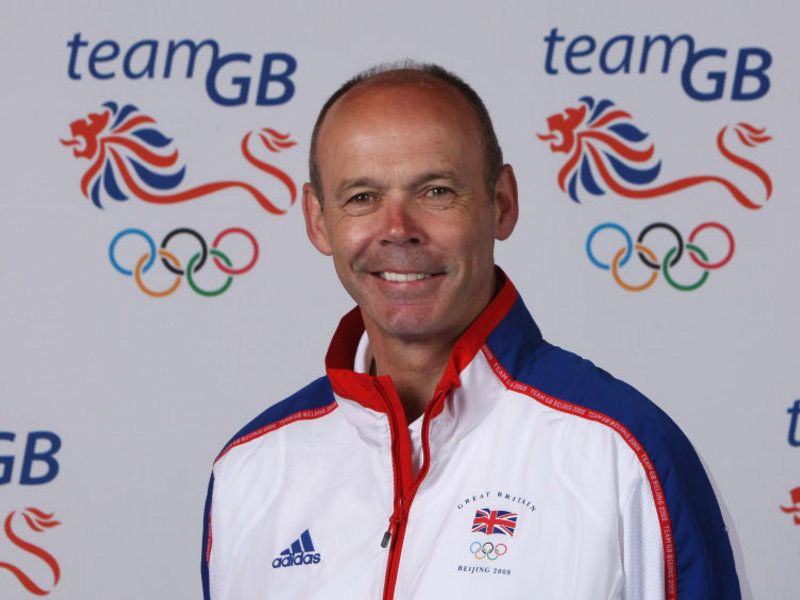
Some interesting observations from the British Olympic Association’s Director of Sport, Sir Clive Woodward:

'Successful businesses, like successful sport teams, need to remain open to new ideas and to learn how to perform under pressure, according to Sir Clive Woodward, the 2003 Rugby World Cup-winning coach.

Outlining his theory, the British Olympic Association’s Director of Sport said that “great teams are made up of great individuals” and that successful team players shared four characteristics: talent, a willingness to learn, an ability to perform under pressure and the mindset of wanting to be a champion.

Sir Clive argued that “talent is not enough” because there are “bucketloads” of talented competitors. He said top players, like top businessmen and women, needed to be willing to be taught — to be “sponges” instead of “rocks”.

“I’d fly anywhere in the world if I thought it had the smallest chance of [helping] me becoming a better coach or a better manager,” he said.

“Once you lose that ability, that kind of focus, the chances are you’ve become a rock and you’re not going to be competing with that person in the next room.”

He said one of his first actions on becoming head coach of the England rugby team in 1997 was to give each player a laptop and teach them IT skills. “The media had a field day [but] I was trying to find out who the sponges were, who the rocks were. Who the guys in the squad saying ‘this guy isn’t going to be here for long, we don’t need to do this’ were.”

Sir Clive said that the next key component of a successful team member was an ability to perform under pressure, something that he did not believe was inherited.

“Are you born with this gene to play and perform under pressure? I would say absolutely not ... I think this is coachable,” he said. “What you can do is role-play situations you’re going to get into. If you come across something you’ve never seen before, the chances are you would freeze.”

Finally, according to Sir Clive, to become a champion players must have the right attitude, including an “obsession with detail about what you do to beat the person in the next room”.'


Share/Save/Bookmark

Positive Leadership: Lessons from the Olympians


“The Best” will:
  • outwork others
  • be more disciplined than others
  • have greater drive than others
  • be much more competitive than others
  • do things that others think aren't important
  • do the unrequired extra work
  • always want to know what they can do to get better
  • want to be coached, want to be driven, and want to learn more.

These are just some of the characteristics of “The Best" -- all things your players need to recognise in this elite group.  And for all our corporate friends, we think this list is worth thinking about as well. We all can grow and improve if we strive to do these things to the level that “The Best” are willing to do them!

Enjoy watching these special athletes as they once again strive to win! 

Share/Save/Bookmark

Wednesday, August 01, 2012

Positive Leadership: Greatness is Wherever Someone is Trying to Find it


Greatness isn't reserved for the chosen few in one special city, it can also be found in London, Ohio, and London, Norway, and East London, South Africa, and Little London, Jamaica, and Small London, Nigeria and the London Hotel and London Road and anywhere else someone is trying to find it.

Share/Save/Bookmark
