Positive Leadership has also been recognised as a Top 50 Leadership Expert to Follow on Twitter.

Follow us on Twitter @posleadership


LEADERSHIP IS A PROCESS OF SOCIAL INFLUENCE, WHICH MAXIMISES THE EFFORTS OF OTHERS TOWARDS THE ACHIEVEMENT OF A SHARED GOAL.
Showing posts with label Ethical Leadership. Show all posts

Monday, July 02, 2012

Positive Leadership: Bankers Need A Moral Compass


This extract from a recent editorial in the Financial Times highlights the continued appalling state of the UK banking sector and the need for wholesale change in leadership. British bankers really do need a moral compass!

‘The Barclays affair may lack the spice of some recent banking scandals, involving as it does the rather dry “crime” of misreporting interest rates. But few have shone such an unsparing light on the rotten heart of the financial system……..What is shocking is the casual way in which this con was perpetrated, and how few checks were in place to stop it. The messages swapped between traders – with their promises to reward fiddled figures with bottles of champagne – breathe an easy sense of entitlement. They also speak volumes about the rotten culture at Barclays. Bob Diamond, the bank’s chief executive, gave a lecture last year in which he stressed the importance of culture in establishing an ethos of trust and integrity. “Culture is difficult to define,” he explained, “but for me the evidence of culture is how people behave when no one is watching.” Well, now we know.’

For the full article, see:  

Share/Save/Bookmark

Tuesday, May 08, 2012

Positive Leadership: Ethical Leadership


Nobel Prize laureate Professor Amartya Sen, spoke on "David Hume and the Demands of Ethics" on Monday, July 18, 2011.

The Professor of Economics and Philosophy at Harvard University gave his lecture as part of Edinburgh University's celebration of philosopher David Hume's 300th birthday.


Share/Save/Bookmark

Saturday, July 02, 2011

Positive Leadership: Ethical Leadership


How do we know what’s ethical or what’s the right thing to do? 

Here are some solid leadership guidelines for you and your team members.


  • Is it legal?
  • Does it comply with our rules and guidelines?
  • Is it in sync with our organisational values?
  • Will I be comfortable and guilt-free if I do it?
  • Does it match our stated commitments and guarantees?
  • Would I do it to my family or friends?
  • Would I be perfectly okay with someone doing it to me?
  • Would the most ethical person I know do it?

Share/Save/Bookmark

Monday, March 28, 2011

Positive Leadership: Business Ethics

In this talk at Bentley University, Harvard Professor Rosabeth Moss Kanter discusses key insights that follow from a three-and-a-half year investigation that served as the basis of her recent book SuperCorp: How Vanguard Companies Create Innovation, Profits, Growth, and Social Good. 

She argues that there are strong potential synergies between financial performance and attention to community and social needs. By embracing values and focusing on the world outside the organisation, companies can gain competitive advantage while responding to social problems.


video platformvideo managementvideo solutionsvideo player
Share/Save/Bookmark

Sunday, March 20, 2011

Positive Leadership: The Shadow Effect

The Shadow Effect is an emotionally-gripping, visually-compelling docudrama that reveals why suppressed emotions and unresolved internal conflicts leads to behaviour that continually unseats politicians, destroys celebrity careers, destabilises the economy and affects the lives of millions each year.

In this age of public humiliation and media meltdowns, the work of New York Times bestselling author, Debbie Ford, continues to make headway as she exposes the opposing forces of both light and dark that compete for attention within every human being. In her film debut, The Shadow Effect, Ford presents the hidden power of “the Shadow” alongside some of today’s most provocative thinkers including Deepak Chopra, Marianne Williamson, Mark Victor Hansen, James Van Praagh and others.

In this life-altering journey, individuals who have transcended child abuse, racism, the Holocaust, war, and wounded upbringings, share their remarkable stories. Meet those who have learned to face their terror, heal their wounds, and embrace their higher, heroic selves to overcome the shadow effect.


Share/Save/Bookmark

Thursday, February 24, 2011

Positive Leadership: The Ethics of Excellence


The ethics you live out as you go about your work can provide the foundation for excellence. The high calibre organisation is, after all, merely a reflection of its people.


Share/Save/Bookmark

Monday, February 07, 2011

Positive Leadership: MBA Oath Provides an Ethical Foundation for Business

This article from today's Financial Times was written by the Archbishop of the Church in Wales - http://www.ft.com/cms/s/2/5c7b7592-307c-11e0-9de3-00144feabdc0.html#axzz1DIjtKlS9) . It bears scrutiny in today's world, where values are often mere words rather than actions.

The conclusion is a pertinent summary of the opportunity which adopting the Values of Positive Leadership™ affords businesses today:

'If adopted, an ethical perspective could become as second nature to executives as an economic outlook. That would make a radical difference to the way in which we conduct business because, in the end, conventional regulations cannot cure moral blindness or human greed.'

Share/Save/Bookmark

Tuesday, November 02, 2010

Educating for Ethics

The Analects covers most of Confucius' teachings and philosophy. He is at the start of a long literary tradition that assumes that good leadership and good followership can, at least to some extent be taught.

Book 1: 1.4 Circa 475-221 BCE

Confucius said, "Clever talk and affected manners are seldom signs of goodness."

Zeng-tzu said, "I examine myself three times a day. When dealing on behalf of others, have I been trustworthy? In intercourse with my friends, have I been faithful? Have I practised what I was taught?"

Share/Save/Bookmark

Sunday, August 08, 2010

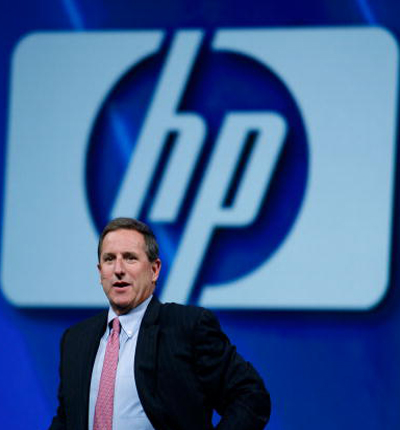
HP's Leadership Failure

Hewlett Packard’s Board of Directors demonstrated recently that if you violate HP’s Standards of Business Conduct (SBC) you can lose your job, even if you are the chairman and CEO. 

Mark Hurd, who had served as HP’s CEO for the last five years (and chairman for four years), resigned at the Board’s request after an investigation concluded he had engaged in inappropriate behaviour that violated HP’s SBC.

Just as leaders don’t get a free pass when they miss performance goals, there ultimately isn’t a free pass when ethical standards aren’t met. Trust is essential in sustaining business performance. Leadership without ethical behaviour is a failure of leadership.

So when Hurd wrote some time ago in the SBC’s preface that “We want to be a company known for its ethical leadership….” the problem wasn’t that the standard was too high to meet. The issue is Hurd wasn’t engaged in making real what that meant for him.

His message in the preface continued: “Let us commit together, as individuals and as a company, to build trust in everything we do by living our values and conducting business consistent with the high ethical standards embodied within our SBC.”

Tone at the top only counts when leaders use words that they believe in enough to live.  

Share/Save/Bookmark

Sunday, January 10, 2010

How do You Define “Ethical Leadership”?


The Positive Leadership definition of 'ethical leadership' has three elements:

(1) Perspective- Working hard to see reality clearly

Many of us view reality as things being just the way they are (at face value), while others understand that our view of reality is based on our beliefs, and that our beliefs are based on our past experiences.

(2) Courage - Doing what is required to get the job done

Failure in leadership is not due to the lack of ideas, but due to the decisions we make after we feel the “tight gut.” It is the ability to be uncomfortable and do the right thing anyway.

(3) Integrity- Doing what is required without violating personal integrity

Integrity is simply obedience to the unenforceable. It is doing the right thing when no one is looking and you wouldn’t get caught doing otherwise.

An individual, a company or even a society’s “brand” is defined to a great extent on ethics. On an individual level, we have to have the courage to be virtuous and do the right thing even when we feel like not doing it. We grow our “virtue muscle” each time we get through the thirty seconds of discomfort – that “tight gut.” We have to work hard not to retreat into cynicism as a protection against feeling bad. One of the best ways to enhance this trait is by working with someone who has higher integrity than us – thereby raising our level of integrity by the association.

On an organisational level, the extremes are from total bureaucracy to total anarchy. In total bureaucracy, lines of integrity are never crossed due to the rules in place, yet individuals are miserable and the company cannot adapt quickly. In total anarchy, the absence of boundaries causes the atmosphere to be chaotic and the company to experience unnecessary loss. The goal in the organisation is to be in the middle of these two extremes and experience “obedience to the unenforceable.” What companies need are employees that will do the right thing in alignment with the direction of the company even when no one is watching.

On a societal level, there are more controls on people’s integrity than ever before. These laws while urging compliance can create cynicism. The more individuals show a commitment to being a value-based society, the more everyone moves toward compassion. The more time we spend in shaping other’s integrity, the more our fabric has been strengthened as a society.

Share/Save/Bookmark