Positive Leadership has also been recognised as a Top 50 Leadership Expert to Follow on Twitter.

Follow us on Twitter @posleadership


LEADERSHIP IS A PROCESS OF SOCIAL INFLUENCE, WHICH MAXIMISES THE EFFORTS OF OTHERS TOWARDS THE ACHIEVEMENT OF A SHARED GOAL.
Showing posts with label Attitude. Show all posts

Wednesday, April 30, 2014

Positive Leadership: Patience and Attitude


Share/Save/Bookmark

Friday, February 07, 2014

Positive Leadership: Attitude


Share/Save/Bookmark

Wednesday, February 05, 2014

Positive Leadership: Attitude


Share/Save/Bookmark

Wednesday, January 15, 2014

Positive Leadership: The Importance of Rest and Recovery

World-class competitors, from athletes to pianists, limit the arduous part of their practice routine to a maximum of about four hours each day. 

Rest is an equally important part of their training regimen, to restore their physical and mental energy. 

Without rest, our brains grow more depleted, often signified by distractedness, irritability, and fatigue. At work, all too often we try to “push through it,” even though there is no magical energy reserve waiting for us. 

To recharge, take a break; a short rest at midday reboots the brain for the rest of the day. If you can’t take a nap, try mindfulness meditation, which can serve as the mental equivalent of a weightlifting rep. 

Attention is a mental muscle—strengthen it with the right practice. 


Share/Save/Bookmark

Monday, May 20, 2013

Positive Leadership: Why Britain Has Not Produced a Google or a Facebook


London Mayor, Boris Johnson at his trenchant best -

‘I remember what the doubters said when we first announced a new bus for London – a replacement for the beloved Routemaster. They said I was mad. The Labour Party said I was deranged. My opponents said I was a swivel-eyed loon, or words to that effect. They said we were showing an arrant disregard for health and safety, and that in any case, it would never be built.

Where is it, they used to sneer at me, as Sir Peter Hendy and Transport for London began the necessarily lengthy process of procurement. When’s the bus due, eh? And when the first prototype finally turned up in 2011, the machine managed to conk out on the M1 (because someone had forgotten that a diesel hybrid still needs to be filled with diesel). The sceptics laughed their pants off.

So it gives me unbridled joy to inform you that the new bus will shortly arrive en masse. A whole gleaming fleet of them is about to take over Route 24, from Pimlico to Hampstead Heath; and in the next two years they will cease to be a curiosity – a rare species of charismatic megafauna that you might spot once in the course of a safari. They will be a glorious and regular addition to London’s streetscape, as famous and as emblematic as the elephants of the Serengeti, whose noble and domelike brows they faintly resemble.

When I went to Antrim last week, and saw dozens of them being made in the new Wrightbus plant, I felt a sense of awe, and the deep certainty that this was the most wonderful project I had ever been involved in. It has clean, green hybrid technology. If the new bus fulfils the promise it has shown in tests, we will be able to save so much on fuel that it will actually come out cheaper than our current hybrid buses. With 600 of them on the streets by 2016, they will make a significant reduction in nitrogen oxides and particulates, and will help us to improve air quality in the city.

The bus is a masterpiece of design, conceived by Thomas Heatherwick, the magician who created the Olympic cauldron. It helps to drive employment throughout the UK – unlike the wretched bendy buses, which were made in Germany. London’s buses are creating hundreds of jobs at the plants in Northern Ireland, but it does not stop there. The engines come from Darlington, the seats are made in Telford, the seat moquette in Huddersfield, the ramps are from Hoddesdon and the “Treadmaster” flooring from Liskeard. Oh, and the destination signs are from Manchester.

It is the embodiment of the point I often make, that investment in London boosts the rest of the UK economy, directly and indirectly. We have stimulated the very best of British technology, creating jobs in this country, and yes, we are now looking to potential export markets.

All these features make the bus remarkable; but there is one more thing about it – the best thing of all. This bus stands for freedom, and choice, and personal responsibility. It not only fulfils a promise often made to Londoners by bringing back conductors; it restores to the streets of London the open platform at the rear – and in so doing, it restores the concept of a reasonable risk.

We all remember the pleasure of the old Routemasters. It wasn’t anything to do with the way their flanks heaved and throbbed like wounded old warhorses. It wasn’t the boggler-boggler-boggler noise or the fumes of diesel. It was the way you could sit on those banquette seats at the back, high over the wheel arches, and watch the road passing you outside. And if the bus got stuck in traffic, or at the lights, you knew that you weren’t a prisoner. You were allowed to get on and off at will, provided the thing wasn’t moving, and now that freedom and benefit will be restored.

Of course, you will have to be careful. You should look around to make sure there aren’t any motorbikes or cycles approaching. But if the road is clear and the traffic is stationary, and you want to hop off and do some shopping – or if you have missed the bus at the stop, and you want to scoot down the street to catch it up – then the option is there. You can hop on and hop off, like the hop-on hop-off hoplites who were trained to leap from moving chariots and then back on again.

Yes, of course there is a risk; but that risk is manageable; and without it you have no opportunity to ascend or escape the bus if you want to. It is, as far as I know, one of the few recent examples of a public policy that actually gives back, to sentient and responsible adults, the chance to take an extra risk in return for a specific reward.

We need to develop this thought, because I worry that in the post-crisis world, we have become all too paranoid, too risk-averse. Yes, the banks made grotesque errors, largely because they could not understand the risks they were taking. But unless we allow businesses and banks to take reasonable risks, they will never hit the jackpot at all.

Why is it that Britain hasn’t produced a giant like Google, or Facebook, or Amazon? It is because such a business, in the UK, would not have been given access to the capital required. We are more hostile to risk, and, indeed, we are more hostile to reward. If you go to San Francisco, where so many of these tech giants were born, you can see the most bizarre tram I have ever set eyes on. People hang from it like gibbons as it swoops and clangs through the streets. It would never be allowed in Europe. But the San Francisco authorities evidently believe that Americans are more robust – more willing to be free, more willing to make their own assessment of a reasonable risk.

If you look at the state of the eurozone, and you compare it with the US economy, you can see the possible advantages of this approach. And that is the point of the hop-on hop-off platform. In restoring a culture of reasonable risk-taking, it is a platform for growth.’


Share/Save/Bookmark

Monday, January 07, 2013

Positive Leadership: Service - Invest in Your People


Tom Peters reminds us that improving the appearance of a business is wasted effort if employee attitude isn't similarly upgraded.

Share/Save/Bookmark

Thursday, August 02, 2012

Positive Leadership: How to Win in Business


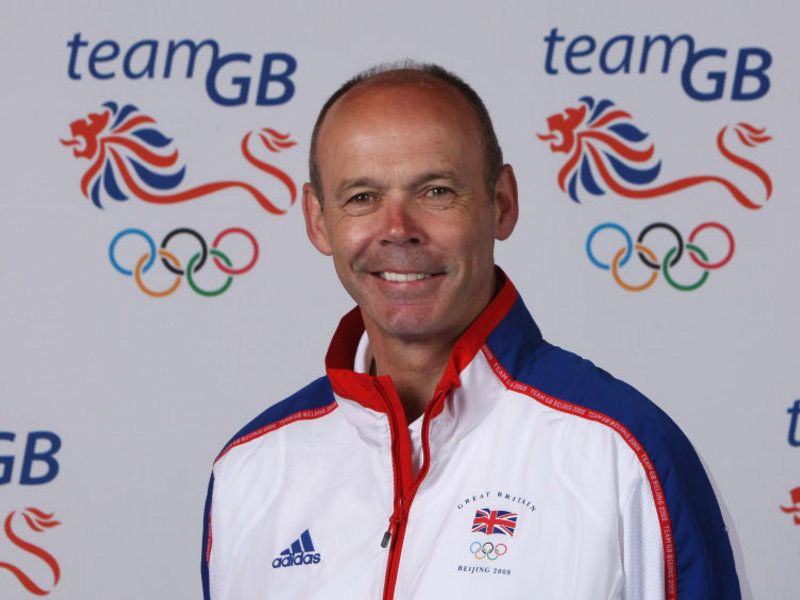
Some interesting observations from the British Olympic Association’s Director of Sport, Sir Clive Woodward:

'Successful businesses, like successful sport teams, need to remain open to new ideas and to learn how to perform under pressure, according to Sir Clive Woodward, the 2003 Rugby World Cup-winning coach.

Outlining his theory, the British Olympic Association’s Director of Sport said that “great teams are made up of great individuals” and that successful team players shared four characteristics: talent, a willingness to learn, an ability to perform under pressure and the mindset of wanting to be a champion.

Sir Clive argued that “talent is not enough” because there are “bucketloads” of talented competitors. He said top players, like top businessmen and women, needed to be willing to be taught — to be “sponges” instead of “rocks”.

“I’d fly anywhere in the world if I thought it had the smallest chance of [helping] me becoming a better coach or a better manager,” he said.

“Once you lose that ability, that kind of focus, the chances are you’ve become a rock and you’re not going to be competing with that person in the next room.”

He said one of his first actions on becoming head coach of the England rugby team in 1997 was to give each player a laptop and teach them IT skills. “The media had a field day [but] I was trying to find out who the sponges were, who the rocks were. Who the guys in the squad saying ‘this guy isn’t going to be here for long, we don’t need to do this’ were.”

Sir Clive said that the next key component of a successful team member was an ability to perform under pressure, something that he did not believe was inherited.

“Are you born with this gene to play and perform under pressure? I would say absolutely not ... I think this is coachable,” he said. “What you can do is role-play situations you’re going to get into. If you come across something you’ve never seen before, the chances are you would freeze.”

Finally, according to Sir Clive, to become a champion players must have the right attitude, including an “obsession with detail about what you do to beat the person in the next room”.'


Share/Save/Bookmark

Friday, July 20, 2012

Positive Leadership: Elite Athletes and Successful Goal Setting


No one becomes an elite sportsperson on talent alone. It takes passion, commitment and attitude to make it to the top.

Whether you’re an aspiring athlete or entrepreneur, there’s a lot you can learn from the world’s elite athletes. By emulating the techniques they use to push ahead, win gold and shatter records, it’s possible for anyone to be on their way to accomplishing the remarkable.

Athletes at the top of their game understand all about successful goal-setting. This is what they do:

Adopt concrete goals that aim toward excellence: Elite athletes are very specific about what they want to achieve, right down to the split-second. By developing your own set of specific, long-term goals you can achieve success in any aspect of your life – whether you want to a promotion or to complete a specific project.

Design a training regime, engage coaches and expand your expertise: Athletes are continuously training and expanding their programme to include new challenges – but they never do it alone. Find a mentor you admire, listen to their advice and incorporate it into achieving your goals.

Keep a log of your efforts and outcomes: The best athletes don’t simply create goals; they also rigorously measure how they are tracking to achieve them. Make note of all the actions you take to achieve your personal goals and measure the pay-off received from each one.

Take the long view: Each competition an elite athlete participates in helps them reach their long-term goals. By being tactical about what projects, jobs and roles you take on you can help ensure each one is a step towards achieving your long-term goals.

Share/Save/Bookmark

Tuesday, June 26, 2012

Positive Leadership: Act Like an Optimist

In this brief video Jack Canfield describes a simple technique that will get you thinking, perceiving and acting like an optimist, so you can start enjoying the rewards that come with recognising opportunities...

Try it! But not just once...try it again and again and again until it becomes a habit. Then this "simple trick" will stop being a trick and become a part of who you are.

Here's to your success!


Share/Save/Bookmark

Tuesday, May 01, 2012

Positive Leadership: Attitude


Share/Save/Bookmark

Wednesday, April 11, 2012

Positive Leadership: The Values and Attitudes of Great Leaders


Unlike supervisors and middle managers, what successful executives share are not skills and knowledge but values and attitudes.  

These are some of the key the values and attitudes that great leaders share:

Great Leaders Thrive on Ambiguity. While most of us like black and white decisions, successful leaders are comfortable with “shades of grey.” Great leaders are able to hold apparent contradictions in tension. They use the tension these paradoxes produce to come up with innovative ideas.

Great Leaders Love Blank Sheets of Paper. Supervisors and middle managers use a framework of policies and procedures to guide them to the proper decision. They want a plan that reduces their job to filling in the blanks or “following the bouncing ball.” By contrast, leaders create the blanks that managers fill in. Like some business Einstein intent on reinventing the universe, every great leader relishes the opportunity to “think things through” from scratch.

Great Leaders are Secure People. Successful executives thrive on differences of opinion. They surround themselves with the best people they can find: people strong enough to hold a contrary opinion and argue vociferously for it. Great leaders crave challenges, and this means hiring the most challenging people they can find with no regard for whether today’s challenger might be tomorrow’s rival.

Great Leaders Want Options.  Leaders constantly demands diverse options from their team, and they use these options to produce creative decisions.

Great Leaders are Tough Enough to Face Facts. Successful executives face facts, and this means being open to the truth even when it is not what we want to hear. Great leaders have a nose for B.S and abhor it.

Great Leaders Stick Their Necks Out. It is a natural human trait to fear being evaluated. We crave wiggle room so we can deflect blame and get off the hook when things go wrong. In business what is often passed off as a collaborative effort is actually just an attempt to avoid individual accountability. Great leaders want to be measured and evaluated. They continually look for ways to measure things that may seem immeasurable, and they cheerfully accept the blame when they are wrong or fail to deliver. The old adage that success has a 1000 fathers while failure is an orphan does not apply to great leadership.

Great Leaders Believe in Themselves. While great leaders crave advice, options, and strong colleagues, they all share a profound belief in themselves and their judgment. Great leaders are people stubbornly following their star who don’t know how to quit. Holding this stubbornness in tension with a willingness to be wrong is perhaps the greatest trick that every great leader must perform.

Great Leaders are Deep Thinkers. Managers get things done. Executives must decide on the things worth doing in the first place. Though very difficult to quantify, great leaders are deep thinkers. They constantly dive below surface “facts” searching for new ways to knit those facts together. Great leaders are generalists not specialists driven by an omnivorous curiosity. They know that the answers they are seeking will probably emerge from outside business and from disciplines that may seem utterly unrelated.

Great Leaders are Ruthlessly Honest with Themselves. Self-knowledge is perhaps the most critical trait that all great leaders share. Leaders question assumptions and disrupt complacency by relentlessly asking the question: “What is the business of the business?” This exercise develops and refines the organisation’s mission and purpose, and it is little more than the age old question, “Who am I?” applied collectively. If you are not clear about the purpose of your own life how can you provide a sense of organisational purpose for others?

Great Leaders are Passionate. They may be loudly charismatic or quietly intense, but all great leaders care deeply about what they are doing and why they are doing it. Perhaps most importantly they care about people. Every business is a people business, and passionately caring about people whether they are employees, customers, vendors or stockholders is an essential leadership value.

Share/Save/Bookmark

Wednesday, March 28, 2012

Positive Leadership: Attitude Matters More Than Skill


“Most new hires do not fail on the job due to lack of skill,” says Mark Murphy. Attitude is a bigger issue than skill. 

Consequently, most of our approaches to selecting the right people for the job are dead wrong. 

In Hiring for Attitude, Murphy lists the top five reasons why new hires failed:


  1. Coachability (26%): The ability to accept and implement feedback from bosses, colleagues, customers, and others.
  2. Emotional Intelligence (23%): The ability to understand and manage one’s own emotions and accurately assess others' emotions.
  3. Motivation (17%): Sufficient drive to achieve one’s full potential and excel on the job.
  4. Temperament (15%): Attitude and personality suited to the particular job and work environment.
  5. Technical Competence (11%): Functional or technical skills required to do the job.
Naturally, we should be concerned whether or not a candidate can do the job, but it should not be the main focus. “Because even the best skills don’t really matter if an employee isn’t open to improving or consistently alienates co-workers, lacks drive, or simply lacks the right personality to succeed in that culture.”

What attitudes work in one culture may not work in another. Attitudes are culture specific. So you first need to discover your organisation’s unique attitudes. Think about the “attitudes that separate your high performers from your middle performers and your low performers from everybody else. You’re not trying to create a laundry list of attitudes but just the—three to seven—“important critical predictors of employee success or failure for your organisation.”

Murphy talks about the kinds of common questions you should never ask—the “tell me about yourself” questions, the behavioural “tell me about a time when” questions, the hypothetical “what would you do if” questions, and the oddball “if you could be any superhero” questions—and how to create the questions and evaluate the answers that differentiate people by the attitudes that are the most important to success in your organisation.

A benefit of determining the attitudes that work best in your organisation is that you can begin to clearly communicate those attitudes to your current employees and develop high performers throughout the whole organisation.

Share/Save/Bookmark

Sunday, March 18, 2012

Positive Leadership: Attitude


Share/Save/Bookmark

Friday, March 16, 2012

Positive Leadership: Goosebumps thanks to Adele are Powerful

Music is a powerful mood setter, transcending time and place, and has the ability to evoke memories made yesterday or thirty years ago. We all know that music makes us feel, but what is it about music that gets us pensive, or full of life and on our feet and dancing?

British psychologist, John Sloboda, conducted a study where he asked participants to identify the parts of a song they thought were most powerful. The results showed that a significant number of the 'powerful song parts' were created by appoggiatura – a process which creates emotional tension in the listener.

If appoggiatura doesn't sound familiar, you'll be able to relate to it when we say it's the moment in a song when you feel shivers down your spine. If you've heard "Someone Like You" by Adele, you'll know what we mean. Appoggiatura creates an emotional connection with our brains which leads us to think that these are the most powerful parts of a piece of music.

What's really interesting is that listening to emotionally charged music, whether happy or sad, releases dopamine which makes us feel good. The more goosebumps you feel when listening to a song, the more your brain craves it.


Share/Save/Bookmark

Wednesday, March 07, 2012

Positive Leadership: Combat Complacency


One of the things that we should constantly remind ourselves about is to be very aware of the good things in our life. It seems to be a part of human biological functioning to take good things for granted, especially those good things that are a part of our day-in, day-out lives.

You see, there is actually a part of our brain that is designed to screen out anything that isn't hurtful, fearful, or physically moving. A long time ago, it helped our ancestors stay alive and get ready to fight or run away.

Nowadays, this brain function may have something to do with our neglect of the good but very familiar things in our lives. So is there anything we can do about it? How can we combat this complacency?

Well, for one thing we can become conscious! We can stimulate our own awareness by making lists of the things we are grateful for, and by deliberately thinking about what we value and take pleasure from. In other words, we can take on the "Attitude of Gratitude."

We can express these feelings in words, or in other ways. We can express them openly, and in the process help others to remember their own reasons for gratitude. What are you grateful for in your life? How do you express your gratitude, and how often do you express it?

Are you taking your most important gifts for granted? If so, how could you change, and how soon?

Share/Save/Bookmark

Friday, March 02, 2012

Positive Leadership: The Power of Positive Thinking


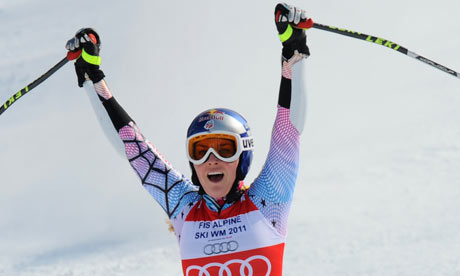
Lindsey Vonn's Aha! Moment: The Power of Positive Thinking

As told to Jessica Silvester

From the February 2012 issue of O, The Oprah Magazine


‘After very different encounters with two childhood role models, the Olympic gold medallist skier learned the value of a winning attitude.

One weekend when I was 9, two of my idols from the U.S. Ski Team came to sign autographs at the ski shop in my Minnesota hometown. When I heard about the event, I couldn't believe I'd have the chance to see them in person—on TV, they seemed like superheroes.

Picabo Street, the downhill champion, appeared at the store first, and she was amazing. "Keep following your dreams," she told me. With those simple words, she made the idea of being an Olympian seem attainable. She signed a poster for me that I still have.

But the next day I went back to meet my other idol, who shall remain anonymous. I arrived at the tail end of her signing, and when I asked for an autograph, she coldly said no and walked away. I was crushed. My parents tried to console me, saying, "She's probably stressed. She must have had a bad day. Try not to think about it." But as an impressionable kid, I couldn't stop thinking about it. After having these opposite experiences—one so inspiring, one devastating - I realised what a difference your attitude can make.

That moment stayed with me. When kids recognize me now, whether they want an autograph, a high five, or to ask me my favourite colour, I never say no. If I'm at an event like the meet and greet I did last year in Vail, which lasted about three hours in ten-degree weather, I don't focus on the fact that I'm freezing. I remember that if you stay upbeat, it can have a huge impact on those around you.

I make the effort to stay positive in other areas of my life, too. If one of my friends gets hurt in a relationship, I try to point out something she can learn from it (although you'd have to ask my friends if I'm actually helping). And when I'm training with the U.S. Ski Team and feeling exhausted, I still try to give people support. Of course, I have my moments. But it's usually easier and more fun to be positive than it is to be negative—and it has served me well.

In November, while I was having lunch with students from the Vail Ski & Snowboard Academy, a 16-year-old boy named Parker politely asked if I would come to his homecoming dance that Friday night. I couldn't say no. And then there I was, dancing and having fun, after missing my own high school homecoming because I was busy traveling and skiing. Parker was a great date—and I was so glad I had said yes.’

Share/Save/Bookmark

Thursday, March 01, 2012

Positive Leadership: Sustaining Success

Trevor Moawad, IMG Performance Institute Director talks about management leadership skills in this video. "If we find success, it’s all about sustaining it. And if we are struggling, it’s all about responding." Moawad explains the main principle about adopting the correct attitude to affect the performance and being able to talk athletes into winning.


Content on this page requires a newer version of Adobe Flash Player.

Get Adobe Flash player


Share/Save/Bookmark

Tuesday, February 28, 2012

Positive Leadership: The 'Secret' of Success


The secret of success can be described in one word. 

We have studied success. We have also spent a lot of time in the company of respected research psychologists, talking about what makes some people succeed and others collapse - the difference, in short, between the cans and the can-nots, the do's and the do-nots.

And after this study and research, we can tell you one thing with the utmost confidence: the secret of success is "Attitude." That's it. And it is really not a secret. People who succeed do not have fewer problems than other people. They do not start out with the most brainpower or better parents or more money, either.

As a matter of fact, sometimes they start out working against incredible odds. But they have a way of looking at things, a way of seeing obstacles as possibilities, a way of hanging in there and making the most of every opportunity that almost guarantees success. If you are running up against an unexpected challenge, do an attitude check. Ask yourself, "Am I not seeing the way around, because of an attitude?"

You are successful - and flexible, optimistic and hardworking. So if you want to sum it up in a word, it is not difficult to do: success is a question of attitude.

Share/Save/Bookmark

Thursday, February 23, 2012

Positive Leadership: It's All About Winning


Nick Bollettieri President & Founder, IMG Performance Institute, talks about winning and leadership:


Content on this page requires a newer version of Adobe Flash Player.

Get Adobe Flash player


Share/Save/Bookmark

Thursday, February 02, 2012

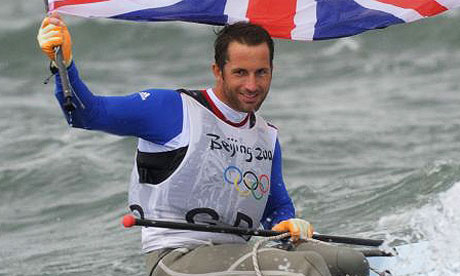
Positive Leadership: What Makes Ben Ainslie a Winner?

British Olympic Gold Medal sailor, Ben Ainslie's reputation as a single-minded competitor has always belied his onshore persona. His dad Roddy describes him as a "placid, ordinary bloke - until he has got a tiller in his hands".

GB Olympic sailing manager Stephen Park agrees: "Ben is considerate and thoughtful onshore, people see him as a gentle giant.

"When he's afloat, in his environment, he's a different animal. He's absolutely driven and determined and nothing is going to get in his way to win. That's what you need to do if you're going to win time after time after time."
Ainslie himself says of his sailing attitude: "When you're racing you're there to win and be successful. If you don't care any more you're not a sailor, you're not a racer and you shouldn't be doing it. It is a competition."

Share/Save/Bookmark