Positive Leadership has also been recognised as a Top 50 Leadership Expert to Follow on Twitter.

Follow us on Twitter @posleadership


LEADERSHIP IS A PROCESS OF SOCIAL INFLUENCE, WHICH MAXIMISES THE EFFORTS OF OTHERS TOWARDS THE ACHIEVEMENT OF A SHARED GOAL.
Showing posts with label Leaders. Show all posts

Saturday, January 15, 2011

Leadership in Education

Teach for America CEO Wendy Kopp speaks in conversation with Stanford University Political Science professor, Robert Reich.


Share/Save/Bookmark

Monday, November 08, 2010

Be Prepared for a Turbulent Business World


Jeff Immelt, chairman and CEO of GE, gave the first annual Roanak Desai Memorial View From The Top at the Stanford Graduate School of Business recently. He discussed how business has changed in his nearly three decades at GE and stressed to the student audience to be prepared for a turbulent business world.


Share/Save/Bookmark

Tuesday, October 26, 2010

England's Natural Born Leader

Andrew Strauss was born to lead England to victory Down Under.

"I hate failing at anything. I love winning. I'm quite determined to go to any depth necessary, within the rules, to achieve victory. I don't believe in bravado and shouting or being seen cracking the whip, that's not my style. But I'd refute any idea that I'm a soft touch, or that I don't want to win as much as others. I've never known anyone who wants to win more than I do. It's that simple. I'm a winner."

"I read a lot of stuff, not so much leadership, more self-improvement books. Things like Outliers: The Story of Success, The Tipping Point: How Little Things Can Make a Big Difference. Biographies, I read a lot of them, you do get some leadership insight. I work with psychologists a bit. But, ultimately, I'm not sure you can borrow too much. You have to be authentic. People are looking for someone being himself, not spieling out management speak. Get too caught up in leadership styles from books, and you are drifting into dangerous territory where people say, 'hang on that's not you'."

"A cricket dressing room is quite a cynical place. If someone says something out of character it will be noticed. Besides, cricket is very specific: you have to go out on the field and do the same job as the people you're captaining. You can't hide away, you either lead by example or you don't lead."

"It's very tough to lead when you aren't contributing. You're telling people to go out there and look the opposition in the eye and you're trudging back to the dressing room not having done that, your leadership is in trouble. I've been very conscious of trying to manage my own game as a priority, that adds legitimacy and respect to your leadership."


Share/Save/Bookmark

Friday, October 15, 2010

Failure Is An Essential Part of Process


Outsourcing giant Wipro chairman, Azim Premji fosters an environment in which workers feel safe taking risks.


Share/Save/Bookmark

Wednesday, October 13, 2010

Create Candor in the Workplace

Jack Welch, former chairman of General Electric and author of  WINNING tells his audience to foster honest feedback: "If you reward candor, you'll get it."


Share/Save/Bookmark

Monday, October 04, 2010

Lessons from the Dugout

One of the greatest lessons football has for business is the value of coaching. Too often, in business, coaching is mistaken for counseling or mentoring, to the detriment of the organisation.While both functions are valuable, genuine coaching is only about performance.

In football, coaches are judged solely on performance. Nobody watches the process, only the results. If business adopted the same appraisal system, imagine the difference.

Insert into an organisation's appraisal system the concept of judging departmental managers solely on the performance of their staff -- there would be no meetings between appraiser and appraisee, only observation of the performance of staff.

That is what happens on a daily basis with football teams. The entire management team is judged, each week, on what happens during each 90 minutes of competitive play. It is the immediacy of such judgment, and the visibility of the managerial process that makes football the all-embracing model it is.

Where else are failures in personnel selection and man-management so totally visible? That visibility provides an access to the process denied in business at least until long after the event. As a consequence, the lessons from the dugout are profound, not trivial.


Share/Save/Bookmark

Friday, October 01, 2010

Follow Your Passion!


Don't follow money. Instead, pursue what inspires you. And don't miss weekends with your family.


Share/Save/Bookmark

Sunday, September 05, 2010

Behind the Curtain

In Behind the Berkshire Hathaway Curtain: Lessons from Warren Buffett's Top Business Leaders, Ron Chan has interviewed a number of CEOs and executives who have contributed to Berkshire’s success. Here are some of the insights, philosophies an mindsets from people at the top of their fields: 


  • Cathy Baron-Tamraz, President and CEO of Business Wire: “I think a liberal arts education is invaluable in preparing one for the working world. I look at the people I have hired these past 30 years, and to be candid, most of them have had a more general background than a strictly business background.” The whole idea of college is to learn about general principles by taking a variety of courses. 
  • Randy Watson, President and CEO of Justin Brands: “I learned that to run a company and be a leader, it is not about the individual, but how the team of people work together to accomplish something for the greater good. It is about working in unison. My job is to make sure that I have the right people in the right place, and then I stay out of their way.” 
  • Stanford Lipsey, Publisher of the Buffalo News: “As an advertising executive, I learned to be observant and flexible. I learned to pick up information from my clients so that I could prepare data to attract them. As the saying goes, ‘persistence succeeds when all else fails!’ I just kept trying and trying.” 
  • Brad Kinstler, President and CEO of See’s Candies: “Spotting talent is more of an art than a science. You’ll never know whether you have an eye for it until you put your managers out in the playing field and observe the way they perform. What I realised is that there is no right or wrong when it comes to picking talent. In fact, you can’t even tell who will be the next leader until he or she becomes one. Leaders come in different shapes and sizes, and it is often during a crisis or other extraordinary situation that their true ability emerges.” 
  • David Sokol, Chairman of the Board of MidAmerican Energy Holdings Company: “When I was a 27-year-pld project manager, I had to lead some older and more experienced managers. The reality was that some of them were uncomfortable working with me. The only thing I could do was to keep my head down, check my ego at the door, and work extremely hard to prove that I was capable of leading. I didn’t try to convince them of anything other than the need to accomplish everything as a team. “My father taught me that it is difficult to control others’ perceptions, but I can always control my own actions, and these actions can, over time, alter those perceptions. I constantly show my colleagues that I am an active listener, and I make sure to explain my rationale for every decision and to consider their opinions. That is all I can do, because the reality is that it will soon become clear whether or not I am capable.”

Share/Save/Bookmark

Friday, August 13, 2010

Great Teaching

Great teaching is the centre piece of a strong education; everything else revolves around it.’ 


Bill Gates, speaking to the American Federation of Teachers, 
10 July 2010

One example of how business can contribute to education in a very meaningful way is IBM's 'Transition to Teaching' Programme. T
hrough this initiative, which was launched in 2005, IBM is helping address the critical shortage of maths and science teachers in the USA by leveraging the brains and backgrounds of some of its most experienced employees, enabling them to become fully accredited teachers in their local communities upon electing to leave the company.


The Future is in Our Classrooms - Pledge version from TakePart on Vimeo.

For more, see - 


Share/Save/Bookmark

Wednesday, July 28, 2010

Applying Leadership Lessons in a Crisis

The panellists in this Harvard Business School video reflect on important leadership lessons they have learned and how to apply these lessons in times of crisis -
Jaime Augusto Zobel de Ayala Chairman & CEO, Ayala Corporation;
Jamie Dimon Chairman & CEO, JPMorgan Chase & Company;
Orit Gadiesh Chairman and CEO, Bain & Company, Inc.;
G. Richard Wagoner Chairman and CEO, General Motors Corporation.


Share/Save/Bookmark

Thursday, July 22, 2010

The Future of Leadership

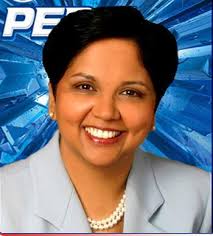
Cross-cultural, female, visionary, and values-driven, Indra Nooyi, chairman and ceo of PepsiCo embodies characteristics that will be increasingly sought in leaders for a globalising world. In an interdependent world of border-crossing and boundary-spanning, leaders must position their organisations not only in the marketplace but also in a social nexus in which sectors overlap and societal problems belong to everyone.es-driven, he has been guest speaker at national events, such as, Scottish Mutual annual event, Countrywide Investments annual sales conference, PIMS International, Finance Directors UK 
Share/Save/Bookmark

Saturday, July 17, 2010

Opinions

Silicon Valley futurist Paul Saffo has long argued that the best leaders and the best organisations have strong opinions that are weakly held. Strong opinions reflect and instil confidence, and also provide clear guidance about the direction that people should try to go right now. But, since those opinions are weakly held, they don't stand as barriers to change when better information comes along.

Share/Save/Bookmark

Tuesday, July 13, 2010

Think Different!

This Apple ad leads with a fundamental leadership premise: Be courageous enough to be yourself. Entertaining, inspiring, and educational, this clip is a must-download on any leader's iPhone. Filled with role models and ideas to emulate, this clip will get you thinking about your leadership style, philosophy and broader goals.


Share/Save/Bookmark

Monday, June 28, 2010

How Great Leaders Inspire Action

Simon Sinek has a simple but powerful model for inspirational leadership all starting with a golden circle and the question "Why?" His examples include Apple, Martin Luther King, and the Wright brothers -- and as a counterpoint Tivo, which (until a recent court victory that tripled its stock price) appeared to be struggling.


Share/Save/Bookmark

Monday, June 07, 2010

The Difference between Leaders and Others


When leaders make a mistake,
they say, "I was wrong." 
when followers make mistakes,
they say, "It wasn't my fault."

A leader works harder than a follower
and has more time; 
a follower is always "too busy"
to do what is necessary.

A leader goes through a problem;
a follower goes around it and never gets past it.

A leader makes and keeps commitments;
a follower makes and forgets promises.

A leader says, "I'm good, but not as good as I ought to be;"
a follower says, "I'm not as bad as a lot of other people."

Leaders listen;
followers just wait until it's their turn to talk. 

Leaders respect those who are superior to them and tries to learn something from them;
followers resent those who are superior to them and try to find chinks in their armour.

Leaders feel responsible for more than their job;
followers say, "I only work here."

A leader says, "There ought to be a better way to do this;"
followers say, "That's the way it's always been done here." 

Share/Save/Bookmark

Sunday, June 06, 2010

Coach Wooden on Leadership

As a tribute to John Wooden's amazing legacy of leadership, here are some of Coach Wooden's thoughts on leadership:.

LEADERS MUST CONTINUOUSLY LEARN

I believe leadership itself is largely learned. Certainly not everyone can lead nor is every leader destined for glory, but most of us have a potential far beyond what we think possible.

Those who aspire to be leaders can do it; those who wish to become much better leaders can also do it. I know, because this has been true in my own life. Whatever coaching and leadership skills I possess were learned through listening, observation, study, and then trial and error along the way.

In my opinion, this is how most leaders improve and progress. For me, the process of learning leadership continued for 40 years until the day I walked off the court for the last time as head coach - March 31, 1975 - following UCLA's tenth national championship. In truth, my learning continued even after that. (Pages 4-5)

PARENTING IS THE BEST MODEL OF LEADERSHIP

At some point, later than I'd care to admit, it became clear to me that the most productive model for good leadership is a good parent. A coach, teacher, and leader, in my view, are all basic variations of being a parent. And while parenting is the most important job in the world, leadership isn't far behind. I revere the opportunity and obligation it confers, namely, the power to change lives and make a difference. For me, leadership is a sacred trust.

A leader in sports, business, or any other field of endeavour should possess and provide the same qualities inherent in a good parent: character, consistency, dependability, accountability, knowledge, good judgment, selflessness, respect, courage, discipline, fairness, and structure.

And while all these will make you a good leader, they will not make you a great leader. For that one additional quality - perhaps the most important of all - is necessary. Although it may sound out of place in the rough-and-tumble context of sports or corporate competition, I believe you must have love in your heart for the people under your leadership. I did. (80)

LEADERS DEMAND ATTENTION TO DETAILS

There was no single big thing that made our UCLA basketball teams effective, not the press or the fast break, not size, not condition - no single big thing. Instead, it was hundreds of small things done the right way, and done consistently.

A leader must identify each of the many details that are most pivotal to team success and then establish, and teach, a high standard of behaviour or performance in executing those details. How you - the leader - define "average" is how your team will define it. Some leaders define average as average; some define average as being significantly above average.

It is easy to be lazy when it comes to details. Laziness is a euphemism for sloppiness, and sloppiness precludes any organisation from achieving competitive greatness and success. Your ability as leader to set and achieve high standards in the domain or details - to insist that average will be well above average - is one of the accurate predictors of how effective you will be as a leader, and how productive those under your supervision will be as a team.

Once you recognise the connection between sweat socks and success, you have acquired one of the most valuable assets for effective leadership, namely, that little things, done well, make big things happen for you and your organisation. (147)

LEADERSHIP IS GETTING THE MOST OUT OF YOUR AVAILABLE TALENT

You need talent on your team to prevail in the competitive arena. However, many leaders don't know how to win even when they have great talent in their organisation. Furthermore, leaders are frequently forced to compete when the talent matchup isn't in their favour. What do you do then?

While a book can't replace talent, it can provide productive insights on how to get the most out of the talent you have available. And this, in my opinion, is the first goal of leadership - namely, getting the very best out of the people in your organisation, whether they have talent to spare or are spare on talent.

Your ability to bring forth - maximize - the potential and abilities of those under your leadership marks you as a great competitor and leader. Some years, the teams I taught were blessed with significant talent. Other years, this was not the case. But in all years - with all levels of talent - my goal was the same, namely, to get the most out of what we had. (289-290)

Share/Save/Bookmark

Saturday, June 05, 2010

Coach John Wooden (October 14, 1910 – June 4, 2010) - An Appreciation


'It was always startling, never surprising, for the high school coach to look up and see the historic but humble man in the corner of the gym, doing what he loved. That would be watching young people practice basketball.

Tim Wolf found his way to the bench at Martinsville High 23 years ago and soon after discovered that one of the great coaching perks in America came with the job. John Wooden, a Los Angeles institution but an Indiana lifer, loved to come home.

He craved the persimmon pudding at Poe’s Cafeteria in nearby Mooresville and would drop in to check up on his old team, known as the Artesians.

Wooden — who died Friday at 99 — was born near Martinsville on Oct. 14, 1910, and led its public high school to three state tournament finals, and an Indiana championship in 1927. Then he went to college in-state at Purdue, became a three-time all-American and in 1932 was part of an unofficial national title team.

Wooden’s Pyramid of Success, his renowned philosophical construct for basketball and life, was rooted in the proverbial rural gymnasium that in most Indiana burgs would rank second only to church.

In Martinsville, with a population in 2000 of about 11,600, they put Wooden’s name on the 5,400-seat gym 22 years ago, and the locals wondered what took so long.

“It was my second year here, he came for the ceremony and spent four days,” Wolf said in a telephone interview. “He held a clinic for the kids, had dinner with the team. The only thing he asked was that we didn’t tell the press.

“After that, you could pretty much count on him showing up once or twice a year. One of the kids would come up to me during the summer and say, ‘I was shooting in the gym today and Coach Wooden came around.’ Around here, the kids know of John Wooden from the time they bounce a ball.”

Elsewhere, the players receiving a free pass in history class might know him as the name on the most prestigious individual award in the college game. They might also recognize the nickname, the Wizard of Westwood. It was one Wooden was never fond of, given the ostentation he demanded his players leave home before matriculating at U.C.L.A.

Wooden won a record 10 national titles, including seven straight from 1967 through 1973. His teams reached 12 Final Fours, and they won 88 straight games between 1971 and 1974. He had supreme talent, including the most dominant centers of the era, Lew Alcindor and Bill Walton.

He also had critics, who reason that there was little competition out west and remind us that Sam Gilbert, a U.C.L.A. booster, served as friend and fixer for many a Bruins star, landing the university on probation six years after Wooden retired in 1975.

Who knows what Wooden knew or didn’t want to know? Temptation was not invented with John Calipari or Jim Calhoun, but there was one compromise Wooden absolutely refused to make.

His players never took control of the gym. Great as they were, Pauley Pavilion never became their stage to pose for the pros, and doing it the coach’s way was about more than getting a haircut.

“His skills as a coach are overlooked because everyone focuses on the talent,” Geno Auriemma, the Connecticut women’s coach, whose team currently has a 78-game winning streak, wrote in an e-mail message. “He taught the game as well as anyone ever has or will.”

If there was one thing that Wooden came to loathe about the game he loved, it was how the last stronghold was lost in too many places and the sport became a showcase — for players and coaches.

Henry Bibby, who played for U.C.L.A. in the early 1970s, said in a telephone interview that Wooden used to tell his players he did not want them watching the local professional team — and that was when the Lakers had a few decent fellows named Chamberlain, West and Baylor.

“He thought we would pick up bad habits watching the Lakers,” Bibby said. “As much respect as he had for the talent, he believed the pros played a different game.”

Not so much anymore, in an age of dunks, 3-point shots and handing the ball to freshmen who will learn just enough to declare themselves ready for the next level while the echo of Dick Vitale’s tournament ranting still rings in their ears.

There are notable exceptions — no doubt Wooden enjoyed watching upperclassmen-laden Duke and Butler square off in the last title game of his life — but in recent years, he became a fan of the women’s game, saying he appreciated watching players do old-fashioned things like move without the ball.

More than his titles, Wooden’s legacy is his wisdom, forever available to those still interested in a free-flowing, thinking-man’s game.

“I regard him as the greatest basketball coach of all time,” Jack Ramsay, an 85-year-old broadcaster and former coach, whose 1977 N.B.A. championship team in Portland was anchored by Walton, said by telephone. “His attention to detail created routines that we all learned and adopted. Every day at practice, we did the things that he preached — running, balance, change of direction, ball handling, just about every fundamental facet of the game, about seven, eight minutes every single day.”

Ramsay called Walton “as fundamentally sound as any player I ever coached or saw,” and Walton has said a few thousand times that he owed that to Wooden, who got his point across without bravado or bullying, who preached the same things to him that he did to Tim Wolf’s Martinsville team.

“The last time he came, a few years ago, his daughter brought him over, with a walker,” Wolf said. “As always, he was happy to take a few moments, tell the boys never to get too high or low after a game, value the fundamentals and always remember there’s a life after basketball.”

John Wooden lived a long one that fell a little more than four months short of his 100th birthday and a planned dedication of a renovated Pauley Pavilion. Just a hunch, but the college arena might not have been the gym he cared about most.'

A version of this article appeared in print on June 6, 2010, on page SP1 of the New York edition of The New York Times.



Share/Save/Bookmark

Monday, May 03, 2010

Uncommon - A Different Way of Leading

Super Bowl winning coach and #1 New York Times best-selling author Tony Dungy has had an unusual opportunity to reflect on what it takes to achieve significance. He is looked to by many as the epitome of the success and significance that is highly valued in our culture. He also works every day with young men who are trying to achieve significance through football and all that goes with a professional athletic career—such as money, power, and celebrity. He is the author of Uncommon: Finding Your Path to Significance.


Share/Save/Bookmark

Sunday, April 25, 2010

America's Favourite Bosses

Working for the man in charge of Cheerios, Trix and Lucky Charms might seem less glamorous than working for the man behind the iPod, the iPhone and the iPad, but according to new ratings from Glassdoor.com, General Mills' chief executive officer, Ken Powell, beats out Apple's Steve Jobs as the most popular boss in America.

Glassdoor, a Web site where employees post salary information and reviews of their companies and bosses, has just released its latest ratings of CEOs. The list is based on reviews voluntarily posted by employees who answer the following question: "Do you approve of the way this person is handling the job of leading this company?" One hundred percent of the General Mills employees who answered that question about Powell said "yes," putting their boss in the No. 1 spot. Stanford University President John Hennessy came in second; Jobs ranked third.

One thing all these top-rated bosses have in common is long careers at their companies. Example: Ken Powell joined General Mills in 1979 straight out of Stanford business school. The sixth-rated boss, James Truchard of National Instruments, which makes hardware and software for scientists and engineers, cofounded his company back in 1976.


Share/Save/Bookmark

Friday, April 23, 2010

Can Scottish Enterprise help to build better businesses?

From The Herald (23 April 2010):

'Scottish Enterprise does not possess 2020 vision. The agency was bang on the money in its focus on technology commercialisation and creating a more globally competitive Scottish economy when it rolled out its three-year business plan yesterday. Scotland has a long history of enterprising small companies growing to a certain size before selling out to foreign competition or plodding along in the home market without the know-how or confidence to exploit the scope for exports.

If Scotland is to thrive in the 21st century global economy, it needs to nurture a new generation of globally-competent companies....

However, the acid test of SE’s work, if the agency’s stated ambitions are to be believed, is how many more .... big global players...we will have on our corporate stage. The secret of their success was not a big helping hand from the government but dynamic leadership, clear vision and vaulting ambition. 

As it happens, this was precisely the point made to Holyrood’s Economy, Energy and Tourism Committee this week by Scottish Enterprise chairman, Crawford Gillies. He argued that for Scotland to raise the bar on productivity and target new markets at home and abroad, the Scottish business base needs better leadership.......

In the past Scotland has depended heavily on the public sector, particularly, for employment. With deep public spending cuts on the agenda, whoever walks into 10 Downing Street on May 7, that can no longer be relied on. The country has rarely been so dependent on business growth to fill the looming economic gap.' 


Share/Save/Bookmark