Positive Leadership has also been recognised as a Top 50 Leadership Expert to Follow on Twitter.

Follow us on Twitter @posleadership


LEADERSHIP IS A PROCESS OF SOCIAL INFLUENCE, WHICH MAXIMISES THE EFFORTS OF OTHERS TOWARDS THE ACHIEVEMENT OF A SHARED GOAL.

Monday, September 24, 2012

Positive Leadership: Today's CEO


Today's CEOs must:

Empower employees through values
Engage customers as individuals
Amplify innovation with partnerships

Source: IBM 2012 Global CEO Survey

Share/Save/Bookmark

Friday, September 21, 2012

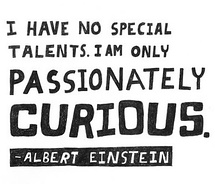
Positive Leadership: Curiosity


Share/Save/Bookmark

Thursday, September 20, 2012

The Values of Positive Leadership

Financial performance is linked to organisational performance and organisational performance is reinforced by the Values of Positive Leadership™.

Share/Save/Bookmark

Positive Leadership: How Honest Are You With Yourself?


How Honest Are You With Yourself?

Answer on a seven-point scale, with 1 being 'not true,' 4 being 'somewhat true,' and 7 being 'very true.'

1. My first impressions are always right.

2. I don't care to know what other people really think of me.

3. Once I've made up my mind, other people can seldom change my opinion.

4. I am fully in control of my own fate.

5. I never regret my decisions.

6. I am a completely rational person.

7. I am very confident of my judgments.

ANSWER KEY: For each question, give yourself one point for answering 6 or 7. The higher your score, the more self-deceptive you tend to be.

SOURCE: Del Paulhus, University of British Columbia


Share/Save/Bookmark

Wednesday, September 19, 2012

Positive Leadership: Greatness

                 
Share/Save/Bookmark

Tuesday, September 18, 2012

Positive Leadership: Finding Thinking Time


Former British Prime Minister Tony Blair discusses the advice he received from Bill Clinton about the need to schedule time to think strategically. He spoke at the Stanford Graduate School of Business with Stanford GSB Dean Garth Saloner.


Share/Save/Bookmark

Monday, September 17, 2012

Positive Leadership: Even The Best Get Nervous!


Share/Save/Bookmark

Positive Leadership: Stay in Touch!


Former Medtronic CEO Bill George discusses how a leader can maintain relationships with employees at all levels of a company. He spoke as part of the Stanford Graduate School of Business' View from the Top series.

Share/Save/Bookmark

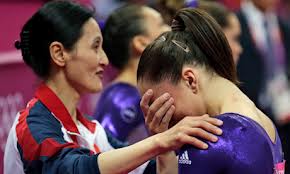
Positive Leadership: Team GB - Our Greatest Team


Share/Save/Bookmark

Positive Leadership: I'm A Winner


Share/Save/Bookmark

Sunday, September 16, 2012

Positive Leadership: 'Live in the Moment'


Share/Save/Bookmark

Friday, September 14, 2012

Positive Leadership: Creating a Positive Workplace


DaVita CEO Kent Thiry explains how a company can create a positive workplace and promote high performance. Thiry's talk was part of the Stanford Graduate School of Business' View from the Top series.


Share/Save/Bookmark

Thursday, September 13, 2012

Positive Leadership: What Drives Great Leaders Through Setbacks


The greatest leaders we know were driven in their overall work - and in their times of greatest challenge - by faith.  For some their faith was religious.  Others described their faith as spiritual.  We call it "faith" because this mindset runs heavily against the grain of conventional wisdom.   Conventional wisdom says two things:  (1) Winning is what matters.  Defeat is defeat. And if you've tried so hard and lost, you deserve to feel awful (maybe for the rest of your life).  (2) Take care of your own self.

Yet in the faith we are talking about, leaders show up with two essential qualities:

First, the results of the past don't matter.  They put themselves whole-heartedly into the new moment they're in.  Indeed, it's this capacity and commitment to keep working, playing, fighting - even when they've lost badly - that doesn't just prove, but builds and solidifies their character.  Second, this faith clearly says: It's just not all about me.  In the times that are hardest, these great leaders lead for others.

Share/Save/Bookmark

Wednesday, September 12, 2012

Positive Leadership: Perfection is the Enemy of Good


Share/Save/Bookmark

Tuesday, September 11, 2012

Positive Leadership: Remarkable is a Tough Choice


Too often, we're presented with choices that don't please us. We can pick one poor alternative or the other. And too often, we pick one.

We were struck by Apple's choice to put a glass screen on the original iPhone. Just six weeks before it was announced, Steve Jobs decided he wanted a scratchproof glass screen. The thing is, this wasn't an option. It wasn't possible, reliable, feasible or appropriately priced. It couldn't be done with certainty, and almost any other organisation would have taken it off the list of appropriate choices.

It was unreasonable.

And that's the key. Remarkable work is always not on the list, because if it was, it would be commonplace, not remarkable.

Share/Save/Bookmark

Positive Leadership: 9/11


Share/Save/Bookmark

Monday, September 10, 2012

Positive Leadership: Paralympics Opening Speech from Professor Stephen Hawking


“Ever since the dawn of civilisation, people have craved for an understanding of the underlying order of the world. Why is it as it is, and why it exists at all. But, even if we do find a complete theory of everything, it is just a set of rules and equations. What is it that breathes fire into the equations, and makes a universe for them to describe?

We live in a universe governed by rational laws that we can discover and understand. Look up at the stars, and not down at your feet. Try to make sense of what you see, and wonder about what makes the universe exist. Be curious.

The Paralympic Games are also about transforming our perception of the world. We are all different, there is no such thing as a standard or run-of-the-mill human being, but we share the same human spirit.

What is important is that we have the ability to create. This creativity can take many forms, forms, from physical achievement to theoretical physics.

However difficult life may seem there is always something you can do, and succeed at. The Games provide an opportunity for athletes to excel, to stretch themselves and become outstanding in their field.

So let us together celebrate excellence, friendship and respect. Good luck to you all.”

Professor Stephen Hawking, Paralympics Opening Ceremony. London 2012


Share/Save/Bookmark

Positive Leadership: Britain IS Great! Thanks to all our Olympians and Paralympians for making London 2012 so special!


Share/Save/Bookmark

Saturday, September 08, 2012

Positive Leadership: The Molecule Behind Effective Teamwork


Paul Zak, author of "The Moral Molecule," explains how oxytocin boosts cooperative behaviour.

Share/Save/Bookmark

Friday, September 07, 2012

Positive Leadership: Six Habits of True Strategic Thinkers


Extraordinary bosses inspire people to see a better future and how they'll be a part of it. As a result, employees work harder because they believe in the organisation's goals, truly enjoy what they're doing and (of course) know they'll share in the rewards.
Share/Save/Bookmark

Thursday, September 06, 2012

Positive Leadership: Becoming Fearless at Work


Share/Save/Bookmark

Wednesday, September 05, 2012

Positive Leadership: How to Write a Successful Elevator Pitch


Share/Save/Bookmark

Tuesday, September 04, 2012

Positive Leadership: Mental Toughness


Whether you are an athlete in the Olympics or someone in the boardroom, a certain quality is always found in those who remain standing when the storm winds blow.  When rejection hits these people it bounces off them like hailstones.  They bounce back quickly from setbacks.  They feel energised to try even harder after a defeat.  That special quality these warriors are showing is something called “mental toughness”.  

Wikipedia defines this as “a term commonly used by coaches, sport psychologists, sport commentators, and business leaders – generally describes a collection of attributes that allow a person to persevere through difficult circumstances (such as difficult training or difficult competitive situations in games) and emerge without losing confidence.”

Each of us will receive a hit at some point in our lives that knocks the wind right out of us.  Rather than sitting around complaining when we are being pelted by chunks of hail the size of golf balls, we can put on a suit of armour to deflect whatever life throws as us.  That suit of armour is your mental toughness.

You can’t measure mental toughness; you measure its effect.  You can’t measure what’s going on inside a leader’s head, but you sure can measure their behaviour!  You can see mental toughness when someone is running a marathon and they are gasping for breath, and the only thing keeping them putting one painful footstep in front of the next is their strength of will.  You see it when someone is totally exhausted, yet they keep throwing hundreds of shots into the basketball hoop to perfect their free throw. Mental toughness is courage in action.  When you’ve got it, you cope better than your opponents with the demands you face.

How do we develop mental toughness?  Here are a few principles to get you started:

Principle #1: Realise Mental Toughness Can Be Developed.

Some people might be born with a certain personality that seems to handle adversity a little more effectively than others.  But that’s not always the case, and either way, anyone can develop this side of their personality.  Don’t avoid the issue by selling yourself any victim thinking, like “That’s just the way I am.”  How do you build mental toughness?  The same way you build muscles in the gym: by pushing yourself to new limits and increasing the pressure or resistance you are pushing against.

Principle #2: Mental Toughness in the Gym Correlates to Mental Toughness in Life.

The gym is the ultimate proving ground for “tough guys”. You really find out what you’re made of in the gym.
You don’t become successful at anything by letting your foot off of the pedal when the going gets tough.  This includes the gym and your business.  When it hurts to do even one more rep of an exercise, that’s when the real muscle development starts! If you throw in the towel on the bench press, you train your brain to quit when things get tough.  When you force yourself to keep pushing the weight even when you want to give up, you are training your brain to keep pushing. 

Principle #3: Champions Fall in Love with Discomfort.

Winners know that the path to success is steep and rocky, and the path to defeat is like a sign pointing at a waterslide that says, “Slippery, Fun and Easy to Reach the Bottom in a Jiffy!”  Bad habits are easy to slip into, like a warm bed when you’re exhausted.  Good habits are pretty much guaranteed to feel tough for most people because you end up denying yourself luxuries and pleasures. You must learn to do what is uncomfortable for you. To develop the psychological edge, you must have extreme discipline to give up the comfort zone that you train and live in. Delaying immediate satisfaction is the ultimate sacrifice that all warriors must choose.

Share/Save/Bookmark

Monday, September 03, 2012

Positive Leadership: 9 Attributes That Differentiate CEOs


Becoming a CEO is the greatest leap that an executive can make in his or her career. What makes it such an extraordinary transition, of course, is the complexity of the role and the skill that is required to manage that complexity successfully. So, what exactly do CEOs have that other leaders don’t?

To answer that question—and, by doing so, help aspiring CEOs optimise their trajectories and assist current CEOs and boards in making better CEO succession planning decisions—Russell Reynolds Associates analysed its database of nearly 4,000 executive assessments, including over 130 CEOs. These tests measure a number of competencies, such as relationship skills, communication skills and decision-making approaches. 

Their findings reaffirm with quantitative evidence what is perceived to be true about the capabilities that differentiate CEOs from non-CEOs.


Share/Save/Bookmark