Positive Leadership has also been recognised as a Top 50 Leadership Expert to Follow on Twitter.

Follow us on Twitter @posleadership


LEADERSHIP IS A PROCESS OF SOCIAL INFLUENCE, WHICH MAXIMISES THE EFFORTS OF OTHERS TOWARDS THE ACHIEVEMENT OF A SHARED GOAL.

Thursday, February 23, 2012

Positive Leadership: It's All About Winning


Nick Bollettieri President & Founder, IMG Performance Institute, talks about winning and leadership:


Content on this page requires a newer version of Adobe Flash Player.

Get Adobe Flash player


Share/Save/Bookmark

Wednesday, February 22, 2012

Positive Leadership: Our Response to Winning and Losing


Only one team wins the 6 Nations.

For each player on the winning team after the game there is a player on the other team going home disappointed without the joy of victory.

It's a lot like life.

Sometimes we win, sometimes we lose.

Sometimes we win the account, the game, the job promotion, the award and sometimes we lose the very thing we want most.

Winning matters. Losing matters. But in life what matters most is what we do with our wins and losses.

When we win do we become complacent or stay humble and hungry?

People often say that success breeds success but often it breeds complacency. After a win people think they can just show up and achieve the same result, forgetting the effort, determination and mindset it took to achieve the win.

To continue winning it's essential to turn the euphoria of winning into a fire of burning desire that fuels your continuous improvement, passion, and quest for excellence.

Even more important than what we do after our wins is how we respond to our losses.

Do we give up or come back stronger?

Do we allow the loss to act like a cancer that eats away at us for the rest of our life or do we turn it into a learning opportunity that leads to our healthy growth?

Everyone loses but the key is to make the LOSS stand for something. 

LOSS (Learning Opportunity, Stay Strong)

When we lose we ask what we can learn from this loss and how we can improve because of it. Then we stay strong and work harder to come back and try to win.

This leads to more wins in the future...and also eventually more loses...and more learning opportunities and opportunities to stay strong and develop our character.

Through this process of winning and losing we learn the greatest lesson of all:

No matter how hard we work and how much we improve there will be times when we experience the worst of defeats instead of the greatest of victories. But ultimately life is about more than winning or losing. It’s about the lessons we learn, the character and strength we build and the people we become along the way.

Whether we win the big game or not, when we realise this we will surely be a winner in the game of life!

Share/Save/Bookmark

Tuesday, February 21, 2012

Positive Leadership: Making Informal Mentoring Work


Here are eight steps to follow in making an informal leadership mentoring programme work:

Step #1: Identify one or two specific leadership skills you feel that you could improve through mentoring. Is it your ability to make strategic decisions in a quick and decisive manner? Is it your ability to recognise and develop talent to improve the success of your department and yourself? Something else?

Step #2: Now assess what style of leadership is best suited to you. (As you know, not everyone leads in the same way.) Are you more collaborative as a leader, working through consensus? Or are you a decisive type of leader who makes the decisions and motivates others to follow those decisions?

Step #3: Determine whether you want a mentor who mirrors your leadership style so that you can improve upon how you lead…or decide if finding a mentor with a different leadership style might challenge you more and help you grow as a leader by adding new dimensions to your own personal style.

Step #4: Consider the type of person you want as a mentor. For informal mentoring to work, you have to have focus. The first three steps have provided you with this focus. But the other important component needed is the relationship aspect. Think about the personal qualities and/or communication styles that you respond to. Do you want a mentor who is more sociable than business-like? Or one who is more of a thinker than a doer? Perhaps you respond better to warmth and friendliness rather than someone who is more aloof, despite his or her success.

Step #5: Now make a list of potential leaders who you may want to approach as mentors. These people could be in your company, but they could also be elsewhere, such as an alumni organisation or networking group. Don’t forget to ask colleagues for recommendations as well. An important point: this may be obvious, but it's worth saying: only put leaders with proven track records on your list.

Step #6: Approach and interview the candidates. Have a conversation with at least three of the leaders on your list to evaluate if the person would be the right fit for you. Approaching potential mentors and eventually asking "the winner" to be your mentor are the hardest steps in the process. Remember, it's how you approach the person that makes all the difference.

Here's one strategy for doing just that:

• Make contact via phone or email introducing yourself and indicating that you are working on self-improvement in the area of leadership and that you would welcome input from an experienced leader who has been successful in this area. Would this person have 30 minutes or so to have a discussion with you on your goals and how best to approach these? Maybe you could do this over lunch, as you would also like to thank that person for his or her time.
• If you feel the person might indeed be a good fit, ask him or her (at the end of the meeting) if you could stay in touch with any follow-up questions. The person's response – and HOW he or she responds – will be a good indicator as to whether your assessment is on target. Does the person sound welcoming and enthusiastic about staying in touch? Or does the person sound noncommittal?
• Send a handwritten thank you note. In a pinch, an email will do, but nothing beats a personal note of thanks. (Note: you should still send a thank you, even if you've ruled the person out as mentor.)

Step #7: Decide and ask. After interviewing several candidates, you are now ready to ask the person you think is best if he or she will be your informal mentor. Before you do this, it’s important for you to be prepared to specifically state what you're looking for and how you want the relationship to work. Since you’ve already had one or more conversations, your prospect has an idea of what you're seeking, but now be clear and as specific as possible. In addition, you should be prepared to discuss setting some guidelines for your mentoring relationship.

Here are some to consider:

• How often will you meet? Weekly is ideal, and once a month is the recommended minimum.
• Will your meetings take place face-to-face, over the phone, through Skype, or combination of these?
• How will you approach confidential issues?
• How will you communicate to one another if something isn’t working in the relationship?
• How long do you want to meet before you re-assess the need to continue or end the relationship? Note: in formal mentoring programs, the relationship typically lasts nine months to one year. We suggest a minimum of four to six months for an informal relationship.
• Discuss concerns you both have about engaging in this type of relationship.

Step #8: When your chosen mentor has agreed to the informal mentoring relationship, then congratulate yourself for finding someone who will be strategically important to your career and to your growth as a leader. To succeed, make sure you keep to the guidelines you’ve agreed to in Step # 7.

Here's to your leadership success!

Share/Save/Bookmark

Monday, February 20, 2012

Positive Leadership: Why Do People Succeed?


Why do people succeed? Is it because they're smart? Or are they just lucky? Neither. Analyst Richard St. John condenses years of interviews into an unmissable 3-minute slideshow on the real secrets of success.


1. Passion - Do it for love, not money
2. Work - Nothing comes easily, but be a ‘workafrolic’ not a workaholic
3. Good - Become really good at what you do
4. Focus - Centre your attention on one thing
5. Push - Drive yourself mentally and physically
6. Serve - Offer other people something of value
7. Ideas - Listen, be curious, problem solve and make connections
8. Persist - The number one reason for success
Share/Save/Bookmark

Friday, February 17, 2012

Positive Leadership: Practice Makes Perfect


Share/Save/Bookmark

Thursday, February 16, 2012

Positive Leadership: Learning from Olympians


How can we learn from our athletes currently preparing for the Olympic Games? 

By exploring 5 of the core principles these elite performers work to in the world of sport, we can translate these into practical strategies for success in the world of work.

Have a clear vision of where you want to go

Successful sports teams have a specific moment in time when they want to achieve their goals. Usually in business we have to deliver consistently great performances throughout the year in order to achieve our strategic goals. So how do we do this?

Making sure we understand the overall vision of the organisation is vital, as well as agreeing clearly defined goals for ourselves which align with these strategic goals and help us to develop as individuals. The challenge here is to make the time to re-visit these goals on a regular basis and review our performances in the context of these goals throughout the year.

Focus on what really matters

Elite sports men and women will ask the question of every process or action they take, will this add value? Will doing this make me jump higher, run faster, throw further?

Once you have total clarity on your goals and where you are going, the key then is to ensure that you focus your time and energies on activities that are congruent with those goals. How good are you at saying no to demands on your time which do not ultimately contribute to the performance indicators you have in place? How well do we prioritise our time to deal with tasks which we may not enjoy so much but which are critical to achieving our goals?

Another key phrase from sport, “Control the Controllables” relates to this concept too. Once you have clarity on what really matters and the ability to stick to that, it’s also really helpful to be realistic about what’s in your sphere of influence and work hard to avoid getting bogged down on the things you can’t make an impact on.

Work to strengths

Maximise what you’re great at and ensure your players are in the right positions. This practice of constantly analysing core strengths and moving the team around accordingly is second nature within sport.

In business we potentially have less flexibility to be able to adjust our roles and responsibilities every week. But, just having a regular review of your strengths can mean that putting yourself forward for projects, secondments or just covering a colleague's work provides you with great opportunities to maximise your performance and maintain your motivation.

Do things differently

Only by innovating and challenging the norm can you gain a competitive advantage in sport and business. Look at Dick Fosbury and his controversial innovation in the high jump, which led to the adoption of the 'Fosbury Flop' as the accepted technique to enable an athlete to jump as high as humanly possible. Hard to imagine now that before Fosbury competitors used to scissor jump over the bar!

In the commercial world this openness to doing things differently is of course equally vital. It’s easy to get stuck in routines and be blocked by the “we’ve always done it this way” mindset.  Fresh thinking generates great new ways of doing things, and builds engagement and motivation at the same time.

Lead from the front

Whether it’s Usain Bolt’s trademark strut, the quiet authority of Steve Redgrave or the sheer grit of Kelly Holmes, the persona we project has a huge impact on those around us. 

A simple code to live by is to always model best practice. Set the tone with your own brand, your communication, your body language and each one of your interactions. Constantly ask yourself what impact your behaviour and language is having on others, and focus on making it a positive and inspirational one.

With 6 months to the games, Team GB is close to realising their potential, and the great news is that these lessons from their endeavours can be applied directly to our roles and our teams. By emulating these high performance traits you can ensure you produce gold medal winning performances.

Share/Save/Bookmark

Wednesday, February 15, 2012

Positive Leadership: The Real Test of a Leader

Rudy Giuliani was the Mayor of New York City from 1994 to 2001. He ran for the Republican Party nomination in the 2008 United States presidential election.

 
Share/Save/Bookmark

Tuesday, February 14, 2012

Positive Leadership: The Elevator Pitch


Here is a simple and quick (less than 60 second) ‘elevator pitch’ template that will work for most products and services, if it is delivered with passion!

“We sell [product/service deliverable] to [market niche] who want [unmet market need]. Unlike [competition], we [differentiation].”

All you have to do is fill in the brackets and you have the essence of an elevator pitch!


Share/Save/Bookmark

Monday, February 13, 2012

Positive Leadership: #ClintEastwood


Share/Save/Bookmark

Saturday, February 11, 2012

Positive Leadership: Expectations


The best golfers in the world experience the same things you do. It is important that they stick to the process and plan that they put together for success. When expectations get ahead of their own present preparation, it opens the door for frustration and anger. That becomes the expectations spiral that results in struggling and poor performance.

To get out of the expectations spiral, focus on today and what you can control. Commit to your own process. Replace expectations with demands – demands focus on your investment and actions. Expectations involve results, so by committing to demands, you are investing in your process.

Enjoy the read!


Share/Save/Bookmark

Friday, February 10, 2012

Positive Leadership: Google Ranking


Share/Save/Bookmark

Positive Leadership: Routine is a Key to Winning

'For me the secret to winning isn't about some kind of magic. It is all about minimising mistakes and luck comes from working harder at it. I'm a massive believer in routine. When you have something really important and complex to do like sport - or anything else for that matter - then you need to keep everything in order. Each morning has to be the same right up to when the start gun fires. Routine allows your brain to concentrate on the things that matter.'

Iain Percy
Team GB Olympic Gold Medal Sailor


Share/Save/Bookmark

Thursday, February 09, 2012

Positive Leadership: Resilience


Because we always make mistakes and always will, one of the most important qualities for business success is resilience—the ability to bounce back from failure, to turn around a bad situation, to profit from your mistakes.

Point One: Those who persevere win. Be resilient and welcome failure. That’s how you become a better businessperson.

Point Two: You learn by refusing to make excuses and looking inside yourself for the reason things have gone wrong.

Point Three: Focus and discipline are more important than identifying opportunities, but they have to be balanced with flexibility.

Point Four: The solutions are seldom right in front of you. You need to learn how to spot them out of the corner of your eye.

Share/Save/Bookmark

Wednesday, February 08, 2012

Positive Leadership: What A Lovely Suit You're Wearing, Emperor


Warning: If you're opening this blog in a good mood, and you want to stay in it, you may want to skip this post and scroll right down to the bonus bits!

Of course, were you to block out the negative, you'd be acting in a way that Bob Sutton probably wouldn't find surprising. 

In a recent blog post, the Stanford management professor opines that leaders can be more easily swayed by positive feedback than by reality. 

Sutton synthesises several recent studies to show how flattery can lead to an inflated self-assessment and distract leaders from what's actually happening on the ground.

Share/Save/Bookmark

Tuesday, February 07, 2012

Positive Leadership: A Checklist for Leadership Action


Here are fifteen essential principles that taken together constitute an irreducible checklist for leadership action:


Share/Save/Bookmark

Monday, February 06, 2012

Positive Leadership: Restoring Trust in Corporate Leadership


Positive Leadership ceo, Graham Watson writes in The CA Magazine about the importance of restoring trust in corporate leadership.


Share/Save/Bookmark

Friday, February 03, 2012

Positive Leadership: Change Your Thinking


Share/Save/Bookmark

Thursday, February 02, 2012

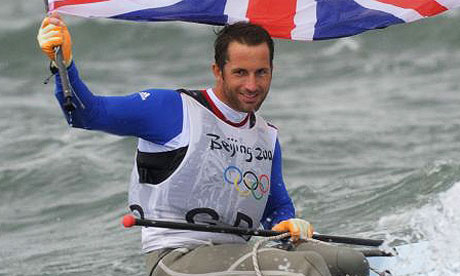
Positive Leadership: What Makes Ben Ainslie a Winner?

British Olympic Gold Medal sailor, Ben Ainslie's reputation as a single-minded competitor has always belied his onshore persona. His dad Roddy describes him as a "placid, ordinary bloke - until he has got a tiller in his hands".

GB Olympic sailing manager Stephen Park agrees: "Ben is considerate and thoughtful onshore, people see him as a gentle giant.

"When he's afloat, in his environment, he's a different animal. He's absolutely driven and determined and nothing is going to get in his way to win. That's what you need to do if you're going to win time after time after time."
Ainslie himself says of his sailing attitude: "When you're racing you're there to win and be successful. If you don't care any more you're not a sailor, you're not a racer and you shouldn't be doing it. It is a competition."

Share/Save/Bookmark

Wednesday, February 01, 2012

Positive Leadership: Your Job as a Leader


My job as a leader is to make sure everybody in the company has great opportunities, and that they feel they're having a meaningful impact and are contributing to the good of society." Larry Page, CEO of Google

Share/Save/Bookmark

Tuesday, January 31, 2012

Positive Leadership: The Role of Business


We have a fundamental belief that the role of business is to make the world a better place. 

Jim Stengel, former Chief Marketing Officer of Proctor & Gamble and the author of Grow uses the expression "improving the lives of the people a business serves.” He has teamed with data crunchers Millward Brown to produce the “Stengel 50” – a ranking of 50 companies that have exponentially improved their profits by dedicating themselves to improving the lives of customers. Win-Win. His top 50 have generated a traditional ROI of 400% better than S&P.


Share/Save/Bookmark

Monday, January 30, 2012

Positive Leadership: Being Average is No Use


In the past, workers with average skills, doing an average job, could earn an average lifestyle. But, today, average is officially over. Being average just won’t earn you what it used to. 

It can’t when so many more employers have so much more access to so much more above average cheap foreign labour, cheap robotics, cheap software, cheap automation and cheap genius. Therefore, everyone needs to find their extra — their unique value contribution that makes them stand out in whatever is their field of employment. Average is over.

There will always be change — new jobs, new products, new services. But the one thing we know for sure is that with each advance in globalisation and the I.T. revolution, the best jobs will require workers to have more and better education to make themselves above average. 

By way of illustration, here are the latest unemployment rates from the Bureau of Labour Statistics for Americans over 25 years old: those with less than a high school degree, 13.8 per cent; those with a high school degree and no college, 8.7 per cent; those with some college or associate degree, 7.7 per cent; and those with bachelor’s degree or higher, 4.1 per cent.

In a world where average is officially over, there are many things we need to do to buttress employment, but nothing would be more important than passing some kind of Recovery Act for the 21st century that ensures that every Briton has access to post-secondary school education.

Share/Save/Bookmark

Friday, January 27, 2012

Positive Leadership: Follow Your Instincts

This interview with Bill Kling, founder and president emeritus of the American Public Media Group, was conducted by The New York Times (http://www.nytimes.com/2012/01/15/business/bill-kling-of-american-public-media-on-valuing-creativity.html ). 

Q. If you were teaching a class to business school students, what lessons would you impart to them?
A. Follow your instincts. If your instincts for the job are good, you will be successful. If your instincts are bad, it’s the wrong job and you should get out early and try something else. Textbook learning can take you only so far. It can give you tools that will help you analyse things. But don’t do it the way other C.E.O.’s that you read about have done it. Don’t follow the case studies if your instinct tells you otherwise.
The great leaders, I think, are people who were smart enough to gather all of the tools that they needed, all the information, all the peer mentoring that they could get and then just tucked that away somewhere as extra fuel and followed their instincts to do what they had a passion for, what they thought they knew how to do.
Too often, leaders fail because someone told them they can’t do it. If you don’t know what you can’t do, then you may well achieve it. That is so important. Look at our great companies. Almost all of them shouldn’t have succeeded the way they did. Often it’s accidental, opportunistic, it’s luck, it’s something else. But it’s being open to falling into that success. And you can see it in some of our most innovative companies.
As soon as you get overly tied to the lessons you were taught in business school or elsewhere, I think you’re going to start doing it the way it’s been done in the past. And then you’re going to have a company that’s like those that existed in the past. You’re not going to see that new technologies could offer possibilities that no one has even thought of. You have to be willing to go into a room and say, “Why can’t this happen?” And then have someone look at you and say, “That’s the dumbest question anybody ever asked.”
Even though you are the C.E.O., you have to allow and encourage that kind of feedback. Because you can sink a company if you come in with a load of ideas and innovation and creativity that’s bigger than the company can carry. So you’ve got to have people coming back and saying, “We know that,” or “We understand where you’re going with it, but it’s not something we can do at this point.”

Share/Save/Bookmark

Thursday, January 26, 2012

Positive Leadership: Good Strategic Choices v Bad Strategic Choices

Good strategy makes the link between the specific actions leaders take and the financial results of those actions. Assuming you can determine who belongs on your bus, someone still must pick a destination and make great choices along the way.

Strategy is about making choices that lead to sustainably superior performance. Michael Porter's five tests of good strategy can help you to tell the difference between good choices and bad.
So what are good choices?
First, you must choose a distinctive value proposition. Which needs will you serve, which customers, at what relative price? Have you staked out a positioning that's different from rivals?
Second, and far less intuitive, you must choose to tailor your activities to that value proposition. Competitive advantage lies in the activities, in choosing to perform activities differently or to perform different activities than rivals. These ultimately are the choices that result in a company's ability to charge premium prices or to operate at lower cost. (Remember, we're talking about quantifiable performance.)
The third test of strategy, making trade-offs, may well be the hardest. It means accepting limits — saying no to some customers, for example, so that you can better serve others. Porter explains why trade-offs are an important source of profitability differences among rivals, and why trade-offs make it difficult for rivals to copy what you do without compromising their own strategies. The essence of strategy, says Porter, is choosing what not to do.
Fit is the fourth test. Great strategies are like complex systems in which all of the parts fit together seamlessly. Each thing you've chosen to do amplifies the value of the other things you do. That's how fit improves the bottom line. It also enhances sustainability. Says Porter, "Fit locks out imitators by creating a chain that is as strong as its strongest link."
Continuity is strategy's fifth test. While managers are often berated for changing too slowly and too little, it is also possible to change too much, and in the wrong ways. Faced with the latest ‘new thing’, managers must choose whether to embrace it or not. Continuity of strategy helps companies to make good choices about whether and how to change in the face of turbulence. Good choices will strengthen tailoring, sharpen trade-offs, and enhance fit.
So, is it great by choice...or making great choices? Academics tend to divide the world into two separate domains: people and numbers. There are the "soft" subjects like leadership and organisational behaviour, and the "hard" ones like finance, accounting, and operations. Of course this distinction only makes sense in the classroom. All great leaders know that the central challenge of performance is seamlessly integrating the two into a working whole. Good strategies do just that. 

Share/Save/Bookmark

Wednesday, January 25, 2012

Positive Leadership: A Team of Rival Perspectives

One element that fosters creativity is the ability to see an issue from multiple angles. When leaders build mechanisms that give them these various perspectives, they are more likely to see creative solutions.

One fascinating example is that of Abraham Lincoln. Lincoln was the surprise winner of a hotly contested primary election that included personal attacks and attempted coup d’états. Once he had secured the nomination, and later the presidency of the United States, Lincoln assembled his cabinet primarily of the very men he quarrelled with for the nomination. This “team of rivals” was able to provide a variety of perspectives and create a tension over the solutions that avoided the traditional, yes-man saturated groupthink sessions that marked so many other presidents’ cabinets.

What is important is for the leader of such diverse rivalries to sustain the right amount of creative friction, taking care to produce the tension needed to refine new ideas and challenge old assumptions while ensuring that the tension doesn’t get overbearing and melt the team. While there was a team of rivals in Lincoln’s cabinet, we suspect it was always certain who that needed leader was.
We tend to think of creatives as artists, musicians and writers. However, Lincoln’s deliberate attempt to leverage tension provided him with a style of creativity he found quite useful in navigating America through an equally tumultuous feud.

Share/Save/Bookmark