Positive Leadership has also been recognised as a Top 50 Leadership Expert to Follow on Twitter.

Follow us on Twitter @posleadership


LEADERSHIP IS A PROCESS OF SOCIAL INFLUENCE, WHICH MAXIMISES THE EFFORTS OF OTHERS TOWARDS THE ACHIEVEMENT OF A SHARED GOAL.

Friday, September 10, 2010

Connecting

The two key elements of all leadership are simply: 1) to connect everyone to the mission, and 2) to each other. Other aspects of leadership may be critical, but not as indispensable as these two. Connecting everyone to the mission takes identifying that mission. Only top leaders can do that. Only they can set the whole organisation's direction, and give it meaning.

The larger, the more important the mission, the more satisfaction people have in pursuing it. As Shakespeare says:

'O, the blood more stirs
To rouse a lion than
To start a hare.' (Henry IV, I)

People get more satisfaction from coping with a big challenge, like rousing a lion, than going after small tasks, like chasing a rabbit. It's the responsibility of top leadership to explain how and why their whole organisation is pursuing a big, important mission. Supervisors can repeat their message, and specify their unit's role in that mission.

Both elements, connecting folks to the mission, and to each other come together magnificently when Shakespeare's Henry V inspires the "we few, we happy few, we band of brothers" at the Battle of Agincourt on October 25, 1415.

His St. Crispin Day's Speech (http://www.youtube.com/watch?v=P9fa3HFR02E) is the greatest motivational speech ever made. That's why Sir Winston Churchill adapted its approach and beauty to his powerful speeches during the British Empire's darkest days of 1940.

Share/Save/Bookmark

Thursday, September 09, 2010

The Secrets of Resilient Leadership: When Failure is Not an Option

When faced with adversity, leaders can get caught up trying to manage their own stress. In the worst cases, such as the demise of Enron or the fiasco after Hurricane Katrina, they become so concerned for their own position that they jeopardise the entire operation.

The authors of The Secrets of Resilient Leadership: When Failure Is Not an Option.Six Essential Characteristics for Leading in Adversity remind us of a simple fact -

Resilient leadership is not only about how well you survive, it is about helping others rebound. The true test of leadership, they point out, is how well others follow.

“Although a leader may have the vision and courage to lead, he must do so in a way that followers respond to”, they say. The prerequisites for this are trust and devotion. Leaders must act with “bold and decisive action built on honour and honesty.”

These are basic qualities that most leaders are already aware of, even if they do not always exhibit them. The strength in this book is in the authors’ ability to break down these abstract concepts into concrete, achievable steps. 

The book is structured on their top six components of resilient leadership:

(1) Acting with integrity. Bold, decisive action is not enough; it must come from integrity. Integrity inspires trust, trust enhances a sense of safety, and safety helps fulfil the most fundamental need—survival.

(2) Communicating effectively and honestly. There is no such thing as an information vacuum—if you don’t talk, others will.

(3) Using the power of decisiveness, optimism, and self-fulfilling prophecies. Optimism has been shown to influence outcomes: Your thoughts define and create reality as much, or possibly more, than vice versa. Leaders must not only see opportunity in adversity, they must model it, convey and create optimism in others.

(4) Persevering and taking responsibility for actions. Perseverance is what provides strength, and responsibility generates honour. To your employer, your first duty is to earn your income; to others, it is understanding and respect; to your community, consideration and appreciation; and to those you lead it is to protect, act in their best interest, and teach.

(5) Building a resilient culture.  Fostering a group identity, or sense of belonging, combined with group cohesion—the degree of interpersonal affinity, commitment or attraction that members share—are keys to cultural resilience. The tenet “No one left behind” creates the sense of safety without which followers won’t follow.

(6) Developing physical and psychological health as a competitive advantage. Overwhelm, frustration, fatigue and illness will undermine any effort towards resilience. To combat this, leaders need to follow, model, and promote common sense rules for physical and mental health.

Share/Save/Bookmark

Wednesday, September 08, 2010

See Direction as a Result of Process?


Share/Save/Bookmark

Value Creation and Sport

Over the last two decades, professional sport has grown to be one of the biggest and most influential industries in the world.

There is a great deal that managers and business leaders can learn from examining the unique role sport plays in the global economy – and specifically by analysing what makes certain franchises economically successful. And yet, there’s a real shortage of research on this topic. Few people are thinking and writing about it intelligently.

Enter Sandalio Gómez, Kimio Kase and Ignacio Urrutia. Their new book, Value Creation and Sport Management proposes an insightful and academically rigorous framework for understanding the growth of the sport industry over the last few decades. 

As they point out, “twenty years ago Real Madrid football team had a budget of less than €60 million; today, it is €400 million.” Something is going on here, and these three authors do a superb job of getting to the bottom of it.

Sport taps into the deepest emotional feelings of the world’s population, regardless of geography age or demographics. This is territory that today’s business leaders need to be deeply knowledgeable about, especially as it is in the arena of experiences (rather than products) where optimum value is being created. Emotional experiences like the ones provoked by sport that will be at the core of the successful businesses of tomorrow, which is why it is important to study the underlying forces that govern this vibrant, unique industry.

Gómez, Kase and Urrutia have hit upon an important and overlooked research project, and hopefully their work sparks a firestorm of academic investigation into the inner workings of sports franchises.

Share/Save/Bookmark

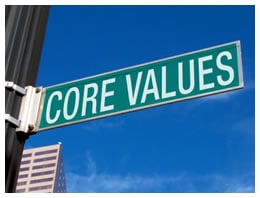
Creating Value from Values

In companies that are innovative, profitable, and responsible, widespread dialogue about the interpretation and application of values enhances accountability, collaboration, and initiative.

Here are ten essential ingredients that make values work to produce organisational value:

·         Values are a priority for leaders, invoked often in their messages and on the agenda for management discussions.
·         The entire work force can enter the conversation; employees are invited to discuss or interpret values and principles in conjunction with their peers, who help ensure alignment.
·         Principles are codified, made explicit, transmitted in writing in many media, and reviewed regularly to make sure people understand and remember them.
·         Statements about values and principles invoke a higher purpose, a purpose beyond current tasks that indicates service to society. This purpose can become part of the company's brand and a source of competitive differentiation.
·         The words become a basis for on-going dialogue that guides debate when there is controversy or initial disagreement. Decisions are supported by reference to particular values or principles.
·         Principles guide choices, in terms of business opportunities to pursue or reject, or in terms of investments with a longer time horizon that might seem uneconomic today.
·         As they become internalised by employees, values and principles can substitute for more impersonal or coercive rules. They can serve as a control system against violations, excesses, or veering off course.
·         Actions reflecting values and principles — especially difficult choices — become the basis for iconic stories that are easy to remember and retell, reinforcing to employees and the world what the company stands for.
·         Values are aspirational, signalling long-term intentions that guide thinking about the future.
·         Principles, purpose, and values are discussed with suppliers, distributors, and other business partners, to promote consistent high standards everywhere.

In short, it's not the words that make a difference; it's the conversation. Frequent discussion about organisational values can be engaging and empowering. The organisation becomes a community united by shared purpose, which reinforces teamwork and collaboration. People can be more readily relied on to do the right thing, and to guide their colleagues to do the same, once they buy into and internalise core principles. People can become more aware of the drivers and impact of their behaviour. Active consideration of core values and purpose can unlock creative potential.

Share/Save/Bookmark

Tuesday, September 07, 2010

The Power of Positive Deviance

Think of the toughest problems in your organisation or community. What if they'd already been solved and you didn't even know it?

In The Power of Positive Deviance: How Unlikely Innovators Solve the World's Toughest Problems, the authors present a counterintuitive new approach to problem-solving. Their advice? Leverage positive deviants - the few individuals in a group who find unique ways to look at, and overcome, seemingly insoluble difficulties. By seeing solutions where others don't, positive deviants spread and sustain needed change.

With vivid, firsthand stories of how positive deviance has alleviated some of the world's toughest problems (malnutrition in Vietnam, staph infections in hospitals), the authors illuminate its core practices, including:

  • Mobilising communities to discover "invisible" solutions in their midst
  • Using innovative designs to "act" your way into a new way of thinking instead of thinking your way into a new way of acting
  • Confounding the organisational "immune response" seeking to sustain the status quo
Inspiring and insightful, The Power of Positive Deviance: How Unlikely Innovators Solve the World's Toughest Problems unveils a potent new way to tackle the thorniest challenges in your own company and community.

Share/Save/Bookmark

Monday, September 06, 2010

The Biggest Mistake Leaders Can Make

Through Imagining the Future of Leadership, a symposium at the Harvard Business School, expert thinkers gathered to investigate what is necessary today to develop the leaders we need for tomorrow.

Featuring:

Bill George, Professor, Harvard Business School and former Chairman and Chief Executive Officer of Medtronic
Evan Wittenberg, Head of Global Leadership Development, Google, Inc.
Dr. Ellen Langer, Professor, Harvard University
Andrew Pettigrew, Professor, Sïad Business School, University of Oxford
Gianpiero Petriglieri, Affiliate Professor of Organizational Behavior, INSEAD
Carl Sloane, Professor Emeritus, Harvard Business School
Jonathan Doochin, Leadership Institute at Harvard College
Scott Snook, Associate Professor, Harvard Business School and retired Colonel, US Army Corps of Engineers
Daisy Wademan Dowling, Executive Director, Leadership Development at Morgan Stanley


Share/Save/Bookmark

Sunday, September 05, 2010

Behind the Curtain

In Behind the Berkshire Hathaway Curtain: Lessons from Warren Buffett's Top Business Leaders, Ron Chan has interviewed a number of CEOs and executives who have contributed to Berkshire’s success. Here are some of the insights, philosophies an mindsets from people at the top of their fields: 


  • Cathy Baron-Tamraz, President and CEO of Business Wire: “I think a liberal arts education is invaluable in preparing one for the working world. I look at the people I have hired these past 30 years, and to be candid, most of them have had a more general background than a strictly business background.” The whole idea of college is to learn about general principles by taking a variety of courses. 
  • Randy Watson, President and CEO of Justin Brands: “I learned that to run a company and be a leader, it is not about the individual, but how the team of people work together to accomplish something for the greater good. It is about working in unison. My job is to make sure that I have the right people in the right place, and then I stay out of their way.” 
  • Stanford Lipsey, Publisher of the Buffalo News: “As an advertising executive, I learned to be observant and flexible. I learned to pick up information from my clients so that I could prepare data to attract them. As the saying goes, ‘persistence succeeds when all else fails!’ I just kept trying and trying.” 
  • Brad Kinstler, President and CEO of See’s Candies: “Spotting talent is more of an art than a science. You’ll never know whether you have an eye for it until you put your managers out in the playing field and observe the way they perform. What I realised is that there is no right or wrong when it comes to picking talent. In fact, you can’t even tell who will be the next leader until he or she becomes one. Leaders come in different shapes and sizes, and it is often during a crisis or other extraordinary situation that their true ability emerges.” 
  • David Sokol, Chairman of the Board of MidAmerican Energy Holdings Company: “When I was a 27-year-pld project manager, I had to lead some older and more experienced managers. The reality was that some of them were uncomfortable working with me. The only thing I could do was to keep my head down, check my ego at the door, and work extremely hard to prove that I was capable of leading. I didn’t try to convince them of anything other than the need to accomplish everything as a team. “My father taught me that it is difficult to control others’ perceptions, but I can always control my own actions, and these actions can, over time, alter those perceptions. I constantly show my colleagues that I am an active listener, and I make sure to explain my rationale for every decision and to consider their opinions. That is all I can do, because the reality is that it will soon become clear whether or not I am capable.”

Share/Save/Bookmark

Saturday, September 04, 2010

Voicing Values in the Workplace

Recent years have seen an unprecedented breakdown in public trust of business, spurred in no small part by instances of unethical behaviour at some of the world’s most powerful institutions. 

Mary Gentile, director of the business curriculum at Babson College, says the real challenge for business students, employees, and executives isn’t knowing what’s right, but knowing how to act on those convictions within an organisation. 

In this video interview, Gentile shares insights and experiences on how to do that, which she’s gathered through her work developing the Giving Voice to Values curriculum and her book, Giving Voice to Values: How to Speak Your Mind When You Know What's Right. McKinsey Publishing’s Lily Cunningham conducted the interview with Mary Gentile in New York in June 2010. 


Share/Save/Bookmark

Friday, September 03, 2010

What Can You Expect from a Leader with a Big Ego?

What can you expect from a leader with a narcissistic personality? 


This study of 75 CEOs of Major League Baseball organisations in the USA over a 100 year period examined how positive and negative personality characteristics affected the individual’s leadership style and ultimately important outcomes for the organisation.

Terms like confident, determined, optimistic, stable, persistent, and positive were associated with the bright-side of leadership, while terms like arrogant, boastful, conceited, egotistical, self-centred, show-off and temperamental were associated with the narcissistic dark-side of leadership. 

The authors of the study suggest the following five things based on their findings (pp. 1373-1374):

The Bright-side of personality

1. Leaders who have an overall positive self-concept are better able to articulate a vision in a manner that builds commitment to the organisation’s goals.

2. Positive leaders may role model the efforts needed for the organisation to be successful and are comfortable empowering others because they have a realistic sense of their own and their organisation’s capabilities

3. Positive leaders are more comfortable with the focus being on the good of the organisation rather than on their individual success.

The Dark-side of personality

1. Narcissistic leaders are unlikely to be concerned about developing equitable exchange relationships with members of their organisation. When followers meet objectives, narcissistic leaders do a poor job of allocating recognition and rewards to reinforce desired behaviour.

2. Narcissistic leaders are very unlikely to offer a compelling vision for the organisation and inspire others to higher levels of morale and motivation.

Narcissistic leadership in this study eventually lead to more manager turnover, while positive leadership lead to higher attendance, a better winning percentage, and greater external influence in the industry (Major League Baseball).

Just like the advice to avoid hiring narcissistic employees, you should likewise avoid hiring and promoting narcissistic individuals into positions of management and leadership. It’s impossible for narcissists to see the best in others when they are so laser-focused on spotlighting the best they see in themselves. They won’t treat people fairly because it simply is not a concern for them, and their vision of individual greatness is unlikely to inspire others and may even expose the organisation to competitive peril.

There is no guarantee that simply hiring and promoting positive people is a recipe for organisational success. However, the research is pretty clear that narcissistic individuals, especially in positions of power and influence, are more likely to do harm than to do lasting good.

Share/Save/Bookmark

Thursday, September 02, 2010

Educating Tomorrow's Ethical Leaders

Rich Lyons, dean of University of California at Berkeley's Haas School of business, is leading an overhaul of the school's curriculum, with special attention to who it admits and how instructors develop innovative and responsible leaders. He talks here with Wall Street Journal Careers editor Jennifer Merritt.


Share/Save/Bookmark

Wednesday, September 01, 2010

The Positive Leadership Tweetbook 2009/2010


Graham Watson is a passionate communicator with many provocative ideas to share. The contents of this blog and the Twitter book include a number of Graham's most stimulating messages. And they're all absolutely free. Download, print, discuss, dissect, and disseminate to your heart's content. We ask only that you not alter the files, claim them as your own work, or charge for their use.

PDFs require Acrobat Reader which you can download free from Adobe.

For more information, please contact: graham.watson@positiveleadership.co.uk


Share/Save/Bookmark

Happy Birthday!

Today marks the first anniversary of the Positive Leadership blog.

We hope that with our over 900 posts and many thousands of page loads in the last year we have helped stimulate thinking and discussion on the importance which great leadership plays in delivering consistent high performance.

Positive Leadership™ values when aligned with a Game Plan for Winning will deliver sustained high performance, even under pressure. 

You can find out more about the Positive Leadership™ consulting approach at www.positiveleadership.co.uk or via e mail: graham.watson@positiveleadership.co.uk
Share/Save/Bookmark

Tuesday, August 31, 2010

A Commitment to Values

'If there is any lesson to be learned from the economic morass in which we now find ourselves, and into which we have been plunged by an army of amoral numbskulls, it is that it is not wealth, or size, or fame that matter but a commitment to values that transcend the blind pursuit of the buck and what it buys.'

Mickey Edwards spent 16 years in Congress and 16 years teaching at Harvard and Princeton. He is a director of The Constitution Project and wrote Reclaiming Conservatism: How a Great American Political Movement Got Lost--And How It Can Find Its Way Back.


Share/Save/Bookmark

Avoiding the Tendencies of Poor Leaders


Being the leader is hard, especially when you need to counter the natural tendencies that separate you from the people you manage. Knowing what these propensities are can help you avoid them. 

Here are our top three to watch out for:


  1. Self-deluding. This isn't just a problem with bosses; the majority of people estimate their skills to be higher than they are in reality. Be aware that you might be self-aggrandising and find ways to get input and evaluations that show you what your true skills are.
  2. Heedless of subordinates. Those in positions of power are watched carefully by those under them. But that level of attention is not reciprocated. When you become the head honcho, don't forget to remain curious about and engaged with your direct reports.
  3. Insulated from reality. No one wants to deliver bad news to the boss, so the boss often doesn't know the full story. Create a culture in which the messenger isn't shot, but lauded for bringing important information forward.

Share/Save/Bookmark

Monday, August 30, 2010

Best Leadership Practices from the Greatest Actors

Know your character. Do the self-reflection required to know who you are and where you come from, and what your strengths and values are. That preparation will enable you to show up and be a present leader, and to be available to the moment.

Walk the stage. You don’t have to live in the boardroom for a week before the presentation, but do what stage actors do. We walk the stage before performances so you know how many steps it is from chair to coffee table. If you walk the boardroom, you’ll know how to avoid the LCD light and which chair is most likely to trip you. 

Learn your lines. What’s your message? What do you want people to walk away with from your meeting or presentation? Make sure it’s brief and “sticky”. 

Share/Save/Bookmark

Leadership Lessons


Share/Save/Bookmark

Performing Under Pressure


Share/Save/Bookmark

Nordstom's Employee Handbook - Short and to the Point!

'Welcome to Nordstrom

We're glad to have you with our Company. Our number one goal is to provide outstanding customer service. Set both your personal and professional goals high. We have great confidence in your ability to achieve them.

Nordstrom Rules: Rule #1: Use good judgement in all situations. There will be no additional rules.

Please feel free to ask your department manager, store manager, or division general manager any question at any time.'

Share/Save/Bookmark

Sunday, August 29, 2010

Why Once Great Companies Fail

Jim Collins, in his book How The Mighty Fall: And Why Some Companies Never Give In spent four years researching how once great companies failed. He developed a five-stage model that describes the stages that each of these companies went though. They are:
1. Hubris born of success. Great companies can become insulated by success. People become arrogant, regarding success as an entitlement, and they lose sight of what made them successful in the first place.

2. Undisciplined pursuit of more. Companies stray from what led them to greatness in the first place and make undisciplined moves into areas where they can’t succeed.

3. Denial of risk and peril. Leaders discount negative data, amplify positive data, and post a positive spin on ambiguous data. They start to blame external factors rather than accept responsibility.

4. Grasping for salvation. They start looking for that “silver bullet” solution.

5. Capitulation to irrelevance or death. Turn out the lights, the fat lady is singing.

Collin’s recent work confirms that organisations don’t fail because of a lack of technical, functional, or business skills – it’s always because of some kind of collective destructive mindset and behaviours.

Share/Save/Bookmark

Saturday, August 28, 2010

John Wooden - Lessons in Leadership

When it comes to the topic of leadership, successful sports coaches often offer insights into how best to manage talented people. 

As the NFL’s Vince Lombardi once put it: “Running a football team is no different than running any other kind of organisation – an army, a political party or a business. The principles are the same. The object is to win – to beat the other guy. Maybe that sounds hard or cruel. I don’t think it is.”

There are few coaches with a track record as illustrious as former UCLA basketball coach John Wooden.

Wooden was the first person to ever be inducted into the Basketball Hall of Fame as both a player and a coach. In the last 12 years of Wooden’s tenure as head coach at UCLA, the team took home 10 championship titles. Seven of those championships were won back-to-back! For his momentous accomplishments, Wooden was awarded a Presidential Medal of Freedom – America’s highest civilian honour – in 2003, and was also the recipient of California State University’s John Wooden Ethics in Leadership Award (which was, obviously, named after Mr. Wooden himself).

Wooden was famous for his “Pyramid of Success,” as well as his 12 lessons of leadership. Here are the 12 lessons:

Good values attract good people
Love is the most powerful four-letter word
Call yourself a teacher
Emotion is your enemy
It takes 10 hands to make a basket
Little things make big things happen
Make each day your masterpiece
The character is mightier than a stick
Make greatness attainable by all
Seek significant change
Don’t look at the scoreboard
Adversity is your asset

Given his hard-nosed determination, his ability to remain cool under pressure and the tremendous emphasis he placed on teamwork, Wooden was the consummate leader, and we’d all be wise to take his lessons to heart. None of them are easy to follow, but they are words to live by nonetheless.

Share/Save/Bookmark

Friday, August 27, 2010

The Importance of Values in Decision Making

Values are becoming the preferred mode of decision-making in business. 

If we use our values to make decisions, our decisions will align with the future we want to experience. Therefore, they can be used for making tough decisions in complex situation that we have not experienced before. 

When we use values in decision making, we are consciously creating the future we want to experience. Values are not constrained by the past and are adaptable to new situations. Since the world we live in, particularly the business world, is becoming increasingly complex, chaotic, and unpredictable, values provide a more flexible mode of decision-making than beliefs. 

Values are the anchors we use to make decisions so we can weather a storm. They keep us aligned with our authentic self. They keep us true to ourselves and the future we want to experience.

Share/Save/Bookmark

Thursday, August 26, 2010

Essential Lessons on Management, Society and Economy


The Drucker Lectures: Essential Lessons on Management, Society and Economy focuses largely on how to effectively and ethically manage large institutions by striking a balance between their individual role with that of the common good. This is a timely, instructive, and prescient book particularly relevant for managers and leaders today.

Share/Save/Bookmark

Knowledge Gained from Failure Lasts Longer

While success is surely sweeter than failure, it seems failure is a far better teacher, and organisations that fail spectacularly often flourish more in the long run, according to a new study by Vinit Desai, assistant professor of management at the University of Colorado Denver Business School.

Desai's research, published in the Academy of Management Journal, focused on companies and organisations that launch satellites, rockets and shuttles into space – an arena where failures are high profile and hard to conceal.

Working with Peter Madsen, assistant professor at BYU School of Management, Desai found that organisations not only learned more from failure than success, they retained that knowledge longer.

"We found that the knowledge gained from success was often fleeting while knowledge from failure stuck around for years," he said. "But there is a tendency in organisations to ignore failure or try not to focus on it. Managers may fire people or turn over the entire workforce while they should be treating the failure as a learning opportunity."

The researchers said they discovered little "significant organisational learning from success" but added "we do not discount the possibility that it may occur in other settings."

Desai compared the flights of the space shuttle Atlantis and the Challenger. During the 2002 Atlantis flight, a piece of insulation broke off and damaged the left solid rocket booster but did not impede the mission or the programme. There was little follow-up or investigation.

The Challenger was launched next and another piece of insulation broke off. This time the shuttle and its seven-person crew were destroyed.

The disaster prompted the suspension of shuttle flights and led to a major investigation resulting in 29 recommended changes to prevent future calamities.

The difference in response in the two cases, Desai said, came down to this: The Atlantis was considered a success and the Challenger a failure.

"Whenever you have a failure it causes a company to search for solutions and when you search for solutions it puts you as an executive in a different mindset, a more open mindset," said Desai.

He said the airline industry is one sector of the economy that has learned from failures, at least when it comes to safety.

"Despite crowded skies, airlines are incredibly reliable. The number of failures is miniscule," he said. "And past research has shown that older airlines, those with more experience in failure, have a lower number of accidents."

Desai doesn't recommend seeking out failure in order to learn. Instead, he advised organisations to analyse small failures and near misses to glean useful information rather than wait for major failures.

"The most significant implication of this study…is that organisational leaders should neither ignore failures nor stigmatise those involved with them," he concluded in the June edition of the Academy of Management Journal, "rather leaders should treat failures as invaluable learning opportunities, encouraging the open sharing of information about them." 


Share/Save/Bookmark