Positive Leadership has also been recognised as a Top 50 Leadership Expert to Follow on Twitter.

Follow us on Twitter @posleadership


LEADERSHIP IS A PROCESS OF SOCIAL INFLUENCE, WHICH MAXIMISES THE EFFORTS OF OTHERS TOWARDS THE ACHIEVEMENT OF A SHARED GOAL.

Sunday, May 16, 2010

Business Leadership - The India Way

In India business leaders have come to be emblematic of national achievement and fortitude. When US Secretary of State Hillary Clinton visited India sixth months after the 2008 terrorist attack, she arrived first not in New Delhi, the political capital, but in Mumbai, the business capital, where she began by meeting with Indian business leaders, including Mukesh Ambani, executive chairman of Reliance Industries, and Ratan Tata, head of the $62 billion Tata Group.

India has a way of doing business that brings together business leadership with national leadership and societal leadership. Many heads of business are deeply involved in matters from climate change to child nutrition, and they find it entirely appropriate and even necessary to make their views on such matters public.

Some of this has to do with a need for development. The heads of many Indian businesses believe that national growth is essential for their own profitable expansion. Also, India has a long-standing tradition of business largesse, with many companies committed to social betterment through philanthropic giving and investment in infrastructure near their facilities. But the melding goes well beyond private profit and public charity. Indian business leaders care as much about national purpose as about financial results.

Thus the co-chairman and former chief executive of Infosys Technologies, Nandan Nilekani, has accepted a call to direct India's mammoth effort to provide a unique digital identification number for every one of its 1.1 billion citizens, which will make possible more effective delivery of social services across the country. And thus Hindustan Unilever has launched Project Shakti, which has used the principles of microfinance to create a sales force in some of the subcontinent's most remote regions. And big-name businesses have built community hospitals, grade schools and virtual universities across the country.

This India way of doing business has fuelled an economy that even in perilous global times remains a dynamo, driven by big companies that are bent on growing at prodigious rates. India's gross domestic product has been expanding more than twice as fast as the U.S.'s. Infosys Technologies employed 10,700 in 2002, but more than 100,000 just seven years later.

The essence of the India Way is best expressed by those business leaders themselves. We "think in English and act in Indian," observed R. Gopalakrishnan, the executive director of Tata Sons, the holding company of the Tata Group. The Tata Group comprises some 98 enterprises that employ 290,000 and book annual revenue equal to 3.2% of the nation's GDP.

"For the Indian manager," Gopalakrishnan explained, "his intellectual tradition, his y-axis, is Anglo-American, and his action vector, his x-axis, is in the Indian ethos. Many foreigners come to India, they talk to Indian managers and they find them very articulate, very analytical, very smart, very intelligent--and then they can't for the life of them figure out why the Indian manager can't do what is prescribed by the analysis."

The Indian "x-axis" is defined by four distinctive elements of managing:

1. Holistic engagement with employees. Indian business leaders see their firms as organic enterprises, where sustaining employee morale and building company culture are critical obligations and the very foundations of their success. People are viewed as assets to be developed, not costs to be reduced.

2. Improvisation and adaptability. Improvisation and adaptability are also at the heart of the India way. In a complex, often volatile environment with few resources and maddening red tape, business leaders learn to rely on their wits to circumvent the innumerable hurdles they recurrently confront. Anyone who has seen outdated equipment nursed along a generation after its expected lifetime with retrofitted spare parts and jerry-rigged solutions has witnessed this in action.

3. Creative value propositions. Given the enormous and intensely competitive domestic market and the country's discerning customers, most of them of modest means, Indian business leaders have of necessity learned to be highly creative in developing their value propositions, delivering entirely new products and services with extreme efficiency. A case in point: Tata Motors now produces the Nano automobile at a sticker price of just $2,500.

4. Broad mission and purpose. Indian business leaders place special emphasis on personal values and on having a vision of growth and strategic thinking. In addition to serving the needs of their stockholders, like CEOs everywhere, they also stress broader purpose. They take pride in enterprise success but also in family prosperity, regional advancement and national renaissance.

Bundled together, these principles constitute a distinctly Indian way of conducting business, one very different from other countries, especially the U.S., where the blend centres more on delivering shareholder value.
Company managers in the West can usefully learn from India's example. The time is right to better understand what is driving the Indian economic powerhouse, the company practices we have come to call the India Way.

For more, see - http://www.forbes.com/2010/04/14/india-business-way-leadership-citizenship-useem.html?boxes=leadershipchannellighttop 

Share/Save/Bookmark

Effective Managers are Excellent Leaders

Most individuals want their managers first and foremost to be strong leaders.  

When you possess and display the following top 5 leadership qualities on a consistent basis, you will stand out from the pack as a highly effective manager:

  • Strong Performance – Managers need to meet and exceed performance standards on a daily basis.  They must have a very narrow “say-do gap” and always live up to the commitments they make.
  • Decisiveness – Managers must have the courage to make the tough calls.  While they realise that every decision might not be perfect, effective managers make well-reasoned and timely decisions.  They choose to live proactively – not reactively.
  • Accountability – Managers are always accountable for their actions and the decisions they make.  When a problem arises they look first to their own contributing actions (or lack there of).  Accountability breeds trust.   An effective manager is one who others see as a go-to person who will listen to their problems and help them to find solutions.
  • Strong Communication – Managers must be strong communicators.  They must clearly convey their expectations and consistently hold others accountable when those expectations are not met.  Effective managers do not shy away from confrontation because they understand that conflict is sometimes necessary to bring about resolution.
  • Service-Based Leadership – Managers truly care about those they lead.  They seek to remove obstacles that prevent others from reaching their fullest potential.  They are empathetic to others’ needs; however, they avoid coddling or enabling others because they are focused on individual growth and exceptional performance.
Effective managers are excellent leaders.  Incorporate these 5 top leadership qualities into your daily life and watch your team thrive! 

Share/Save/Bookmark

Vision


Vision is one of the values of Positive Leadership.

This means:


  • DEVELOPING A CLEAR, COMPELLING AND CONVINCING PICTURE FOR THE FUTURE OF THE TEAM,  BUSINESS OR ORGANISATION
  • CREATING A FOCUSED COMMUNICATION AND IMPLEMENTATION STRATEGY
  • UNDERSTANDING THAT VISION CASTING IS A PROCESS, NOT AN EVENT.


Share/Save/Bookmark

Saturday, May 15, 2010

"Self-Made People"

Do you know anyone who is a self-made man or woman - a self-made person?

From time to time, we hear someone describe him- or herself as "self-made." What they usually mean is that they weren't born to wealthy, successful parents, or that they managed to succeed in spite of great odds.

However, in the final analysis, all of us are self-made people. Of course, some of us get off to an easier start, and some of us are fortunate enough to have had parents or others who helped us recognise and use our talents.

But success is not a matter of luck, or talent, or of being gifted. More than anything else, success is a matter of belief and persistence.

If you don't believe you can succeed, no amount of talent or money or good parenting will help you. And if you do believe it and refuse to give up no matter how hard the struggle, no obstacle, no setback, no disadvantage will stop you.

George Bernard Shaw said it perfectly: "People are always blaming circumstances for what they are. But the people who get on in this world are those who get up and look for the circumstances they want, and if they can't find them, they make them."

So take charge of your life by taking accountability for being who you are! 

Share/Save/Bookmark

Resilience


Resilience is one of the values of Positive Leadership.

This means:

  • SUCCESS UNDER SUSTAINED PRESSURE
  • QUICK RECOVERY FROM SETBACKS
  • ‘BOUNCE BACK’ IN THE FACE OF ADVERSITY AND THREAT.


Share/Save/Bookmark

Ego Strength

No one wants to think of themselves as having a "big ego," but having a strong ego is definitely a good thing.

How strong is your ego? Many people think that the term "ego" has something to do with being a braggart or totally self-interested, but they're wrong. Actually, psychologists tell us that the ego is that part of our personality that directs our activities, so we can get our needs met and survive. It's a normal and necessary part of who we are.

Having good ego strength means you perceive things accurately and have the ability to make wise decisions. It also generally means that you have self-confidence, self-esteem, and poise under pressure. 

Ego strength has nothing whatever to do with people we think of as having "big egos"- those macho folks who like to push other people around and blow their own horns.

On the contrary, it often shows up as resiliency - the ability to bounce back from adversity - and the flexibility to take advantage of change. According to Dr. Charles Garfield, author of Peak Performers: The New Heroes of American Business, ego strength - a thoughtful, systematic programme of personal growth - can help enormously. 

Share/Save/Bookmark

Friday, May 14, 2010

Purpose and Goals help you to be Productive

How busy are you these days? Now, here's another question: How productive are you? As most of us know, the two just aren't the same. All too often, being busy may have nothing at all to do with the results we get and what we achieve.

We spend our days, often very long days, in a flurry of activity. But, when the day or week is over, we're disappointed at the level of our accomplishment. Our disappointment creates stress and we push ourselves even harder to "get more done." But pushing hard isn't the answer.

What is? Well, in our experience, a sense of priorities based on a clear purpose and well-defined short- and long-term goals are what one needs. The world is full of individuals who are definitely in motion, but they're not exactly sure where they're going and they don't know why, either. Maybe they get going so fast that they never take the time to think it through. If that is your situation, we urge you to set aside some time for personal reflection, some personal values clarification and goal-setting.

There's nothing like a strong sense of purpose, based on clearly spelled out values, to keep you moving. But more than that, it keeps you moving in the right direction. Without it, you can climb the ladder of success all right, but when you get to the top, you may find that it's leaning against the wrong building! 

Share/Save/Bookmark

Accountability

Accountability is one of the values of Positive Leadership.


This means:


  • ADOPTING A ‘CAN DO, WILL DO ‘ APPROACH – OTHERS WILL FOLLOW
  • DOING EVERYTHING POSSIBLE TO DELIVER OUTPUTS WITHIN PRESCRIBED TIME, COST AND QUALITY STANDARDS
  • NOT BLAMING OTHERS FOR SHORTFALLS IN PERFORMANCE
  • TACKLING OBSTACLES TO SUCCESS DIRECTLY AND WITH DISPATCH.


Share/Save/Bookmark

Trust Starts With Clarity

Leaders must take the lead in building trust throughout their organisation and in individual teams.

Trust starts with clarity. Without clarity neither side in a relationship has confidence in where they stand. This means each person in the team relationship must be committed to specific and clear communication, otherwise, misunderstandings will occur causing a breakdown in trust.

One area leaders need to invest time in is ensuring specific communication is an expectation in their organisation and is one of its core values against which performance is measured.

Openness and Communication are important values in the Positive Leadership approach to building a robust leadership strategy.

Share/Save/Bookmark

Thursday, May 13, 2010

There is No 'Off Switch' for Leaders

Leaders are wise to behave with a consciousness of how other people might view what they do — and the awareness that people probably will view it. That requires truly authentic leaders whose characters are not mental constructions developed for the job but run deeply in their hearts and souls.

In the age of social media, instant video feeds via cell phones, and hidden surveillance cameras, this advice about authenticity increasingly applies to everyone who aspires to leadership.

Share/Save/Bookmark

Team Spirit

Team Spirit is one of the values of Positive Leadership.

This means:


  • CREATING A CLIMATE THAT FOSTERS PERSONAL INVESTMENT AND EXCELLENCE
  • NURTURING A COMMITMENT TO A COMMON VISION AND SHARED VALUES
  • GIVING PEOPLE OPPORTUNITY AND LATITUDE TO GROW AND ACHIEVE
  • PROMOTING COLLABORATION AND TEAMWORK.

To illustrate the point, see this story of a team that went from 'worst to first'  - http://www.avp.com/News/2010/05/Stanford.aspx#

Share/Save/Bookmark

Leadership - Building Capacity

Leadership - Building Capacity  

Wednesday, 2 June 2010, Crutherland House Hotel, East Kilbride, Scotland
School Leaders Scotland and Positive Leadership Limited have teamed up to help you tackle the challenges of A Curriculum for Excellence 2010/2013.

The introduction of ACfE in August 2010 will present school leaders with a range of challenges. Leading and managing change requires a whole set of skills which have been well rehearsed within Scottish education over the years. For this seminar SLS has looked outside the education community  for fresh ideas and proven strategies relating to leadership in the context of our challenges over the next three years. The team from Positive Leadership Limited, Gavin Hastings, Lee Torbet and Graham Watson, bring leadership skills and strategies from the worlds of sport and business. They have developed a propriety leadership strategy which optimises both the performance of leaders throughout an organisation and the results of the organisation.

‘A strategy begins and ends with values – a prioritised listing of what is important to you. Once you know what you value as a leader, you can set goals to help you bring about end results that are aligned with your values. This is Positive Leadership.’

Such an approach also sits well with School Leaders Scotland's own view of a values driven leadership approach.

This seminar will help develop YOU as a leader. It will provide you with the opportunity to hear about this innovative approach to building a high performing school and how it can help you as a leader. You will have an opportunity to reflect on your current practice and clarify your thinking.  You will be able to focus on where you are going, what you are trying to achieve and what your purpose is. You will be given opportunities to discuss and debate with fellow participants the values that are important to you.   You should leave at the end of the day with a positive outlook on the way ahead and a plan of action to take back to your school. 

A Curriculum for Excellence – Kick negativity into touch with the help of Gavin Hastings!


Share/Save/Bookmark

Bono at 50: The Leader We Need

Earlier this week, Bono, the U2 singer, global activist and one of the most powerful leaders on the world stage, turned 50. At this important milestone, it is worth briefly taking stock of his journey thus far--a journey of purpose, impact, passion, and humour. It is a path with lessons for leaders from all walks of life.

So what has Bono been up to that accounts for his enormous influence--influence that extends from the 100,000-seat stadiums that U2 plays to the White House, Vatican, and Downing Street to debt forgiveness and medical aid to Africa? After all, he was not born with cash or connections.

Bono's leadership journey has its roots in U2, the Irish band that he and several schoolmates, including Larry Mullen, Jr., David Evans (who later became known as "The Edge"), and Adam Clayton, founded in 1976. The story of U2's success is one of commerce as much as art. At its centre is the creation and stewardship of a very powerful brand, a brand that, in the midst of an ongoing perfect storm of turbulence in the music distribution business, is still going strong around the world.

Leading this enterprise has meant keeping the key team members motivated, engaged and growing--as human beings as well as music makers--for almost 34 years. Growing the organization four gangly teenagers - who in 1979 had to sell one of their instruments in order to buy passage home after a short London tour--to one of the most successful rock bands in history has demanded abiding faith, a steady stream of courage, huge reserves of personal energy, and a disciplined openness to the world as he continues to meet it.

From this solid foundation, Bono has acquired great agency. Not only money for himself and sway with his customers--music fans of all ages, shapes and sizes--but also extraordinary access to other movers and shakers as well as influence on a wide range of issues outside rock music. One of the most compelling aspects of Bono's leadership is how he has chosen to use the authority that has accompanied business success. He has decided, over and over again, to put his artistic, political, strategic, and spiritual muscle to work to alleviate suffering in the world's poorest countries.

Amidst all this activity, Bono keeps turning his energy to making and distributing music. His work as a musician is as central to his humanitarian efforts as the money he helps raise or the politicians he wins over for debt relief. At the same time, his activism has become part of the U2 brand, animating the way that millions of people think about the group and their offerings.

Herein lie several lessons. First, all successful organisational leaders wield power, often in excess of that granted them by their office. How such individuals decide, explicitly or not, to use this control is a question of grave importance for the world today.

The most important problems confronting us now, including a precarious global financial system and an equally vulnerable environmental system, do not come in separate buckets labelled "business" and "public policy." These are challenges that are smashing through older boundaries and helping redefine organisational place and mission.

Second, as Bono seems to understand, these issues demand a new kind of leadership, one based not in aging hierarchies and status systems but in humility, an ardent desire to learn and a respect for the individuals that organisations serve.

Third, individual leaders have to keep getting right with themselves about their own path and impact.

Finally, effective leadership today demands a willingness to stay open, not only to one's own enterprise but also to the teeming global village around it.

Bono, like Abraham Lincoln 150 years ago, has not let himself become isolated in an elite atmosphere. He has used his touring and travels as classrooms to help him understand the hopes, dreams and tribulations of his fellow citizens, whom he often calls his brothers and sisters. And he has used this knowledge to light his way, his music and his leadership.

Happy Birthday, Bono!

Share/Save/Bookmark

Wednesday, May 12, 2010

Now We Have a True Test of Leadership

Oxford University's Said Business School staged a conference recently on "The Future of Leadership." A survey of Oxford MBA students found that a hefty majority of them thought that there was a major vacuum in leadership today. More than three-quarters (76%) said this was the case in politics and society generally and 82% thought it was the case in international relations. Interestingly, business emerged as having stronger leadership, with 41% identifying it as having a leadership vacuum. One explanation advanced for this was that business rewards good leadership far better than other fields.

The consensus of the conference was that good leaders needed to have moral courage; they needed to be prepared to take risks; and they needed passion.

It may be the case that political parties should encourage and help some of their bright young things learn about leadership. The unseemly haggling that has gone on in the U.K. in recent days as the three main parties tried to cobble together a coalition has not shown political leadership at its finest. With the public already disenchanted with politicians, perceptions will not have been enhanced by the horse-trading that has taken place in the quest for power.

Now, however, the country has a new prime minister in David Cameron. He faces a looming financial crisis on a frightening scale. This is a true test of leadership. Unless he moves hard and fast against the deficit, the markets will pass a very early judgment on his leadership and it will not be flattering. It will also be irreparable.


Share/Save/Bookmark

Insights on Coaching Olympic Athletes

This is an interesting reflection from Dr Paul Schempp of the University of Georgia:

‘I recently invited US Olympic Swim Coach, Jack Bauerle, to share his insights and experiences on coaching with one of my classes at the University of Georgia. In addition to coaching our US Women’s Swim team at the Beijing Olympics, as the head swim coach here at Georgia Jack’s teams have won 4 NCAA National Championships and a host of other honours and championships. In his 30 years of coaching elite athletes, he has not only amassed an amazing record of success, but has also built a wealth of knowledge, skill and experience in coaching.

As Jack spoke, several themes permeated his message. The first and one that resonated with our research on experts was his conclusion when describing an athlete’s accomplishment. He would, for example, detail the training regiment and personal struggles a particular athlete overcame to claim an Olympic medal. And regardless of the athlete or the accomplishment, he concluded the same way: “No one worked harder.” He never said “No one was more talented” or “No one was luckier.” He said: “No one worked harder.”

Former Dallas Cowboys star, Roger Staubach, put it another way: “There are no traffic jams on the extra mile.”

Jack is as enthusiastic and focused on his coaching when he walks into our building for a pre-season practice in early summer as he is eight months later as he prepares his teams for the National Championships. Jack knows that every practice counts—from the first to the last. As a coach, it is all about preparing your athletes, and then letting them do what they do best.

In Beijing, Jack did not directly witness a single one of his athletes win a medal. And his athletes won more medals than any other Women’s Olympic Swim Team in the history of the Games. Why? Because while each swimmer was in the water fighting their way to victory, Jack was in another part of the venue preparing the next athlete for their competition. The second theme I heard in Jack’s remarks was we can only expect great results when we have given our best efforts to being as prepared as we can be to succeed.

As we closed the lecture, I asked Jack if he had any advice for these students who were in the early stages in shaping a career. This is where the third and final theme became clear. He told the students to “follow your passion, not a paycheck.” The famed football coach, Joe Gibbs, said “People who enjoy doing what they do invariably do it well.” Jack loves what he does, and does it unquestionably well. But more importantly, people who follow their passion are happy in what they do. And at the end of the day, isn’t happy where we all want to be? Thanks Jack.’

Share/Save/Bookmark

Tuesday, May 11, 2010

Keeping a 'LeBron James' on your team

Even if you're not watching the NBA playoffs, you are probably familiar with the name LeBron James.

Considered to be one of the best professional basketball players in the world, his team, the Cleveland Cavaliers, are one of the favourites to win the playoffs, in large part because of him. Recently, he earned his second consecutive NBA most valuable player award. No wonder Cleveland fans live in almost constant fear that he'll leave for another team.

Whether or not it's apparent, business leaders have something in common with the Cavaliers: You have a LeBron, a go-to employee without whom your team's performance would suffer -- and you may be in danger of having that person walk out the door someday soon.

If your high-performer has already left, you have three big worries. Will your team's performance immediately decline? Will your short-term gap become a long-term gap because the recruiting process takes so long? And even if you're recruiting promising new talent, can you be sure you've really found another superstar? None of those questions have easy answers.

Your best strategy is to retain your superstars in the first place.

While the Cavaliers can throw a lot of money at LeBron, business leaders don't have endless amounts of cash to keep their best employees. In truth, however, high-performers like LeBron are not always looking for the big payday. They're looking for an opportunity to win. And most key employees, in particular, are looking for an opportunity to make a difference.

Here are some real-world techniques for retaining your high-performers without NBA-level salaries:

Shine the limelight: Use the annual performance-review process -- and every other opportunity you can find -- to reinforce and celebrate your high-performers' best behaviours. Make sure they know they are appreciated, that their success means success for the whole team. Of course even the best players still need a coach, and that means providing honest, specific actionable feedback.

Define that goal: Don't make assumptions about what motivates your best-performing employees. Instead, ask them directly. One employee might be longing for a pay increase, while another has their eye on a key promotion. Another may simply want to feel more tangibly the impact of the programmes they are working on. You won't know until you ask -- and make sure you ask before it's too late.

Use what you have: Give bonuses. Give more responsibility. Give opportunities for travel or training. Whatever tools for professional growth you have at your disposal, offer them to your high performer. Even something as simple as a rotational assignment can help challenge and motivate.

Keep it real: Yes, you're asking your superstar to share their highest career aspirations, and you're doing your best to fulfil those, but never make promises you can't keep. LeBron may want to take the championships, but no coach can guarantee a win. Be honest about what you can and can't offer; they will respect the candour.

Share/Save/Bookmark

Monday, May 10, 2010

Great Leadership

‘Great leadership, that is, to me where it is. It’s in overcoming disappointments because nothing ever goes smoothly, nothing ever goes one hundred percent the way you think it’s going to go. How do you respond when it doesn’t quite workout that’s the true test of a leader.’
Tony Dungy, Super Bowl winning NFL coach

Share/Save/Bookmark

To invent future leaders, General Electric redefines 'tough love'

Ed Ng is president and CEO of GE Capital South East Asia, the company’s financing unit. Recently he shared insights on GE’s human capital development culture.

Even though there have been changes in the company’s culture, certain aspects, like the emphasis on values of integrity, remains. While things like 'values' cannot be quantified and do not show up on the balance sheet, GE regards them just as highly. 

According to Ng, "if you have a person who delivers strong financial results but lacks the values, the integrity, it’s a very easy decision – we remove that person as easily as one who has low performance and is low on values".

GE is known for the way it turns leadership development and talent management into a science more than an art. For example, in each and every position, there has to be an identified successor, from within or external sources. To adhere to this practice, the hunt on-going to uncover “talent behaviours” is a continuous, ongoing process.

Integral to this talent management system is GE’s company-wide reward and recognition programme, which allows any manager to go online and recognise employees by way of cash or non-cash rewards. Every employee uses the Employee Management System annually to assess themselves as his colleagues and managers do the same. 

What makes this system somewhat different from any other staff appraisal systems is that it requires a detailed list of accomplishments and scores the employee against specific GE growth values (read: the leadership potential scale), including the employee’s external focus. In other words, employees are rated on their ability to look at the business and his function from the customer standpoint; the ability to see clear solutions amid complex problems; imagination for out-of-the-box solutions; inclusiveness and teamwork; and finally, technical competence in the position. These are traits expected of every leader in GE.

Word of caution: some boxes in this score sheet carry much more weight than others. For one, if the box next to 'integrity' is left unchecked, this will have the effect of cancelling out all other parameters, however positive. “The difference between GE and other companies is that we believe if you don’t have a core set of values that anchor your belief of what is ethical behaviour, you’re going to run into problems. Without unyielding integrity, you’re basically an empty shell,” said Ng.

To tighten the requirements even further, integrity is only deemed honest when seen through the eyes of others. “Very rarely will you find a particular employee who is mentioned as weak, or as a developmental leader in that he falls behind in an area of performance or measured value, and other employees don’t agree; or a manager thinks that an employee is a strong role model but others don’t agree. It’s an embracing process to prove you will make things happen and always, with unyielding integrity. There are second chances given for some weaknesses except for integrity or compliance failures,” said Ng.

Clearly, while GE’s leaders will change, along with their style, for the company, the on-going task of grooming future leaders never stops. Paraphrasing Edison, Ng said: ““We are constantly seeking new ways to develop leaders. If the world now needs a new kind of leader, GE will invent it.”


Share/Save/Bookmark

Sunday, May 09, 2010

It’s All About Bench Strength

This interview with Sharon Napier, chief executive of Partners + Napier, an ad agency based in Rochester NY, was conducted by The New York Times:

'Q. What were some important leadership lessons for you?
A. Much of what I learned about leadership I learned playing basketball, whether it was as a player or from my coaches. I use basketball analogies a lot.

Q. What are your favourites?
A. I always tell people it’s not about the big game. And what I mean by that is it takes hours and hours of practice to be good. I’ll tell a younger person in the agency: “You’re going to be at an internal agency meeting to present your work, so practice. Act like it’s real. Go home, prepare, practice. Because when you get to the big game, you’ll be able to really be good.”
And I always say that the stats don’t lie. It’s not subjective. It’s just, what are your goals and did you meet them?

Q. What else?
A. I went from playing high school basketball to college basketball. You can be a star in high school, and you can be the ninth player in college. It’s just the way it is. So I always talk about understanding the bench strength. First of all, every player has a role. Know what it is. If you’re the seventh player who’s supposed to go in and get five rebounds because we need them, that’s your role. So I talk about that a lot — we don’t have the starting team and the not-starting team. We have a bench, and everybody has to be strong. They come in and they bring different things to the table. And you learn that by playing. You learn that if you’re not worried about your own success, and you’re worried about the success of the team, you go a lot further.'

For the full interview, see -  

Share/Save/Bookmark

The Foundation of Positive Leadership

When you look at a tall building, what you see are the visible spaces above the ground. The foundation upon which it rests is largely invisible. But the foundation has to be strong, otherwise the entire building will fall.

Similarly, the foundation of Positive Leadership is largely invisible. But it rests on two behaviours. One is Integrity and the other is Character.

To find out more about the values of Positive Leadership and how these values influence business strategy to help organisations achieve performance excellence, even under pressure, please contact: 

Share/Save/Bookmark

Saturday, May 08, 2010

The Power of Positive Leadership

Here is a thought provoking view of the power of Positive Leadership:


Share/Save/Bookmark

Why a Collaborative Culture is Essential in Business

Business leaders around the world are increasingly realising that "silo mentality" and knowledge hoarding behaviours are wasting the kind of collective brainpower that could save their organisation millions, or lead to the discovery of a revolutionary new process or product, or, in the current economic climate, help keep their company afloat when others are sinking!

And it's not just corporate profits that suffer when collaboration is low: the workforce loses something too. Individuals lose the opportunity to work in the kind of inclusive environment that energises teams, releases creativity and makes working together both productive and joyful.

Here are seven insights for harnessing the power of collaboration:

1. Collaboration is a leadership issue. In trying to capture and communicate the cumulative wisdom of a workforce, the public and private sectors have invested hundreds of millions of dollars in portals, software, and intranets. But collaboration is more than the technology that supports it, and even more than a business strategy aimed at optimising an organisation's experience and expertise. Collaboration is, first and foremost, a change in attitude and behaviour of people throughout an organisation. Successful collaboration is a leadership issue.

2. Collaboration is essential for organisational change. Regardless of how creative, clever and savvy a leader may be, he or she can't transform an organisation, a department or a team without the brain power and commitment of others. Whether the change involves creating new products, services, processes – or a total reinvention of how the organisation must look, operate, and position itself for the future – success dictates that the individuals impacted by change be involved in the change from the very beginning. 

3. Visioning is a team sport. Today's most successful leaders guide their organisations not through command and control, but through a shared purpose and vision. These leaders adopt and communicate a vision of the future that impels people beyond the boundaries and limits of the past. But if the future vision belongs only to top management, it will never be an effective motivator for the workforce. The power of a vision comes truly into play only when the employees themselves have had some part in its creation.

4. Diversity is crucial. Experiments at the University of Michigan found that, when challenged with a difficult problem, groups composed of highly adept members performed worse than groups whose members had varying levels of skill and knowledge. The reason for this seemingly odd outcome has to do with the power of diverse thinking. Diversity causes people to consider perspectives and possibilities that would otherwise be ignored. Group members who think alike or are trained in similar disciplines with similar bases of knowledge run the risk of becoming insular in their ideas. Instead of exploring alternatives, a confirmation bias takes over and members tend to reinforce one another's predisposition.

5. Relationships are key. The outcome of any collaborative effort is dependent upon well-developed personal relationships among participants. Not allowing time for this can be a costly mistake. For example, all too often, in the rush to get started on a project, team leaders put people together and tell them to "get to work." This approach proves less than productive, as the group hasn't had time to get to know one another, to discover each other's strengths and weaknesses, to build trust, nor to develop a common understanding and vision for the project.

6. Trust is the glue. Trust is the belief or confidence that one party has in the reliability, integrity and honesty of another party. It is the expectation that the faith one places in someone else will be honoured. In many businesses today, there is a crisis of trust: suspicious and cynical employees are disinclined to collaborate – sharing knowledge is still perceived as weakening a personal "power base." And, despite lots of lip service to the contrary, too many corporate leaders still don't trust employees with the kind of open communication that is the foundation of informed collaboration.

7. Body language matters.  Leaders often make "body language blunders".  For example, have you ever been in an important meeting, and heard the presenter telling the group how much he welcomed any input the group could provide? But at the same time he was using both his hands to nonverbally push the entire group away!

Today's corporation exists in an increasingly complex and ever-shifting ocean of change. As a result, leaders need to rely more than ever on the intelligence and resourcefulness of their staff. Collaboration is not a "nice to have" organisational philosophy. It is an essential ingredient for organisational survival and success.

Share/Save/Bookmark

Friday, May 07, 2010

The Message to Britain's Political Leaders

What has changed more than anything as a result of yesterday’s UK General Election is the voters’ view of those in authority. Whatever constitutional conventions, Parliamentary arithmetic and party ambitions say, deference by the electorate is dead. The old order changeth. That is what the politicians of all parties must remember above all else as they consider this election result.


Share/Save/Bookmark

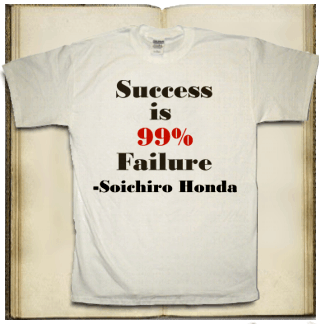
What is 'Failure'?

In our view, and regardless of circumstances, there is no such thing as failure. You see, most people have been programmed to be afraid of failure. But we believe that failure, more than anything else, is an attitude. 

All of us can remember times when we didn't get the results we wanted. We did poorly in a test, or put together a business plan that didn't work.

But successful people don't think in terms of failure. They think in terms of results they can learn from. If they try something and it doesn't work out, they believe they've had a learning experience, and they take new actions to get new results. 

Think about it. What is the one asset, the one benefit you have today that you didn't have in the past? Experience, right? And experience is what you make of it. 

Maybe you are afraid of failure, but how do you feel about learning? Fear of failure can stop you before you start. It can stop you from taking the risks you need to take in order to grow. If you redefine failure as learning, as important feedback, there is no longer anything to fear. 

As a familiar example, Edison tried thousands of different materials before he found the right filament for the electric light bulb. When asked why he didn't quit, he said, "Why should I? I now know 2,000 things that don't work!" If you look at your experiences the way Edison did, you are much more likely to achieve success. 

Share/Save/Bookmark