Positive Leadership has also been recognised as a Top 50 Leadership Expert to Follow on Twitter.

Follow us on Twitter @posleadership


LEADERSHIP IS A PROCESS OF SOCIAL INFLUENCE, WHICH MAXIMISES THE EFFORTS OF OTHERS TOWARDS THE ACHIEVEMENT OF A SHARED GOAL.

Thursday, May 13, 2010

There is No 'Off Switch' for Leaders

Leaders are wise to behave with a consciousness of how other people might view what they do — and the awareness that people probably will view it. That requires truly authentic leaders whose characters are not mental constructions developed for the job but run deeply in their hearts and souls.

In the age of social media, instant video feeds via cell phones, and hidden surveillance cameras, this advice about authenticity increasingly applies to everyone who aspires to leadership.

Share/Save/Bookmark

Team Spirit

Team Spirit is one of the values of Positive Leadership.

This means:


  • CREATING A CLIMATE THAT FOSTERS PERSONAL INVESTMENT AND EXCELLENCE
  • NURTURING A COMMITMENT TO A COMMON VISION AND SHARED VALUES
  • GIVING PEOPLE OPPORTUNITY AND LATITUDE TO GROW AND ACHIEVE
  • PROMOTING COLLABORATION AND TEAMWORK.

To illustrate the point, see this story of a team that went from 'worst to first'  - http://www.avp.com/News/2010/05/Stanford.aspx#

Share/Save/Bookmark

Leadership - Building Capacity

Leadership - Building Capacity  

Wednesday, 2 June 2010, Crutherland House Hotel, East Kilbride, Scotland
School Leaders Scotland and Positive Leadership Limited have teamed up to help you tackle the challenges of A Curriculum for Excellence 2010/2013.

The introduction of ACfE in August 2010 will present school leaders with a range of challenges. Leading and managing change requires a whole set of skills which have been well rehearsed within Scottish education over the years. For this seminar SLS has looked outside the education community  for fresh ideas and proven strategies relating to leadership in the context of our challenges over the next three years. The team from Positive Leadership Limited, Gavin Hastings, Lee Torbet and Graham Watson, bring leadership skills and strategies from the worlds of sport and business. They have developed a propriety leadership strategy which optimises both the performance of leaders throughout an organisation and the results of the organisation.

‘A strategy begins and ends with values – a prioritised listing of what is important to you. Once you know what you value as a leader, you can set goals to help you bring about end results that are aligned with your values. This is Positive Leadership.’

Such an approach also sits well with School Leaders Scotland's own view of a values driven leadership approach.

This seminar will help develop YOU as a leader. It will provide you with the opportunity to hear about this innovative approach to building a high performing school and how it can help you as a leader. You will have an opportunity to reflect on your current practice and clarify your thinking.  You will be able to focus on where you are going, what you are trying to achieve and what your purpose is. You will be given opportunities to discuss and debate with fellow participants the values that are important to you.   You should leave at the end of the day with a positive outlook on the way ahead and a plan of action to take back to your school. 

A Curriculum for Excellence – Kick negativity into touch with the help of Gavin Hastings!


Share/Save/Bookmark

Bono at 50: The Leader We Need

Earlier this week, Bono, the U2 singer, global activist and one of the most powerful leaders on the world stage, turned 50. At this important milestone, it is worth briefly taking stock of his journey thus far--a journey of purpose, impact, passion, and humour. It is a path with lessons for leaders from all walks of life.

So what has Bono been up to that accounts for his enormous influence--influence that extends from the 100,000-seat stadiums that U2 plays to the White House, Vatican, and Downing Street to debt forgiveness and medical aid to Africa? After all, he was not born with cash or connections.

Bono's leadership journey has its roots in U2, the Irish band that he and several schoolmates, including Larry Mullen, Jr., David Evans (who later became known as "The Edge"), and Adam Clayton, founded in 1976. The story of U2's success is one of commerce as much as art. At its centre is the creation and stewardship of a very powerful brand, a brand that, in the midst of an ongoing perfect storm of turbulence in the music distribution business, is still going strong around the world.

Leading this enterprise has meant keeping the key team members motivated, engaged and growing--as human beings as well as music makers--for almost 34 years. Growing the organization four gangly teenagers - who in 1979 had to sell one of their instruments in order to buy passage home after a short London tour--to one of the most successful rock bands in history has demanded abiding faith, a steady stream of courage, huge reserves of personal energy, and a disciplined openness to the world as he continues to meet it.

From this solid foundation, Bono has acquired great agency. Not only money for himself and sway with his customers--music fans of all ages, shapes and sizes--but also extraordinary access to other movers and shakers as well as influence on a wide range of issues outside rock music. One of the most compelling aspects of Bono's leadership is how he has chosen to use the authority that has accompanied business success. He has decided, over and over again, to put his artistic, political, strategic, and spiritual muscle to work to alleviate suffering in the world's poorest countries.

Amidst all this activity, Bono keeps turning his energy to making and distributing music. His work as a musician is as central to his humanitarian efforts as the money he helps raise or the politicians he wins over for debt relief. At the same time, his activism has become part of the U2 brand, animating the way that millions of people think about the group and their offerings.

Herein lie several lessons. First, all successful organisational leaders wield power, often in excess of that granted them by their office. How such individuals decide, explicitly or not, to use this control is a question of grave importance for the world today.

The most important problems confronting us now, including a precarious global financial system and an equally vulnerable environmental system, do not come in separate buckets labelled "business" and "public policy." These are challenges that are smashing through older boundaries and helping redefine organisational place and mission.

Second, as Bono seems to understand, these issues demand a new kind of leadership, one based not in aging hierarchies and status systems but in humility, an ardent desire to learn and a respect for the individuals that organisations serve.

Third, individual leaders have to keep getting right with themselves about their own path and impact.

Finally, effective leadership today demands a willingness to stay open, not only to one's own enterprise but also to the teeming global village around it.

Bono, like Abraham Lincoln 150 years ago, has not let himself become isolated in an elite atmosphere. He has used his touring and travels as classrooms to help him understand the hopes, dreams and tribulations of his fellow citizens, whom he often calls his brothers and sisters. And he has used this knowledge to light his way, his music and his leadership.

Happy Birthday, Bono!

Share/Save/Bookmark

Wednesday, May 12, 2010

Now We Have a True Test of Leadership

Oxford University's Said Business School staged a conference recently on "The Future of Leadership." A survey of Oxford MBA students found that a hefty majority of them thought that there was a major vacuum in leadership today. More than three-quarters (76%) said this was the case in politics and society generally and 82% thought it was the case in international relations. Interestingly, business emerged as having stronger leadership, with 41% identifying it as having a leadership vacuum. One explanation advanced for this was that business rewards good leadership far better than other fields.

The consensus of the conference was that good leaders needed to have moral courage; they needed to be prepared to take risks; and they needed passion.

It may be the case that political parties should encourage and help some of their bright young things learn about leadership. The unseemly haggling that has gone on in the U.K. in recent days as the three main parties tried to cobble together a coalition has not shown political leadership at its finest. With the public already disenchanted with politicians, perceptions will not have been enhanced by the horse-trading that has taken place in the quest for power.

Now, however, the country has a new prime minister in David Cameron. He faces a looming financial crisis on a frightening scale. This is a true test of leadership. Unless he moves hard and fast against the deficit, the markets will pass a very early judgment on his leadership and it will not be flattering. It will also be irreparable.


Share/Save/Bookmark

Insights on Coaching Olympic Athletes

This is an interesting reflection from Dr Paul Schempp of the University of Georgia:

‘I recently invited US Olympic Swim Coach, Jack Bauerle, to share his insights and experiences on coaching with one of my classes at the University of Georgia. In addition to coaching our US Women’s Swim team at the Beijing Olympics, as the head swim coach here at Georgia Jack’s teams have won 4 NCAA National Championships and a host of other honours and championships. In his 30 years of coaching elite athletes, he has not only amassed an amazing record of success, but has also built a wealth of knowledge, skill and experience in coaching.

As Jack spoke, several themes permeated his message. The first and one that resonated with our research on experts was his conclusion when describing an athlete’s accomplishment. He would, for example, detail the training regiment and personal struggles a particular athlete overcame to claim an Olympic medal. And regardless of the athlete or the accomplishment, he concluded the same way: “No one worked harder.” He never said “No one was more talented” or “No one was luckier.” He said: “No one worked harder.”

Former Dallas Cowboys star, Roger Staubach, put it another way: “There are no traffic jams on the extra mile.”

Jack is as enthusiastic and focused on his coaching when he walks into our building for a pre-season practice in early summer as he is eight months later as he prepares his teams for the National Championships. Jack knows that every practice counts—from the first to the last. As a coach, it is all about preparing your athletes, and then letting them do what they do best.

In Beijing, Jack did not directly witness a single one of his athletes win a medal. And his athletes won more medals than any other Women’s Olympic Swim Team in the history of the Games. Why? Because while each swimmer was in the water fighting their way to victory, Jack was in another part of the venue preparing the next athlete for their competition. The second theme I heard in Jack’s remarks was we can only expect great results when we have given our best efforts to being as prepared as we can be to succeed.

As we closed the lecture, I asked Jack if he had any advice for these students who were in the early stages in shaping a career. This is where the third and final theme became clear. He told the students to “follow your passion, not a paycheck.” The famed football coach, Joe Gibbs, said “People who enjoy doing what they do invariably do it well.” Jack loves what he does, and does it unquestionably well. But more importantly, people who follow their passion are happy in what they do. And at the end of the day, isn’t happy where we all want to be? Thanks Jack.’

Share/Save/Bookmark

Tuesday, May 11, 2010

Keeping a 'LeBron James' on your team

Even if you're not watching the NBA playoffs, you are probably familiar with the name LeBron James.

Considered to be one of the best professional basketball players in the world, his team, the Cleveland Cavaliers, are one of the favourites to win the playoffs, in large part because of him. Recently, he earned his second consecutive NBA most valuable player award. No wonder Cleveland fans live in almost constant fear that he'll leave for another team.

Whether or not it's apparent, business leaders have something in common with the Cavaliers: You have a LeBron, a go-to employee without whom your team's performance would suffer -- and you may be in danger of having that person walk out the door someday soon.

If your high-performer has already left, you have three big worries. Will your team's performance immediately decline? Will your short-term gap become a long-term gap because the recruiting process takes so long? And even if you're recruiting promising new talent, can you be sure you've really found another superstar? None of those questions have easy answers.

Your best strategy is to retain your superstars in the first place.

While the Cavaliers can throw a lot of money at LeBron, business leaders don't have endless amounts of cash to keep their best employees. In truth, however, high-performers like LeBron are not always looking for the big payday. They're looking for an opportunity to win. And most key employees, in particular, are looking for an opportunity to make a difference.

Here are some real-world techniques for retaining your high-performers without NBA-level salaries:

Shine the limelight: Use the annual performance-review process -- and every other opportunity you can find -- to reinforce and celebrate your high-performers' best behaviours. Make sure they know they are appreciated, that their success means success for the whole team. Of course even the best players still need a coach, and that means providing honest, specific actionable feedback.

Define that goal: Don't make assumptions about what motivates your best-performing employees. Instead, ask them directly. One employee might be longing for a pay increase, while another has their eye on a key promotion. Another may simply want to feel more tangibly the impact of the programmes they are working on. You won't know until you ask -- and make sure you ask before it's too late.

Use what you have: Give bonuses. Give more responsibility. Give opportunities for travel or training. Whatever tools for professional growth you have at your disposal, offer them to your high performer. Even something as simple as a rotational assignment can help challenge and motivate.

Keep it real: Yes, you're asking your superstar to share their highest career aspirations, and you're doing your best to fulfil those, but never make promises you can't keep. LeBron may want to take the championships, but no coach can guarantee a win. Be honest about what you can and can't offer; they will respect the candour.

Share/Save/Bookmark

Monday, May 10, 2010

Great Leadership

‘Great leadership, that is, to me where it is. It’s in overcoming disappointments because nothing ever goes smoothly, nothing ever goes one hundred percent the way you think it’s going to go. How do you respond when it doesn’t quite workout that’s the true test of a leader.’
Tony Dungy, Super Bowl winning NFL coach

Share/Save/Bookmark

To invent future leaders, General Electric redefines 'tough love'

Ed Ng is president and CEO of GE Capital South East Asia, the company’s financing unit. Recently he shared insights on GE’s human capital development culture.

Even though there have been changes in the company’s culture, certain aspects, like the emphasis on values of integrity, remains. While things like 'values' cannot be quantified and do not show up on the balance sheet, GE regards them just as highly. 

According to Ng, "if you have a person who delivers strong financial results but lacks the values, the integrity, it’s a very easy decision – we remove that person as easily as one who has low performance and is low on values".

GE is known for the way it turns leadership development and talent management into a science more than an art. For example, in each and every position, there has to be an identified successor, from within or external sources. To adhere to this practice, the hunt on-going to uncover “talent behaviours” is a continuous, ongoing process.

Integral to this talent management system is GE’s company-wide reward and recognition programme, which allows any manager to go online and recognise employees by way of cash or non-cash rewards. Every employee uses the Employee Management System annually to assess themselves as his colleagues and managers do the same. 

What makes this system somewhat different from any other staff appraisal systems is that it requires a detailed list of accomplishments and scores the employee against specific GE growth values (read: the leadership potential scale), including the employee’s external focus. In other words, employees are rated on their ability to look at the business and his function from the customer standpoint; the ability to see clear solutions amid complex problems; imagination for out-of-the-box solutions; inclusiveness and teamwork; and finally, technical competence in the position. These are traits expected of every leader in GE.

Word of caution: some boxes in this score sheet carry much more weight than others. For one, if the box next to 'integrity' is left unchecked, this will have the effect of cancelling out all other parameters, however positive. “The difference between GE and other companies is that we believe if you don’t have a core set of values that anchor your belief of what is ethical behaviour, you’re going to run into problems. Without unyielding integrity, you’re basically an empty shell,” said Ng.

To tighten the requirements even further, integrity is only deemed honest when seen through the eyes of others. “Very rarely will you find a particular employee who is mentioned as weak, or as a developmental leader in that he falls behind in an area of performance or measured value, and other employees don’t agree; or a manager thinks that an employee is a strong role model but others don’t agree. It’s an embracing process to prove you will make things happen and always, with unyielding integrity. There are second chances given for some weaknesses except for integrity or compliance failures,” said Ng.

Clearly, while GE’s leaders will change, along with their style, for the company, the on-going task of grooming future leaders never stops. Paraphrasing Edison, Ng said: ““We are constantly seeking new ways to develop leaders. If the world now needs a new kind of leader, GE will invent it.”


Share/Save/Bookmark

Sunday, May 09, 2010

It’s All About Bench Strength

This interview with Sharon Napier, chief executive of Partners + Napier, an ad agency based in Rochester NY, was conducted by The New York Times:

'Q. What were some important leadership lessons for you?
A. Much of what I learned about leadership I learned playing basketball, whether it was as a player or from my coaches. I use basketball analogies a lot.

Q. What are your favourites?
A. I always tell people it’s not about the big game. And what I mean by that is it takes hours and hours of practice to be good. I’ll tell a younger person in the agency: “You’re going to be at an internal agency meeting to present your work, so practice. Act like it’s real. Go home, prepare, practice. Because when you get to the big game, you’ll be able to really be good.”
And I always say that the stats don’t lie. It’s not subjective. It’s just, what are your goals and did you meet them?

Q. What else?
A. I went from playing high school basketball to college basketball. You can be a star in high school, and you can be the ninth player in college. It’s just the way it is. So I always talk about understanding the bench strength. First of all, every player has a role. Know what it is. If you’re the seventh player who’s supposed to go in and get five rebounds because we need them, that’s your role. So I talk about that a lot — we don’t have the starting team and the not-starting team. We have a bench, and everybody has to be strong. They come in and they bring different things to the table. And you learn that by playing. You learn that if you’re not worried about your own success, and you’re worried about the success of the team, you go a lot further.'

For the full interview, see -  

Share/Save/Bookmark

The Foundation of Positive Leadership

When you look at a tall building, what you see are the visible spaces above the ground. The foundation upon which it rests is largely invisible. But the foundation has to be strong, otherwise the entire building will fall.

Similarly, the foundation of Positive Leadership is largely invisible. But it rests on two behaviours. One is Integrity and the other is Character.

To find out more about the values of Positive Leadership and how these values influence business strategy to help organisations achieve performance excellence, even under pressure, please contact: 

Share/Save/Bookmark

Saturday, May 08, 2010

The Power of Positive Leadership

Here is a thought provoking view of the power of Positive Leadership:


Share/Save/Bookmark

Why a Collaborative Culture is Essential in Business

Business leaders around the world are increasingly realising that "silo mentality" and knowledge hoarding behaviours are wasting the kind of collective brainpower that could save their organisation millions, or lead to the discovery of a revolutionary new process or product, or, in the current economic climate, help keep their company afloat when others are sinking!

And it's not just corporate profits that suffer when collaboration is low: the workforce loses something too. Individuals lose the opportunity to work in the kind of inclusive environment that energises teams, releases creativity and makes working together both productive and joyful.

Here are seven insights for harnessing the power of collaboration:

1. Collaboration is a leadership issue. In trying to capture and communicate the cumulative wisdom of a workforce, the public and private sectors have invested hundreds of millions of dollars in portals, software, and intranets. But collaboration is more than the technology that supports it, and even more than a business strategy aimed at optimising an organisation's experience and expertise. Collaboration is, first and foremost, a change in attitude and behaviour of people throughout an organisation. Successful collaboration is a leadership issue.

2. Collaboration is essential for organisational change. Regardless of how creative, clever and savvy a leader may be, he or she can't transform an organisation, a department or a team without the brain power and commitment of others. Whether the change involves creating new products, services, processes – or a total reinvention of how the organisation must look, operate, and position itself for the future – success dictates that the individuals impacted by change be involved in the change from the very beginning. 

3. Visioning is a team sport. Today's most successful leaders guide their organisations not through command and control, but through a shared purpose and vision. These leaders adopt and communicate a vision of the future that impels people beyond the boundaries and limits of the past. But if the future vision belongs only to top management, it will never be an effective motivator for the workforce. The power of a vision comes truly into play only when the employees themselves have had some part in its creation.

4. Diversity is crucial. Experiments at the University of Michigan found that, when challenged with a difficult problem, groups composed of highly adept members performed worse than groups whose members had varying levels of skill and knowledge. The reason for this seemingly odd outcome has to do with the power of diverse thinking. Diversity causes people to consider perspectives and possibilities that would otherwise be ignored. Group members who think alike or are trained in similar disciplines with similar bases of knowledge run the risk of becoming insular in their ideas. Instead of exploring alternatives, a confirmation bias takes over and members tend to reinforce one another's predisposition.

5. Relationships are key. The outcome of any collaborative effort is dependent upon well-developed personal relationships among participants. Not allowing time for this can be a costly mistake. For example, all too often, in the rush to get started on a project, team leaders put people together and tell them to "get to work." This approach proves less than productive, as the group hasn't had time to get to know one another, to discover each other's strengths and weaknesses, to build trust, nor to develop a common understanding and vision for the project.

6. Trust is the glue. Trust is the belief or confidence that one party has in the reliability, integrity and honesty of another party. It is the expectation that the faith one places in someone else will be honoured. In many businesses today, there is a crisis of trust: suspicious and cynical employees are disinclined to collaborate – sharing knowledge is still perceived as weakening a personal "power base." And, despite lots of lip service to the contrary, too many corporate leaders still don't trust employees with the kind of open communication that is the foundation of informed collaboration.

7. Body language matters.  Leaders often make "body language blunders".  For example, have you ever been in an important meeting, and heard the presenter telling the group how much he welcomed any input the group could provide? But at the same time he was using both his hands to nonverbally push the entire group away!

Today's corporation exists in an increasingly complex and ever-shifting ocean of change. As a result, leaders need to rely more than ever on the intelligence and resourcefulness of their staff. Collaboration is not a "nice to have" organisational philosophy. It is an essential ingredient for organisational survival and success.

Share/Save/Bookmark

Friday, May 07, 2010

The Message to Britain's Political Leaders

What has changed more than anything as a result of yesterday’s UK General Election is the voters’ view of those in authority. Whatever constitutional conventions, Parliamentary arithmetic and party ambitions say, deference by the electorate is dead. The old order changeth. That is what the politicians of all parties must remember above all else as they consider this election result.


Share/Save/Bookmark

What is 'Failure'?

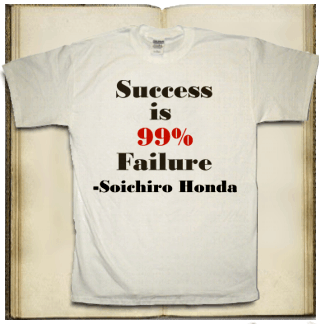
In our view, and regardless of circumstances, there is no such thing as failure. You see, most people have been programmed to be afraid of failure. But we believe that failure, more than anything else, is an attitude. 

All of us can remember times when we didn't get the results we wanted. We did poorly in a test, or put together a business plan that didn't work.

But successful people don't think in terms of failure. They think in terms of results they can learn from. If they try something and it doesn't work out, they believe they've had a learning experience, and they take new actions to get new results. 

Think about it. What is the one asset, the one benefit you have today that you didn't have in the past? Experience, right? And experience is what you make of it. 

Maybe you are afraid of failure, but how do you feel about learning? Fear of failure can stop you before you start. It can stop you from taking the risks you need to take in order to grow. If you redefine failure as learning, as important feedback, there is no longer anything to fear. 

As a familiar example, Edison tried thousands of different materials before he found the right filament for the electric light bulb. When asked why he didn't quit, he said, "Why should I? I now know 2,000 things that don't work!" If you look at your experiences the way Edison did, you are much more likely to achieve success. 

Share/Save/Bookmark

Thursday, May 06, 2010

Character Matters

Character always matters in UK politics, and it matters more than ever now. The age of austerity that will shortly be upon us will require some hard decisions. There will be bruising battles with the public-sector unions; the might of the Whitehall establishment will have to be taken on. The scale and role of government will have to be fundamentally re-assessed because the deficit will demand it. Make sure you vote today!

Share/Save/Bookmark

Make Expectations Clear

The first item in The Gallup Organisation's Q12 survey, which they use to measure employee engagement, is "I know what is expected of me at work." You may be surprised to know that less than 50 percent of the millions of employees who have responded to the survey agreed with this statement.

How can employees do what's expected of them when they don't know what's expected? A big part of the problem is that managers assume their team members are clear because they have their job descriptions, and the manager has, in their own mind, clearly communicated their expectations.

The problem is that meaning resonates in a person's mind, not in the words used to communicate. How many times have people misinterpreted something you said? Your meaning isn't necessarily the same meaning they interpret from your words.

The only way meaning can be effectively transferred is through a two-way discussion--and that is the only way to ensure expectations are clear.

Here are some steps you can take to ensure that you and your team members are clear about what is expected of each other:

  1. Make sure you are not only clear about what you expect from each person, but also about the desired outcomes.
  2. Recognise that your team members have expectations of you as well, and they are more likely to meet your expectations if you meet theirs.
  3. Ask each team member their understanding of what is expected of them and what outcomes they believe they are accountable for. Where their understanding differs from yours, reach agreement and get confirmation that you are both on the same page.
  4. During team meetings, make time to get input from all team members on whether expectations are being met, and agree on any changes that need to be made.
  5. If anyone is failing to meet the team's expectations, make sure the expectations are realistic, and if they are, remind them of their commitment to the team, and get agreement to fulfil the expectations.

Share/Save/Bookmark

Wednesday, May 05, 2010

BP Boss Needs to Do More

As a result of the Gulf of Mexico oil spill, BP faces huge clean-up and compensation bills, a barrage of lawsuits, and a political backlash against the deep-water drilling that has become an important part of its business. When Tony Hayward took the top job three years ago, he made safety his main priority. By all accounts, there have been considerable improvements, but that hardly matters now.

Mr Hayward's reputation depends on how rapidly BP brings the spill under control, even though this is out of his hands, and could take days or weeks or months. But whatever happens, the chief executive sets the tone. We judge organisations now on whether their leaders seem suitably humble and sincere and decent.

In particular, the crisis-stricken boss must weigh up the dangers of defiance against the perils of penitence: Toyota was disastrously slow to acknowledge its recent safety failings, just as Gordon Brown was reluctant to accept any responsibility for Britain's economic woes. 

And even though Hayward promised to cover the costs of the clean-up, his early insistence that the oil slick was "not our accident", since the rig was run by another company, was not what the fishermen of Louisiana wanted to hear. Greater eagerness to shoulder responsibility quickly ensued.

The central problem is that, for most of their careers, executives and politicians are drilled by lawyers and advisers to avoid admitting liability for anything. Yet when things get really bad, taking a hit to next quarter's profits may be less dangerous than the longer-term impact of punitive legislation or regulation (especially in the US, where a political backlash is the inevitable consequence of any crisis). 

Whether you call this the growth of a blame culture, or a greater holding to account of those who mess up, it is an increasingly powerful force – and should prompt bosses to spend more time worrying about the consequences of excessive risk, and less time lobbying for fewer restrictions.

Does anyone remember the late Sir Ian MacGregor and the plastic bag during the 1983 miners' strike in the UK?


Share/Save/Bookmark

Decision Day Tomorrow - Who Should Be Our Next Leader?


Share/Save/Bookmark

Tuesday, May 04, 2010

Leadership on the Rugby Pitch

Andrew Cosslett, CEO of InterContinental Hotels Group, has learned more on the rugby pitch about the value of everyone on the team than in any other part of his life:


Share/Save/Bookmark

10 Ways to Train Your Brain

Here are ten abilities of those who are mentally tough; a key value of Positive Leadership:

1  Visualise the Goal
2  Focus on the Goal
3  Build a Consistent Routine
4  Stay in the Present
                               5  Build Momentum
                               6  Move On
                               7  Prepare Porperly
                               8  Practice for Pressure
                               9  Keep Track to Evaluate
                              10 Believe in Yourself and your Team

For more on how we can help you develop these skills, please contact: gavin.hastings@positiveleadership.co.uk

Share/Save/Bookmark

How Should Your Company Look at Leadership?

Some good advice for leaders who want to focus their energies on people:


Remember the five most important words in business -

'I am proud of you'

Remember the four most important words in business -

'What is your opinion?'

Remember the three most important words in business -

'I appreciate that'

Remember the two most important words in business -

'Thank you'

Remember the most important word -

'You'


Share/Save/Bookmark

Monday, May 03, 2010

Uncommon - A Different Way of Leading

Super Bowl winning coach and #1 New York Times best-selling author Tony Dungy has had an unusual opportunity to reflect on what it takes to achieve significance. He is looked to by many as the epitome of the success and significance that is highly valued in our culture. He also works every day with young men who are trying to achieve significance through football and all that goes with a professional athletic career—such as money, power, and celebrity. He is the author of Uncommon: Finding Your Path to Significance.


Share/Save/Bookmark

What Hurts Large Companies

This interview with Omar Hamoui, founder and chief executive of the mobile advertising network AdMob, was conducted by The New York Times:

'Q. You’ve been involved mostly with start-ups, but you also spent some time working at Sony Pictures as a developer. So what did you learn about large corporations?

A. Two really key things. One was that insecurity is incredibly damaging in a corporate environment. You end up making really poor decisions, a lot of things you do are based on fear, and eventually it will fail. When people are playing defence and they’re primarily focused on their own jobs, it ultimately ends up being a sort of losing strategy.

The second thing is that there’s a lot of time wasted in conversations that don’t happen face-to-face. When there are backroom conversations and dealings — as opposed to direct conversations — it’s less efficient and you get poorer outcomes. People could spend weeks building these political coalitions rather than just having a direct conversation.'


Share/Save/Bookmark